
BELLY DANCE LIFE PODCAST
Hosted by Iana Komarnytska
The Belly Dance Life Podcast is a series of audio interviews with artists who work in the belly dance related industry. Our podcast ranks in the official Apple Podcast Charts, and was acknowledged as one of the top Canadian dance-related podcasts across the web in 2021 by Feedspot.
You can listen to the podcast every week for FREE. Subscribe on your favourite player bellow, or listen directly from this website.


RECENT EPISODE
MOST RECENT SPONSORS
Want to support the podcast AND spread awareness about your dance product/services? Inquire about advertising opportunities on the Belly Dance Life podcast by messaging to info@ianadance.com.





ALL EPISODES
Season 9 (2026):
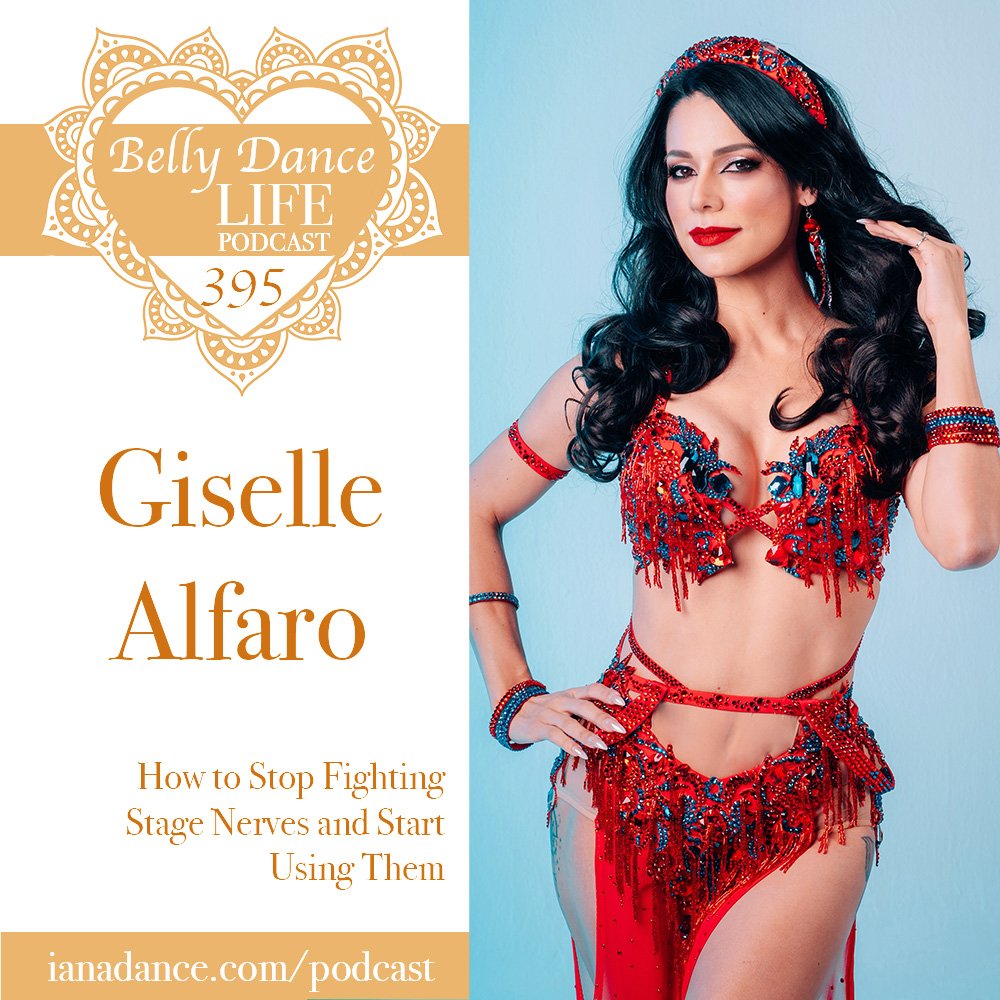
Giselle Alfaro, originally from El Salvador, is a dance artist with more than 17 years of experience, specializing in Middle Eastern dance. She has performed at international festivals including Oriental Marathon Festival in France, Bellydance Convention in Mexico, and Sands of Time in Greece. From 2017 to 2019, Giselle toured as a featured dancer with BellyDance Evolution in its production Fantasm and later joined the creative team as assistant director for the season finale in Buenos Aires, Argentina. Alongside her artistic career, Giselle holds a B.S. in Finance and Economics and is deeply committed to community service. For the past three years, she has worked as a medical interpreter supporting the Hispanic community at Arkansas Children’s Hospital.
In this episode you will learn about:
How to train your brain to feel more comfortable before stepping onstage
How international opportunities often grow from relationships built years earlier
What years with Bellydance Evolution taught her about touring, collaboration, and professional dance life
How Giselle rebuilt her dancing after surgery through repetition and consistency
Is social media visibility really that important?
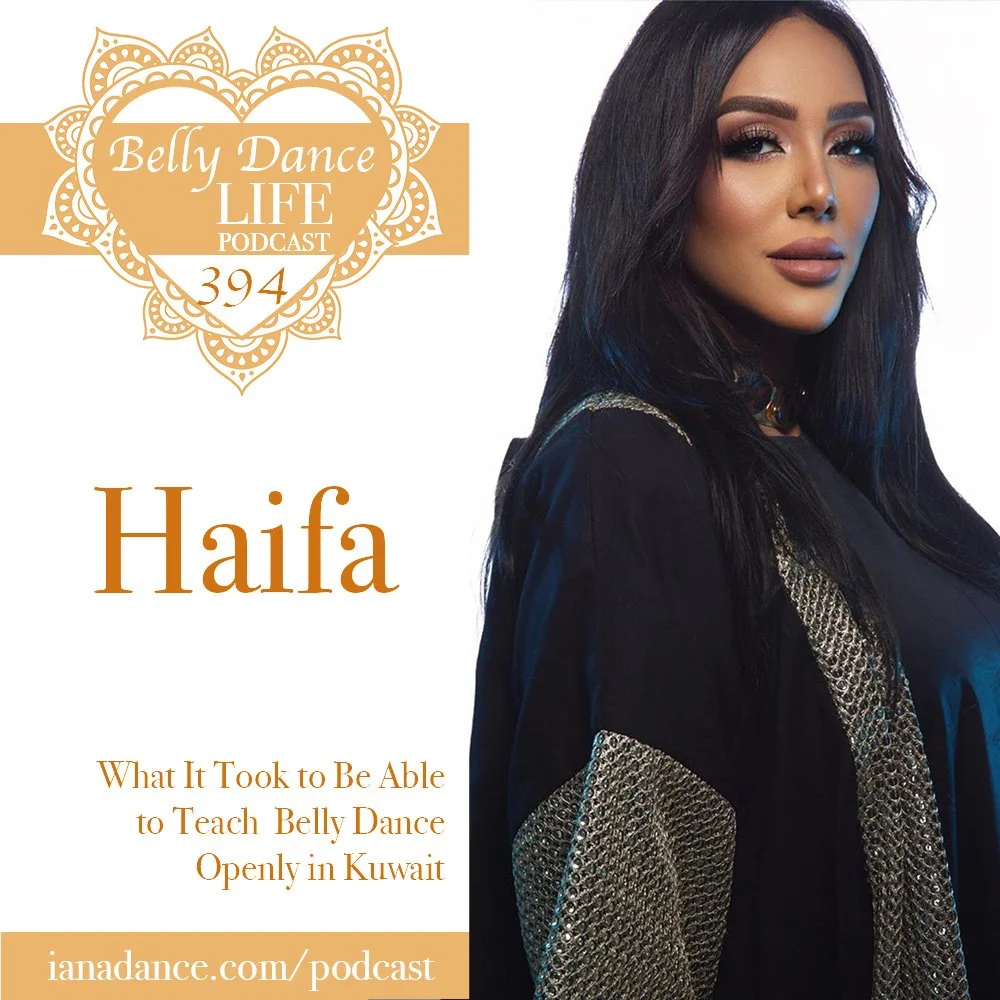
Haifa is a Kuwaiti dance artist, Certified BMD belly dance instructor, and founder of The Rhythm Academy for Performing Arts, with 27 years of experience in Oriental dance. Recognized as one of Kuwait’s pioneering dance educators, she was among the early women to openly present and teach Oriental dance as a legitimate art form and wellness practice despite experiencing significant social resistance shaped by cultural traditions and expectations. Rather than allowing these challenges to define her path, Haifa met them with patience, resilience, and unwavering determination, inspiring many women who later followed a similar path into dance training.
Throughout her career, Haifa has worked to promote a respectful and culturally conscious understanding of dance while emphasizing its role in self-expression, body awareness, confidence, femininity, and emotional well-being. Through The Rhythm Academy, she has helped create greater space for women in Kuwait to experience and study dance, while also bringing international artists and master teachers to the local community. Her work reflects nearly three decades of commitment to expanding the possibilities for women to engage with dance as both an art and a meaningful way to reconnect with their bodies, embrace their femininity, express themselves freely, and develop greater confidence and presence.
In this episode you will learn about:
What makes Kuwaiti dance fundamentally different from Egyptian belly dance
How social media helped revive interest in preserving Kuwaiti dance
How Haifa became one of the first women to speak publicly about belly dance in Kuwaiti media, and how speaking about dance led to legal complaints and even threats of jail
Why women in her classes often come for femininity and self-acceptance more than technique
How she learned to market belly dance in a way that speaks to a conservative cultural environment
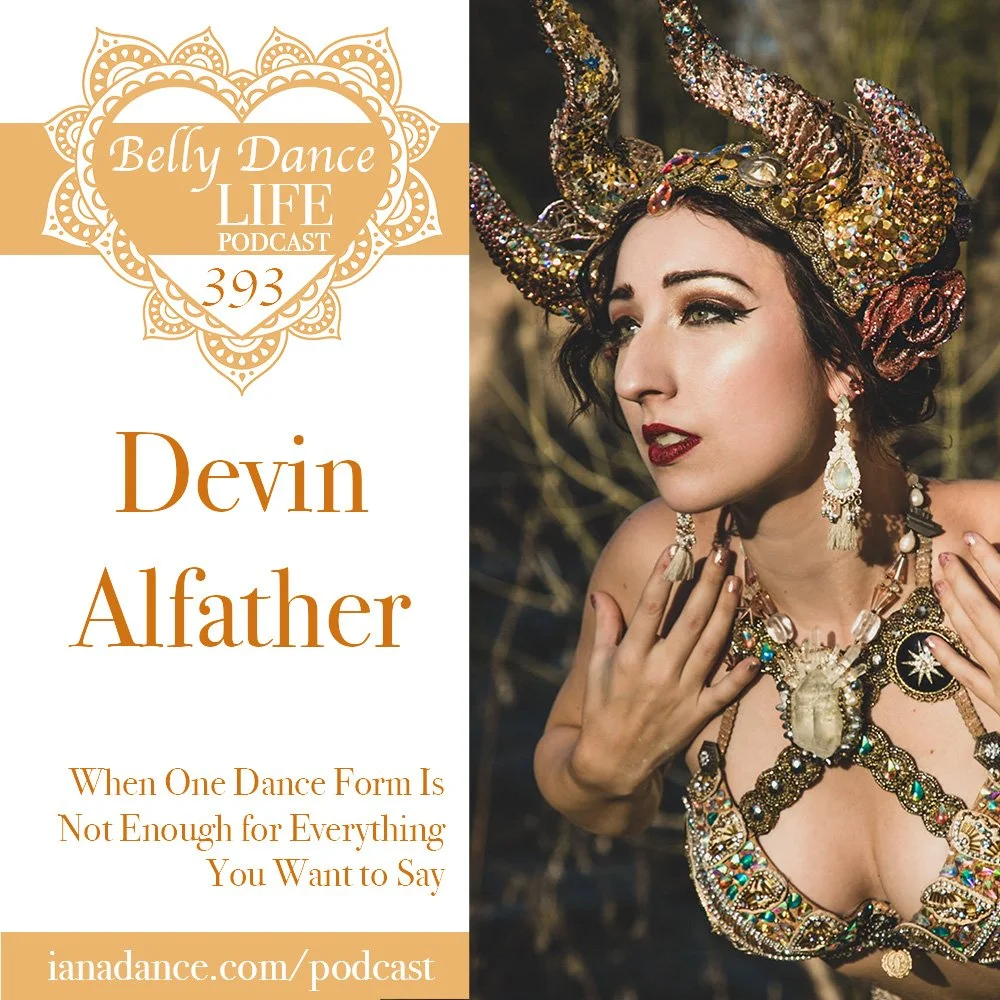
Devin Alfather is a multidisciplinary dancer and entertainer specializing in theatrical Fusion Bellydance, Egyptian Raqs Sharqi, MENAHT and world fusion dances, as well as burlesque, circus, fire performance, and other dance forms. A multi-award-winning performer and instructor, she is dedicated to both technical development and deeper understanding of the cultural sources behind the forms she studies. Her performances often combine belly dance with theatrical storytelling, props, fire, balancing work, veil, zills, Isis wings, and other visual elements, allowing her to create highly distinctive experiences for a wide range of events. Alongside performing across Texas and beyond, Devin teaches workshops for detail-oriented dancers and continues to study source materials and artists while developing her own multidisciplinary approach to movement and performance.
In this episode you will learn about:
How belly dance, circus, burlesque, and theatrical storytelling can coexist in one career
Why diversifying your performance skills can create more professional opportunities
How storytelling influences everything from movement to costume design
What drag and burlesque taught Devin about the incredible power of stillness
Why complex layering requires more relaxation, not more tension
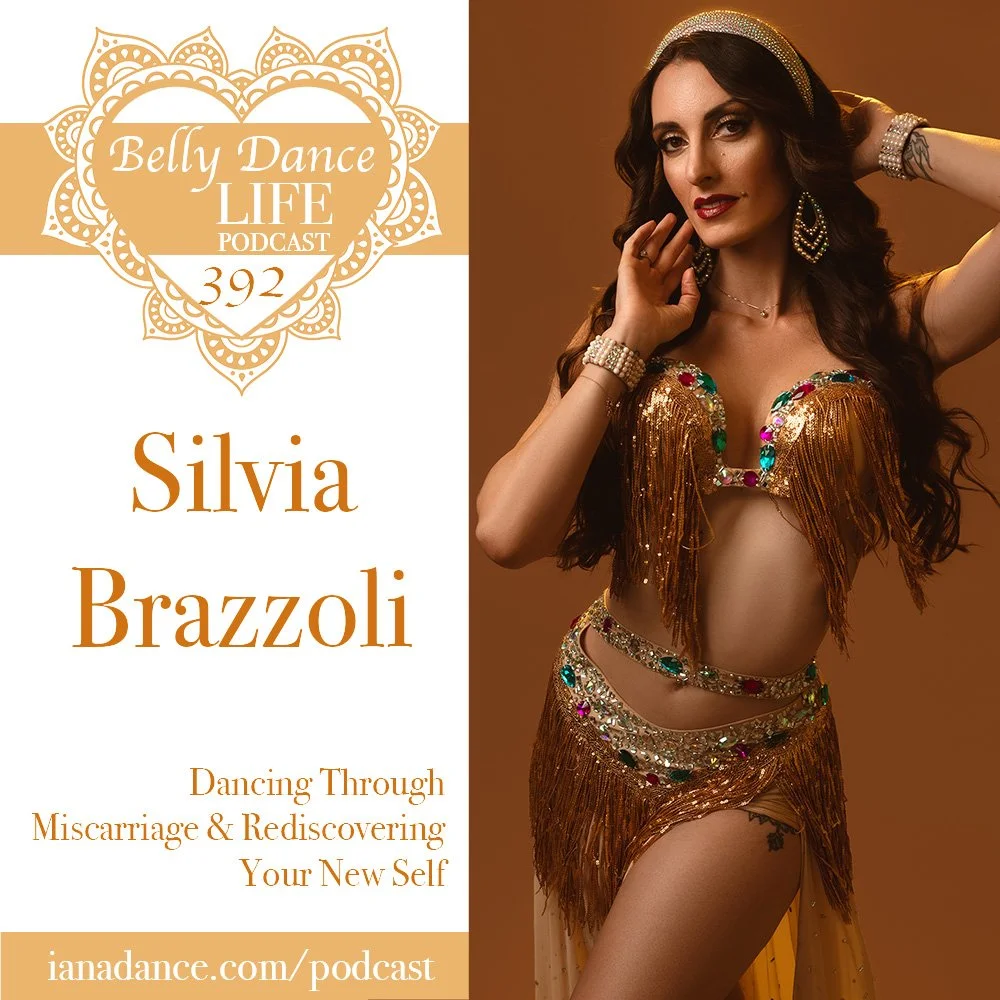
Silvia Brazzoli is an international belly dance artist, instructor, artistic director, yoga teacher, and visual artist based in Italy. She began studying oriental dance at the age of 18 and has since performed and taught across Europe, Asia, Africa, and the Americas. Known for her elegant, feminine style and empowering approach to teaching, Silvia continues to explore oriental dance and other movement traditions as part of her ongoing artistic development. In Italy, she runs her own school and directs the Silvia Raqs Group, while also organizing events and retreats. She has received numerous international competition titles and has performed with world-renowned companies including Jillina Carlano’s Bellydance Evolution and Manca Pavli’s Amaya Dance Company. Her work brings together dance, yoga, musicality, body awareness, creativity, and a strong belief in the lifelong evolution of the dancer.
In this episode you will learn about:
How grief completely reshaped Silvia’s relationship with dance
What it feels like to fall out of love with dance and find your way back
Why talking openly about miscarriage matters in a women-dominated dance community
Why studying Arabic transformed the way she hears and interprets music
What local gigs teach you that festival stages never will
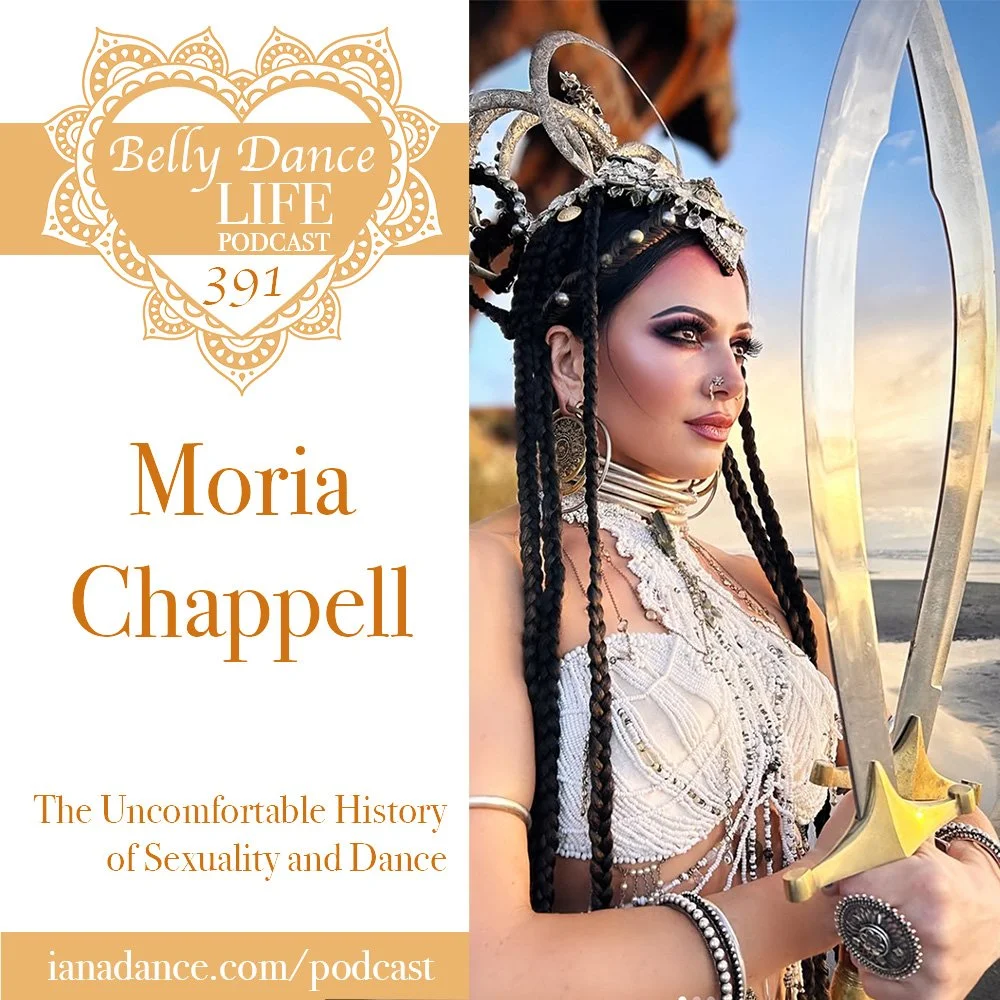
Moria Chappell is an internationally renowned performance artist, dance instructor, researcher, artistic director, and costume designer specializing in Fusion and Experimental Belly Dance, Temple Dance, and Indian Odissi Classical Dance. Over more than two decades, she has performed, taught, and researched ancient dance traditions in over 50 countries, exploring connections between movement, ritual, mythology, and ancient trade routes. A principal dancer and later Artistic Director of the Bellydance Superstars from 2005–2015, Moria is known for her archetypal performance style and Muscular Belly Dance Technique, emphasizing precision, isolation, and individual expression. She is also a principal dancer, teacher, and Assistant Director of the Urvasi Dance Ensemble, studying the Mahari tradition of Odissi under Dr. Ratna Roy. Her work brings together movement research, theatrical production, and a lifelong fascination with the ancient roots of dance.
In this episode you will learn about:
Why Moria believes ancient dances were connected through trade, migration, and shared ritual practices
How ancient societies used dance for far more than entertainment
Why sexuality, fertility, spirituality, and dance became so deeply intertwined
How historical associations with sexuality continue to shape stigma around belly dance
How a severe spinal injury completely changed her relationship with her body and teaching
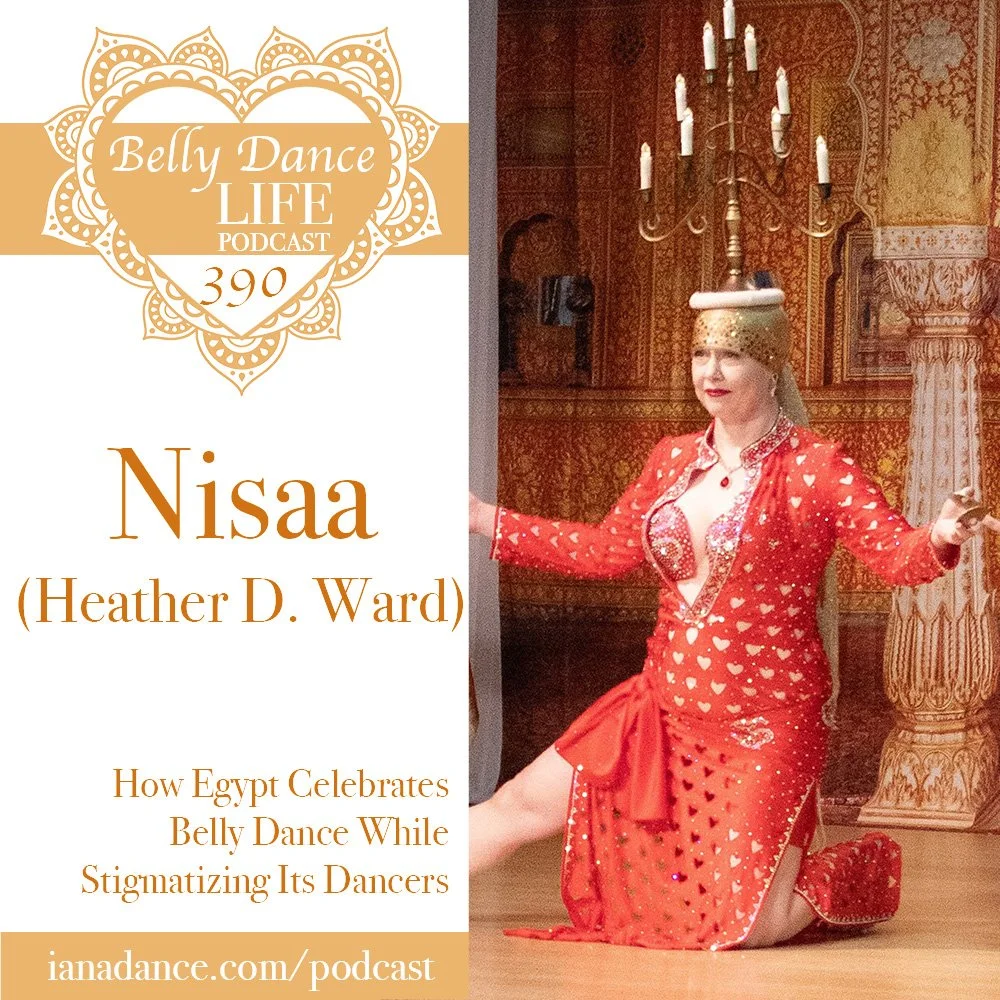
Nisaa (Heather D. Ward) is an instructor, performer, and researcher of Egyptian dance based in St. Louis, Missouri. Specializing in Egyptian raqs sharqi as well as baladi, awalim, ghawazi, and other Egyptian folk and traditional dances, her work focuses on understanding dance within its broader sociocultural and historical context. With academic degrees in anthropology and history, Nisaa has studied with internationally renowned artists as well as Egyptian traditional entertainers and has been teaching Egyptian dance since 2003. Her research into the history of Egyptian dance and its professional practitioners led to the publication of Egyptian Belly Dance in Transition: The Raqs Sharqi Revolution, 1890–1930 and her latest book, Raqs in the City: The Belly Dance Landscape of Cairo. Through her teaching, performance, and research, Nisaa works to deepen understanding of Egyptian dance as both a living art form and a reflection of the history and culture that shaped it.
In this episode you will learn about:
What most dancers got wrong about Egypt’s Delta Ghawazi
Why traditional styles deserve the same depth of study as Raqs Sharqi
What the disappearance of Muhammad Ali Street changed in Egypt’s dance industry
How class and gentrification influence where Egyptian dance is presented today
Why professional dancers in Egypt still carry a powerful social stigma & how outsiders can misjudge Egyptian dancers without understanding their reality
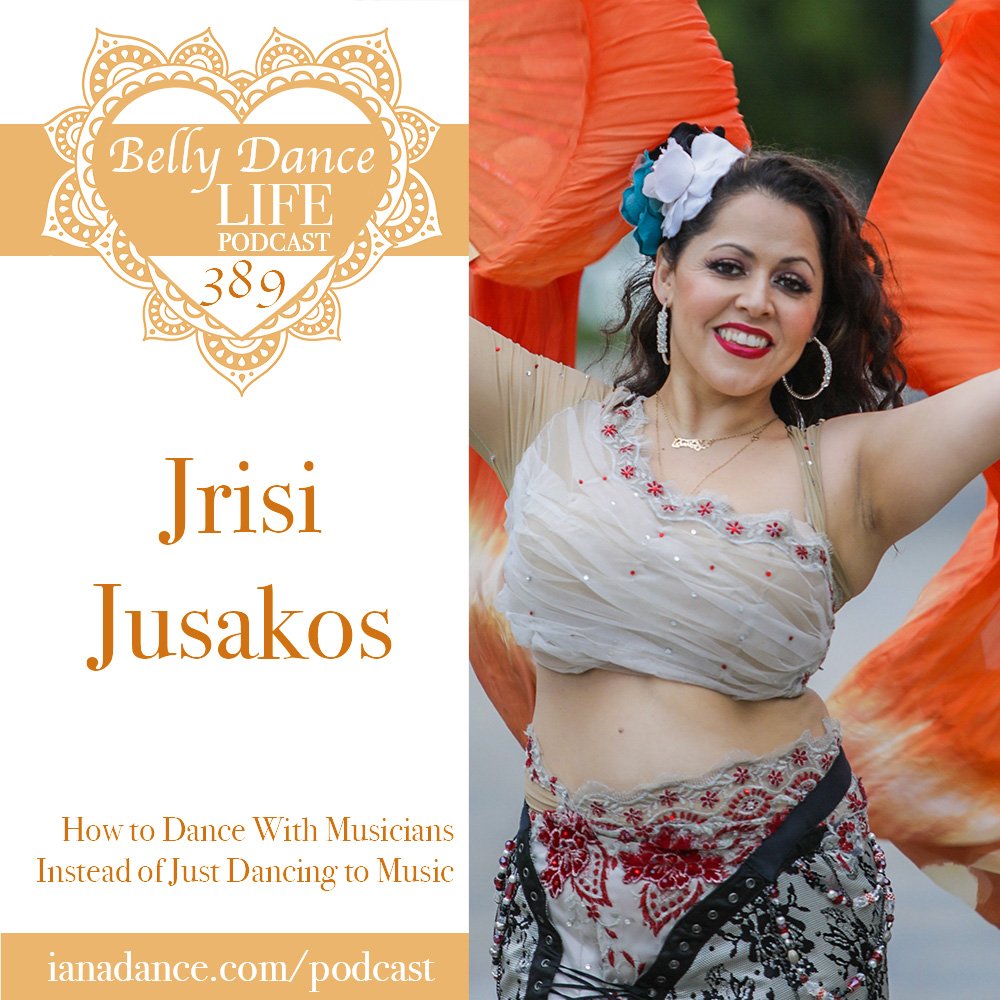
Jrisi Jusakos is an Australian dancer, choreographer, educator, and producer with more than 35 years of experience in dance. Born in Chile to a Greek family and raised in Australia, she first connected with Arabic music and dance through Sydney’s Lebanese community before beginning her formal belly dance training as a teenager. She holds a Bachelor of Arts in Dance with a major in Contemporary Choreography and has extensive training in Raqs Sharqi, ballet, jazz, contemporary, flamenco, and Persian dance. Her career has included professional performance in Sydney’s Arabic live music scene, international study across Egypt, Lebanon, Germany, and New York, and the founding of the Hathor Persian Dance Ensemble. Today, her work centers on musicality, improvisation, artistic individuality, and the relationship between dancer and live musician, while she also creates accessible movement programs for seniors, mixed-ability participants, and culturally diverse communities.
In this episode you will learn about:
What Sydney’s Arabic nightlife looked like when full live bands were everywhere
Why dancing to live music feels completely different from recorded tracks
What to do with stage anxiety before a live performance
How to practice improvisation before you ever step onstage
How grief, life changes, and personal experiences inevitably enter our dancing
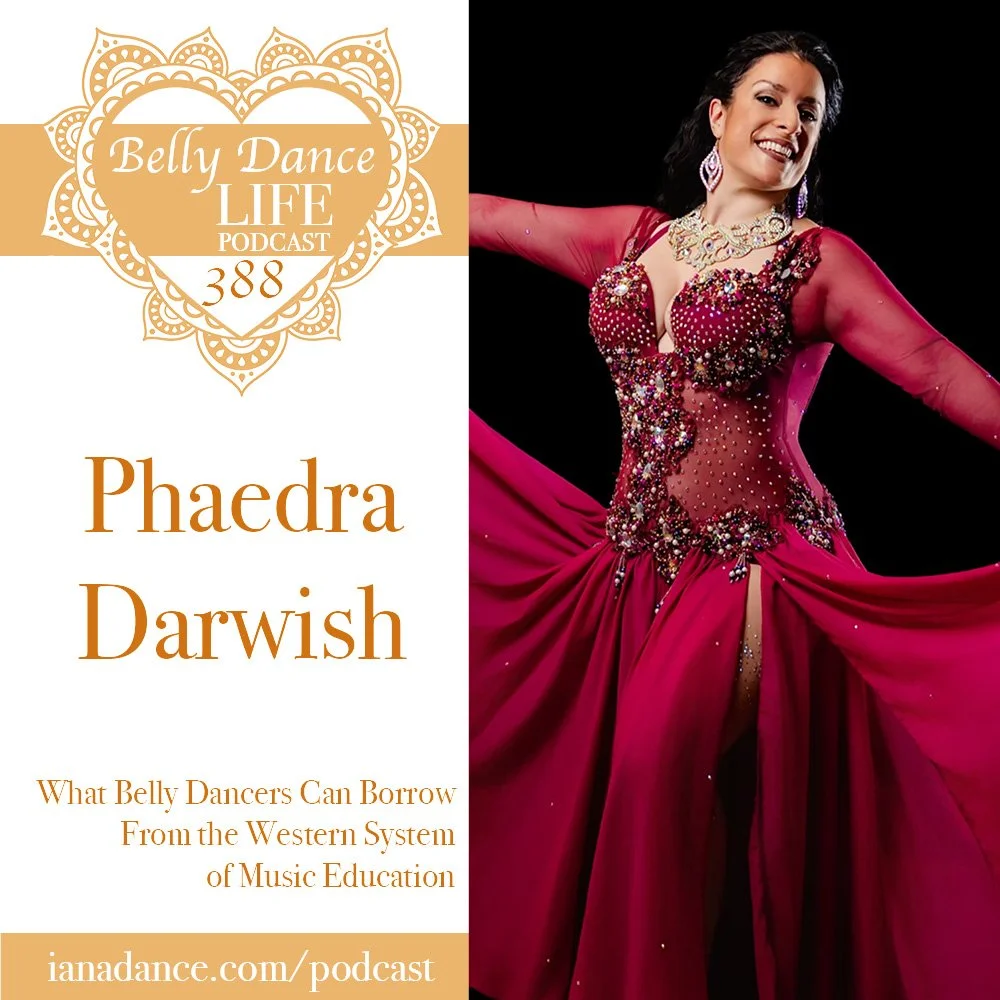
Phaedra Darwish is a Chicago-based dancer, musician, instructor, and cultural advocate with a background in instrumental and vocal music and musical theatre. Inspired by Arabic dance and music and their connection to her own heritage, she has spent more than 14 years performing and teaching throughout Chicago and across the United States, while also participating in cultural events, community fundraisers, and dance festivals as both a dancer and musician. Her approach to Oriental dance goes beyond movement, incorporating music, regional traditions, and cultural context. Through her teaching and professional performances, Phaedra is dedicated to increasing awareness, appreciation, and understanding of Middle Eastern dance and sharing the richness of her cultural heritage with wider audiences.
In this episode you will learn about:
The fact that many dancers were never actually taught how to practice
Why private lessons can accelerate a dancer’s individual growth
How to make choreography look spontaneous instead of rehearsed
The role of breath, tension, and release in bringing movement to life
How “soft focus” can help group dancers move as one unit
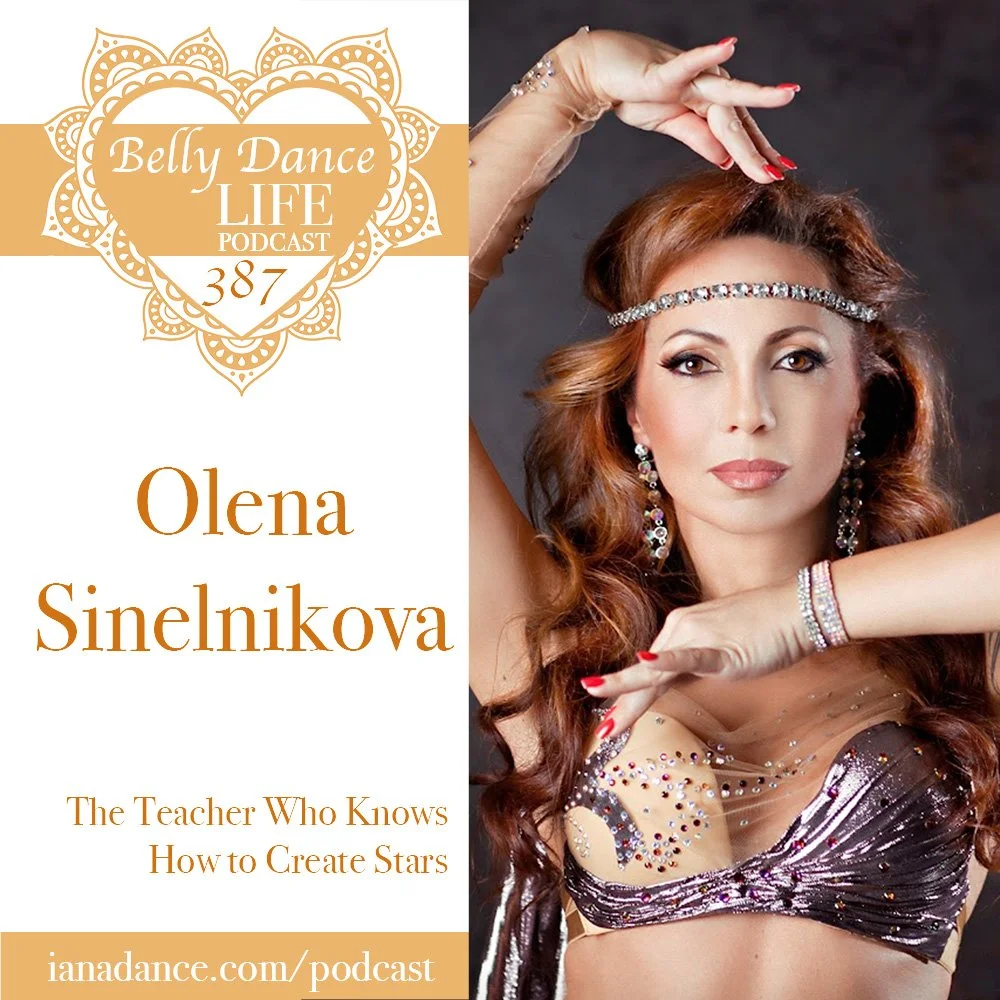
Olena Sinelnikova is an internationally acclaimed belly dancer, choreographer, and instructor from Ukraine. She is the founder and director of the Isfahan Dance School and the organizer of the Isfahan Bellydance Festival. An international judge and mentor to numerous Ukrainian champions and stage stars, Olena is recognized for her dedication to developing the next generation of dancers. She is also a winner of multiple national and international competitions, including first place at the Nile Group Festival in Cairo in both the Folklore Duet (2011) and Solo (2012) categories, and continues to teach and perform at festivals around the world.
In this episode you will learn about:
The qualities every student should look for in a great teacher
Why learning to be a student is just as important as learning to dance
The importance of knowing when it's time to let a student grow independently
Why starting belly dance at 30 is not too late to succeed
How the war in Ukraine changed life for dancers and dance schools
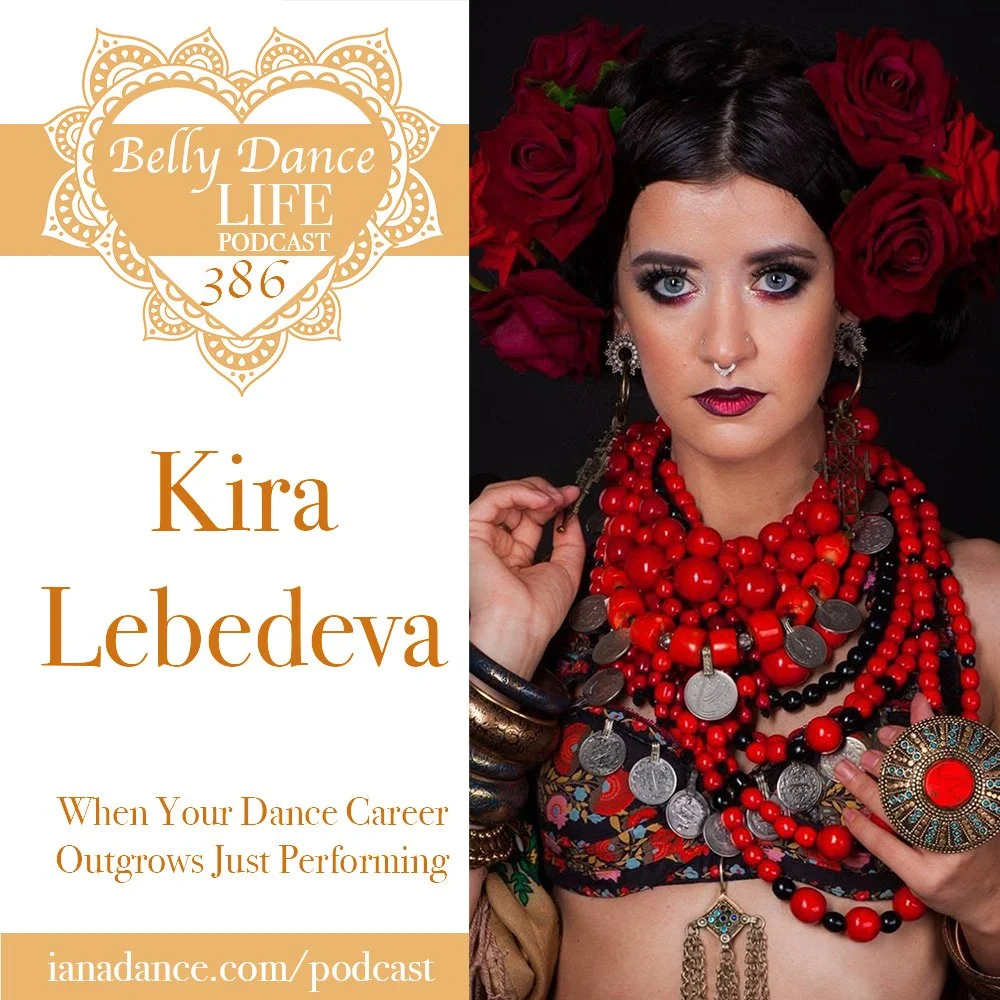
Kira Lebedeva is a Tribal Fusion belly dancer, yoga instructor, and mentor from Lviv, Ukraine, with over 16 years of experience in dance and more than a decade of teaching. Known for her exceptional body control, fluid musicality, and expressive storytelling, she has become one of the leading artists in the international Tribal Fusion community. Her work is distinguished by a seamless fusion of technical precision and emotional expression, inviting audiences to experience dance as both an art form and a deeply personal story. In addition to her artistic career, in March 2022 Kira transformed her dance studio into a shelter for displaced Ukrainians following the outbreak of the full-scale war. Through both her performances and teaching, she continues to inspire dancers around the world with her unique blend of technical precision, creativity, and emotional depth.
In this episode you will learn about:
What coaching can offer that self-discipline sometimes cannot
The mindset that helped Kira continue creating through war in Ukraine
How limiting beliefs about money hold dancers back
Why every dancer needs to understand WHY they dance
Funny misconceptions belly dancers and fusion dancers have about each other
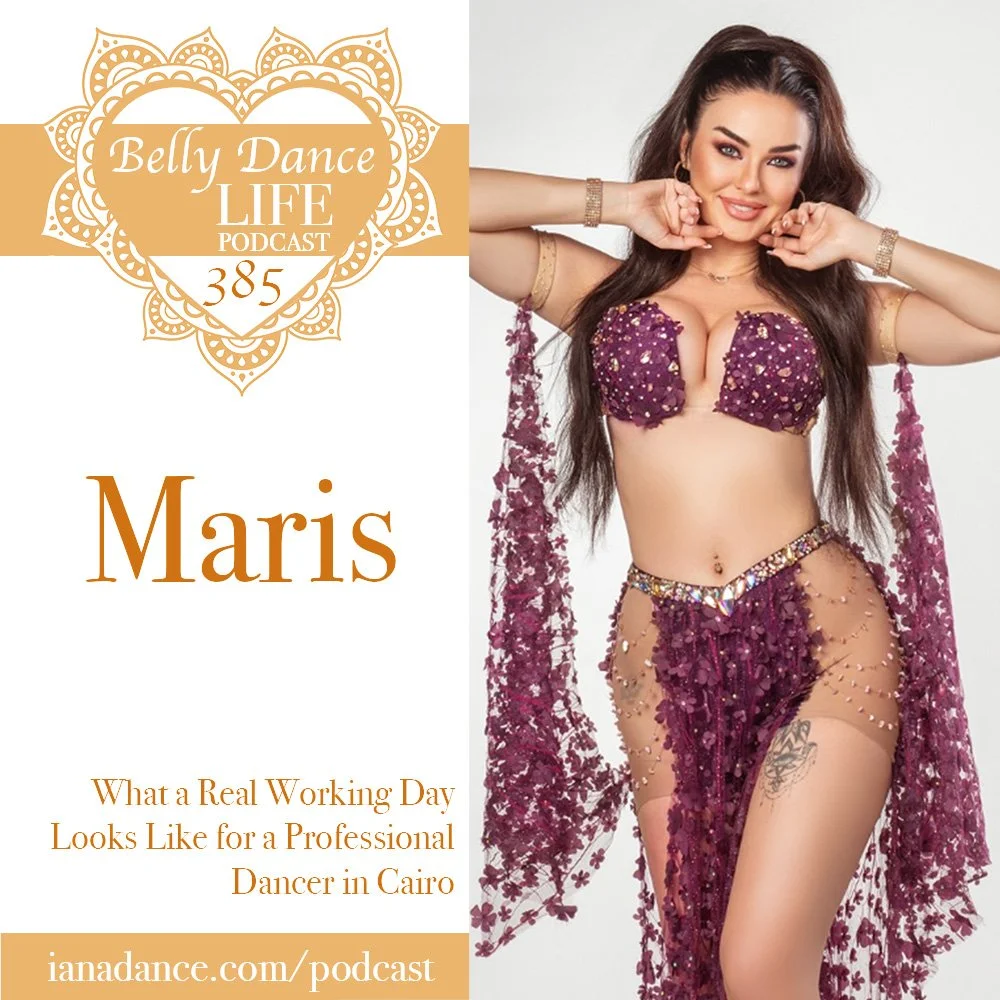
Maris is an Estonian belly dancer, instructor, performer, and recording artist who has built an international career across Europe and the Middle East. After beginning her dance journey in 2005 and teaching from 2012, she launched her professional career in Egypt with daily performances in Sharm El Sheikh before moving on to Dubai and eventually settling in Cairo, where she has become a sought-after performer at prestigious weddings, events, discos, and Nile cruise shows. She has also taught and performed in numerous countries worldwide and is widely recognized in the Arab world for her appearance in Mostafa Shawki's 2019 hit music video Maltashet El 2loub. In addition to performing, Maris regularly teaches workshops internationally and, in 2024, released an album of original music created specifically for belly dance performances.
In this episode you will learn about:
What it really takes to build a sustainable performing career in Egypt
How media exposure can completely change a dancer's career in Cairo
The truth behind common myths and gossip about Cairo dancers
The changing trends in Cairo costumes, music, and audience expectations
Practical advice for dancers dreaming of building a career in Cairo
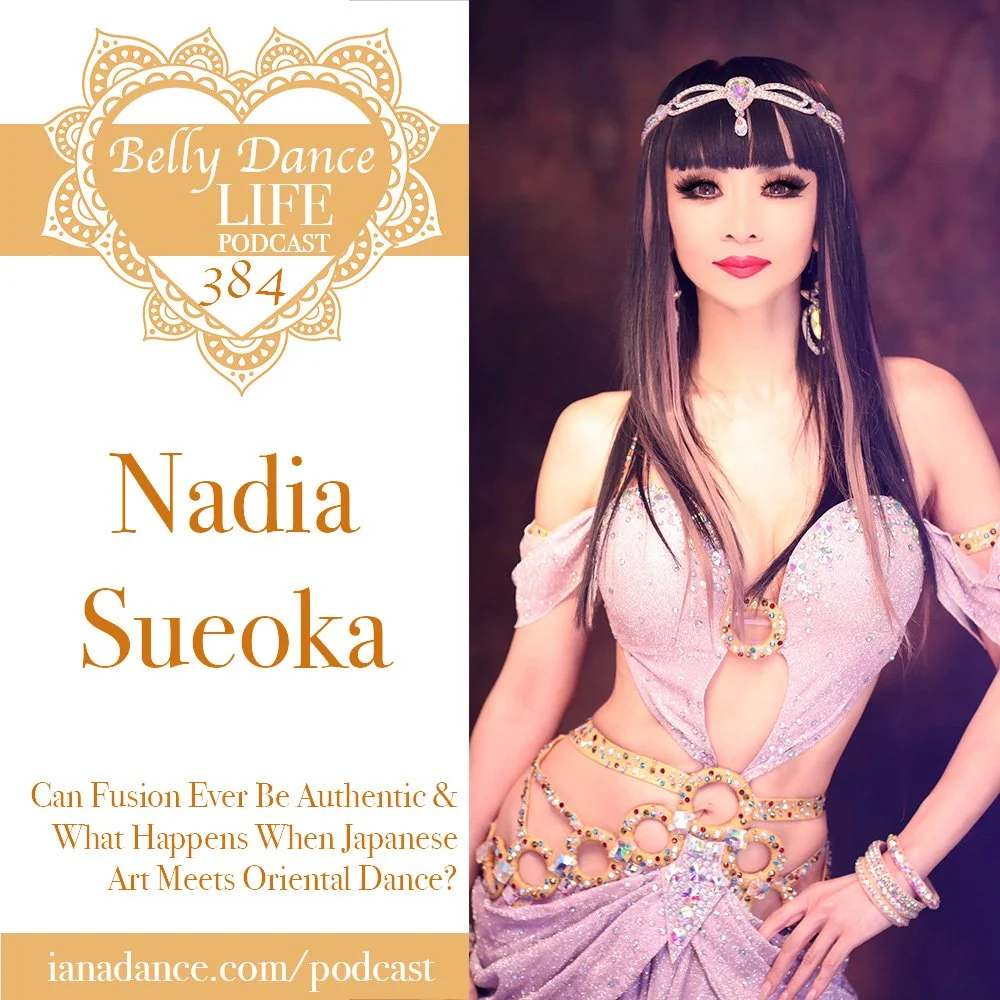
Nadia Sueoka is a Japanese belly dancer, choreographer, and instructor based in Singapore, with an international career spanning performances, teaching, and choreography around the world. Since beginning her professional career in 2005, she has trained extensively in Egypt and Turkey with world-renowned masters. Having traveled to more than 30 countries, she has developed a distinctive artistic style inspired by diverse cultures. An award-winning performer, Nadia is known for her powerful stage presence, exceptional musicality, and soulful improvisation. She has created over 100 choreographies in Oriental, Folklore, and Fusion styles. Her signature JAPANESE ORIENTAL FUSION series, which blends Middle Eastern dance with Japanese aesthetics, has earned international recognition for its originality and artistic vision. Nadia is the founder and artistic director of NADIA Oriental Dance Arts Singapore and NADIA ONLINE. She is regularly invited to perform, teach workshops, and serve as a judge at international festivals and competitions worldwide.
In this episode you will learn about:
How belly dance helped her transform from a shy Japanese girl into a confident international artist
What makes Egyptian, Turkish, and Japanese dance philosophies so different
The story behind creating her signature Japanese Oriental Fusion style & how to blend two cultures without losing authenticity or respect
Why competition culture is transforming belly dance in Asia
The surprising mindset differences between Asian and Western dancers
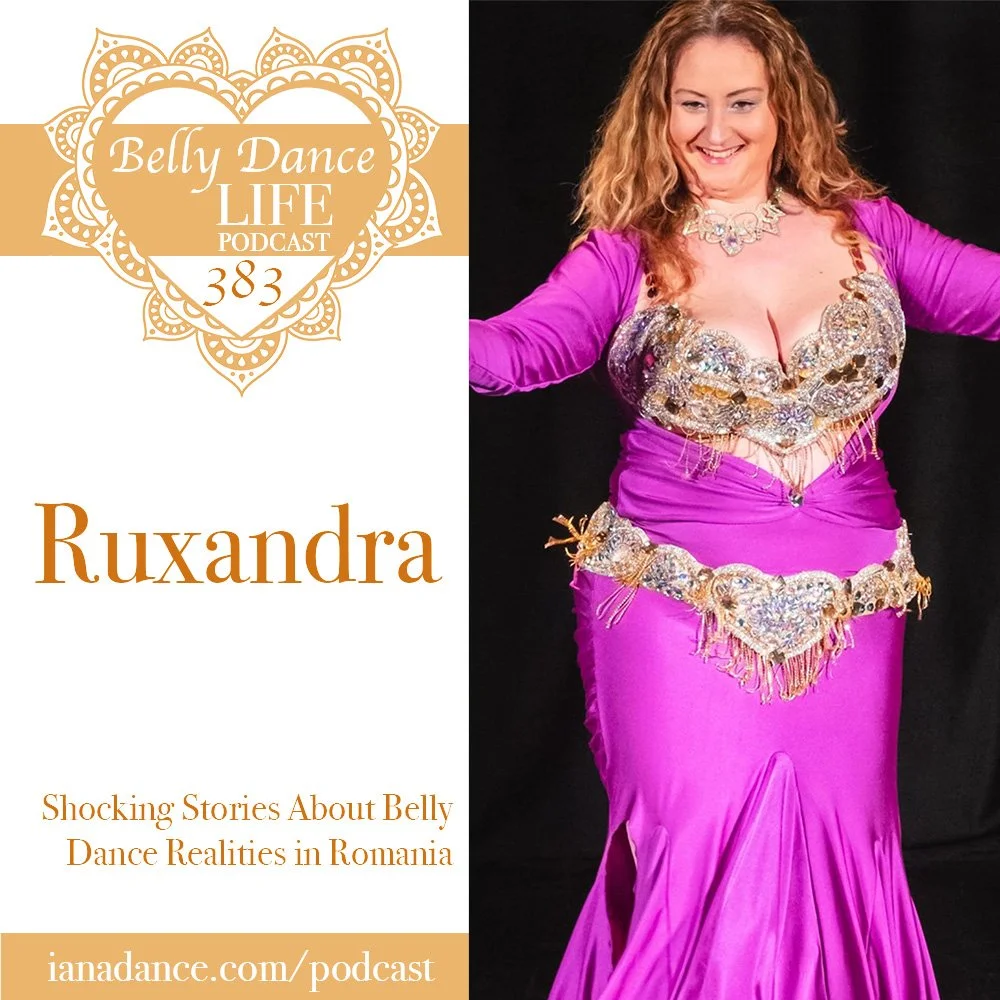
Ruxandra is a Romanian Oriental dance instructor, performer, choreographer, promoter, and storyteller. A graduate of the Floria Capsalli Choreography High School in Bucharest and the Performing Arts Department of Gheorghe Cristea University of Sciences and Arts, she has a strong foundation in ballet and has also studied contemporary, modern, folk, Latin, flamenco, African, and Oriental dance. After living for two years in Egypt and three years in Benin, Africa, Ruxandra came to believe that she did not choose Oriental dance—it chose her. For almost two decades, she has worked to challenge stereotypes surrounding belly dance in Romania, becoming the only teacher in Bucharest to establish dedicated Oriental dance classes for children and creating welcoming spaces where women of all ages can reconnect with their bodies, confidence, femininity, emotions, and joy.
In this episode you will learn about:
Why many women still feel ashamed to admit they take belly dance classes in Romania
The harassment and safety risks belly dancers face while performing
Why teaching belly dance to children remains deeply controversial in Romania
The ways movement can reconnect women with emotions held in the body
Why she created a women’s dabke group as an artistic voice of solidarity

Petite Jamilla is an internationally acclaimed belly dancer, choreographer, instructor, and performer who began her professional career at just 15 years old. Trained from childhood by her mother, folkloric dancer Jamilla Rasa, and further inspired by Polynesian dance, she has dedicated her life to bridging traditional folkloric roots with contemporary belly dance. Petite Jamilla toured internationally for nearly a decade with Bellydance Superstars, where she became renowned for her signature Double Veil performances, served as the company's spokesperson, and briefly held the role of Artistic Director. A multiple award-winning artist, accomplished choreographer, musician, and sought-after teacher, she continues to share her passion for dance through workshops, performances, and creative projects, inspiring dancers around the world with her distinctive artistry and lifelong commitment to the art form.
In this episode you will learn about:
How growing up with a belly dancing mother shaped one dancer's entire artistic journey
What it was like to spend nearly a decade touring the world with Bellydance Superstars
How a fascination with whirling transformed into a signature style of turns and veil work
The emotional transition from an international touring career to motherhood and family life
What it's like to teach belly dance to your own daughter—and let her discover her own voice
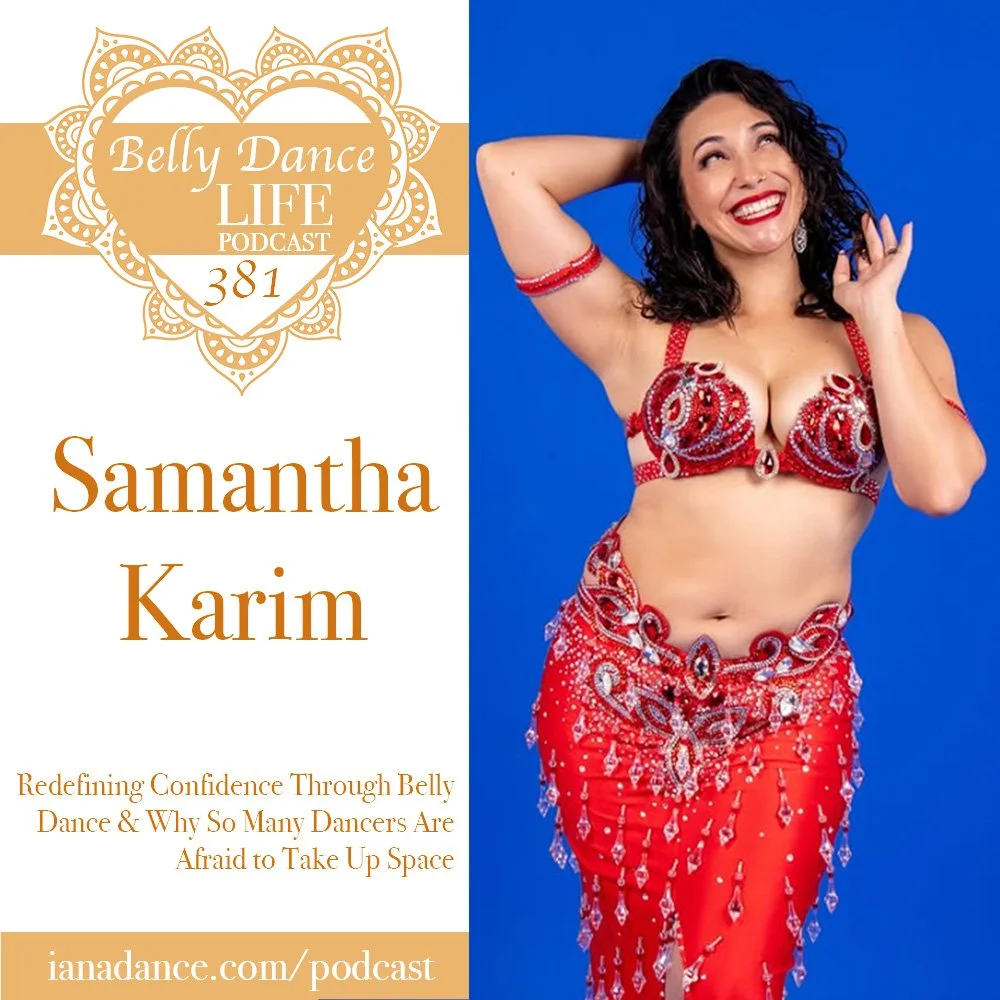
Samantha Karim is an award-winning belly dancer, speaker, coach, and educator dedicated to helping women build confidence, overcome perfectionism, and embrace authentic self-expression. A 2013 USA Belly Dance Queen Champion with more than 20 years of teaching and coaching experience, Samantha combines her extensive background in belly dance with life coaching to help women cultivate body confidence, resilience, and self-trust both on and off the stage. Specializing in supporting high-achieving and perfectionist women through her workshops, speaking engagements, and coaching, she shares practical tools for cultivating body confidence, resilience, and the courage to live unapologetically, inspiring thousands of women to step into their full potential.
In this episode you will learn about:
How an unexpected encounter with Palestinian and Jordanian roommates led to a lifelong passion for belly dance
Why confidence isn't built through dance alone—but through the choices you make while dancing
Practical strategies for overcoming frustration, self-doubt, and mental blocks in class
How perfectionism and people-pleasing quietly hold dancers back from reaching their potential
The mindset shift that helped transform a belly dance teacher into an award-winning coach and speaker
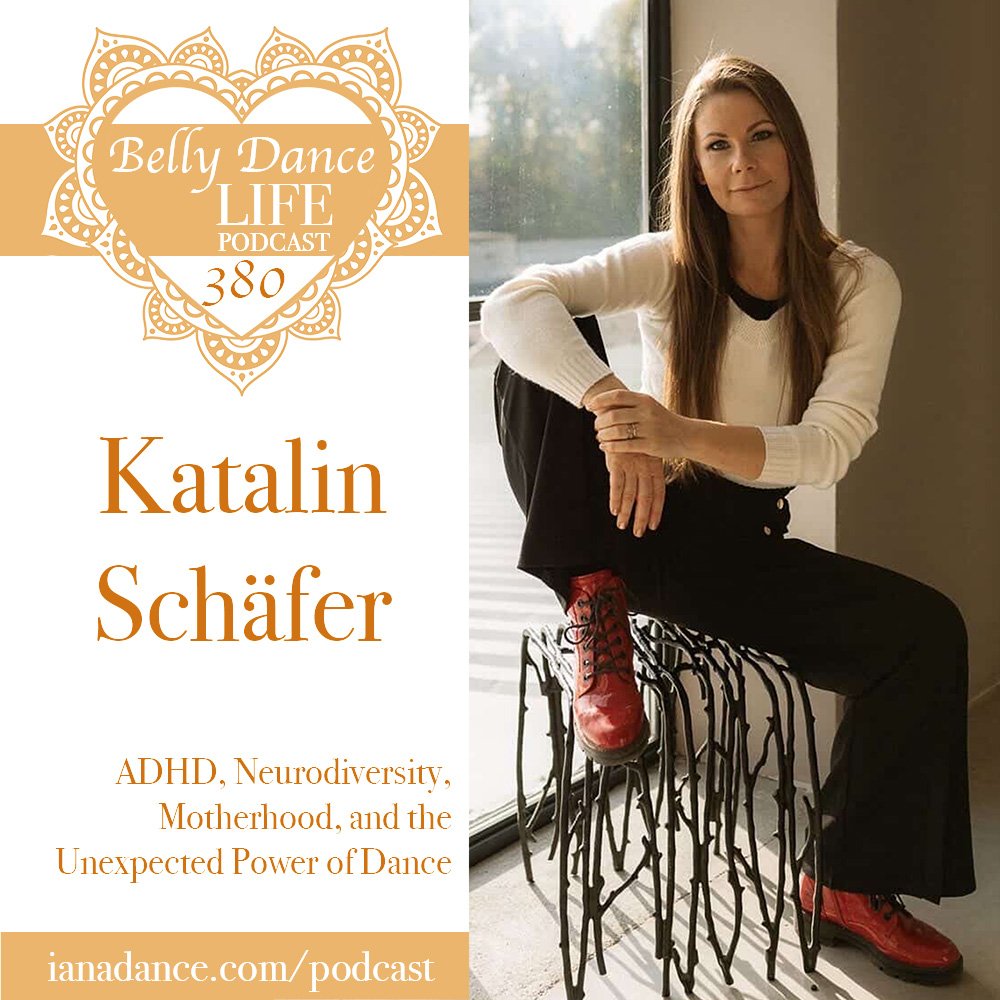
Katalin Schäfer is a Hungarian dancer, choreographer, teacher, costume designer, and psychology student whose work bridges Middle Eastern dance, modern fusion, somatic movement, and self-awareness practices. With more than 20 years of international teaching, performing, and judging experience, she is the creator of the NEUture Dance method, a neuroaffirmative approach that integrates movement, body awareness, creativity, and nervous system regulation. Katalin is the director of GoldenScarf Arabic Folklore Dance Theater, founder of numerous artistic and retreat projects, and an award-winning performer whose career has taken her to festivals and events across Europe, North America, and Asia. Currently pursuing a degree in psychology, she combines her extensive dance background with research into neurodiversity, somatic practices, and personal development, helping participants cultivate authentic expression, resilience, and deeper connection through movement.
In this episode you will learn about:
How an ADHD and autism diagnosis completely changed one dancer’s understanding of herself
Why dance became a healing tool long before she understood the science behind it
The surprising ways neurodivergent traits can become strengths in dance and creativity
The difference between a dance retreat, somatic practice, and actual therapy—and why the distinction matters
The challenges of balancing motherhood, a dance career, university studies, and personal wellbeing
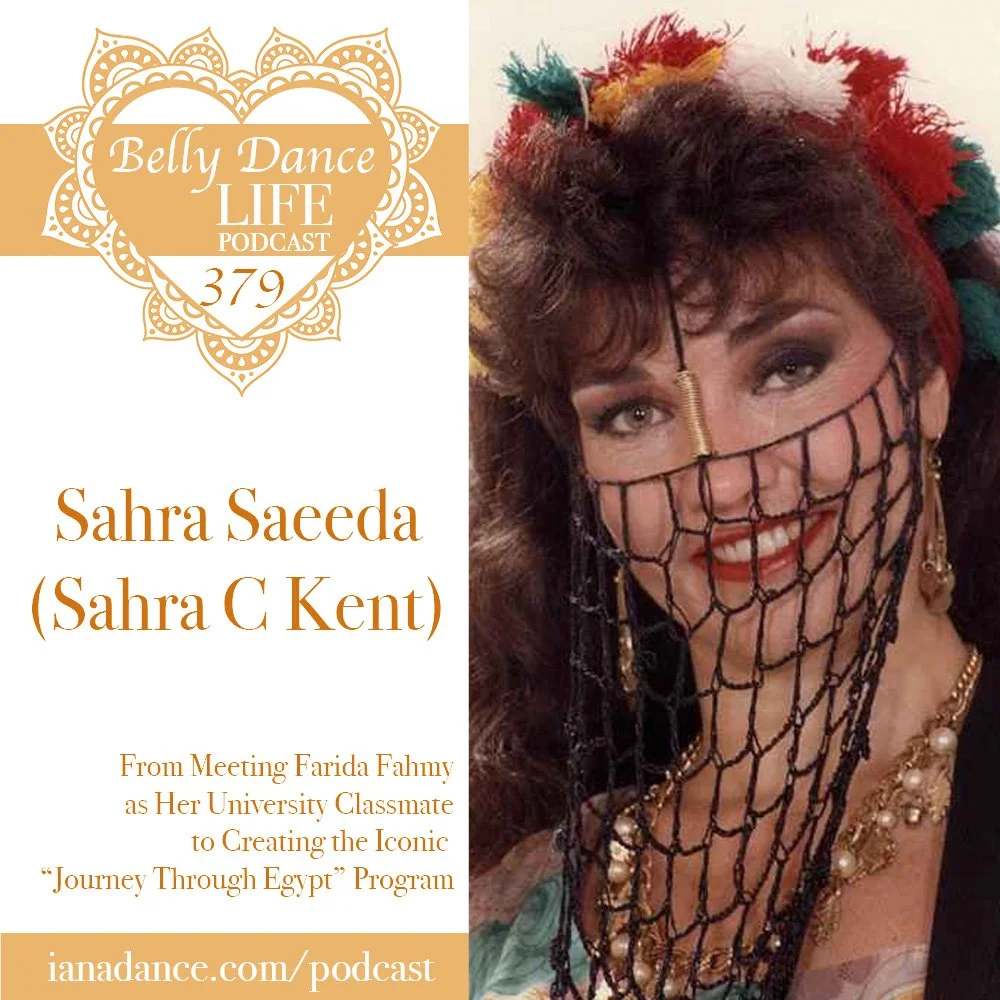
Sahra Saeeda (Sahra C Kent) is an internationally respected belly dancer, researcher, teacher, and choreographer whose career bridges performance, anthropology, and deep cultural study of Egyptian dance. Originally trained in Modern Dance, she later discovered Arabic music and belly dance, eventually building a successful career that included nearly six years performing six nights a week at the Meridian-Heliopolis Hotel in Cairo, completing over 1,600 performances. While pursuing a Master’s degree in Dance Ethnology, Sahra studied and worked closely with Farida Fahmy, whose mentorship deeply influenced her artistic path. She later founded the theatrical dance company Ya Amar! and created the acclaimed Journey Through Egypt program, an immersive educational experience exploring Egyptian dance, folklore, music, and culture through an anthropological lens. Today, Sahra continues to teach workshops, lectures, and Journey Through Egypt worldwide, sharing more than three decades of research and lived experience.
In this episode you will learn about:
What it was like to have Farida Fahmy as a university classmate at UCLA — and the emotional story of unexpectedly meeting an idol
How one “dream performance” in Cairo unexpectedly turned into a hotel contract
What zaffa really means in Egyptian culture — beyond the wedding performance dancers usually see
The hidden symbolic role of the dancer in Egyptian wedding rituals and feminine power
Why folklore research became a lifelong mission — and how it led to “Journey Through Egypt”
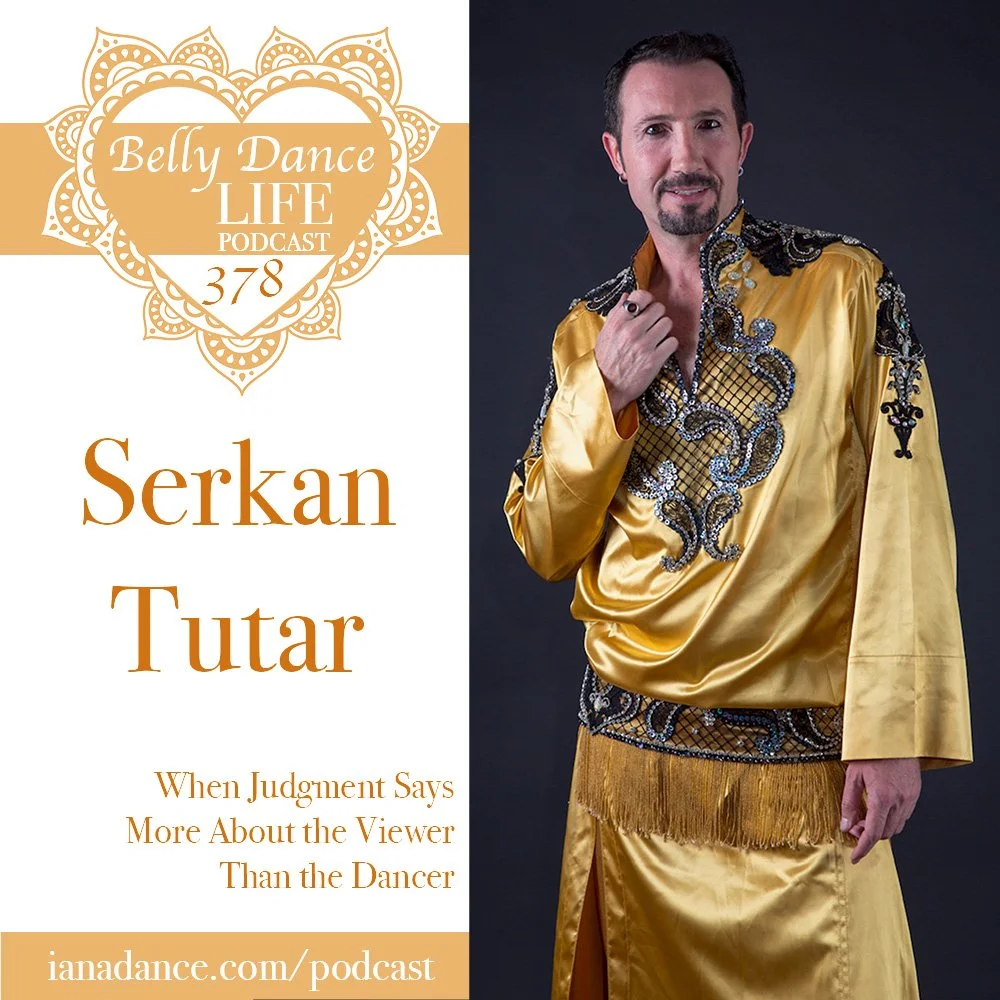
Serkan Tutar is an internationally award-winning Turkish belly dancer, teacher, choreographer, and festival organizer known for his dynamic stage presence and multicultural approach to Oriental dance. Originally from Turkey and now based in Belgium, Serkan discovered his passion for belly dance as a child during his time in Saudi Arabia and was deeply inspired by Middle Eastern music and culture. Winner of Male Bellydancer of the World 2008 and Brandon Oasis 2006, he has taught and performed in over 30 countries worldwide. Specializing in Turkish and Modern Egyptian style, Turkish Romani, Baladi, Saidi, veil work, and his signature “crazy drum solos,” Serkan is also the organizer of the internationally recognized Rakkas Istanbul International Oriental Dance Festival. Known for his warmth, humor, and supportive teaching style, he continues to inspire dancers around the world through workshops, performances, and mentorship.
In this episode you will learn about:
Why jealousy can quietly damage dancers more than competition ever could, and what’s the difference between jealousy and envy from the dance career perspective
The ongoing challenges of being a male belly dancer
Why body type, age, gender, or appearance should never define who gets to dance
The reality of online criticism, keyboard warriors, and how dancers can protect themselves emotionally
Why many “international festivals” are not really festivals—and how this is changing the dance industry
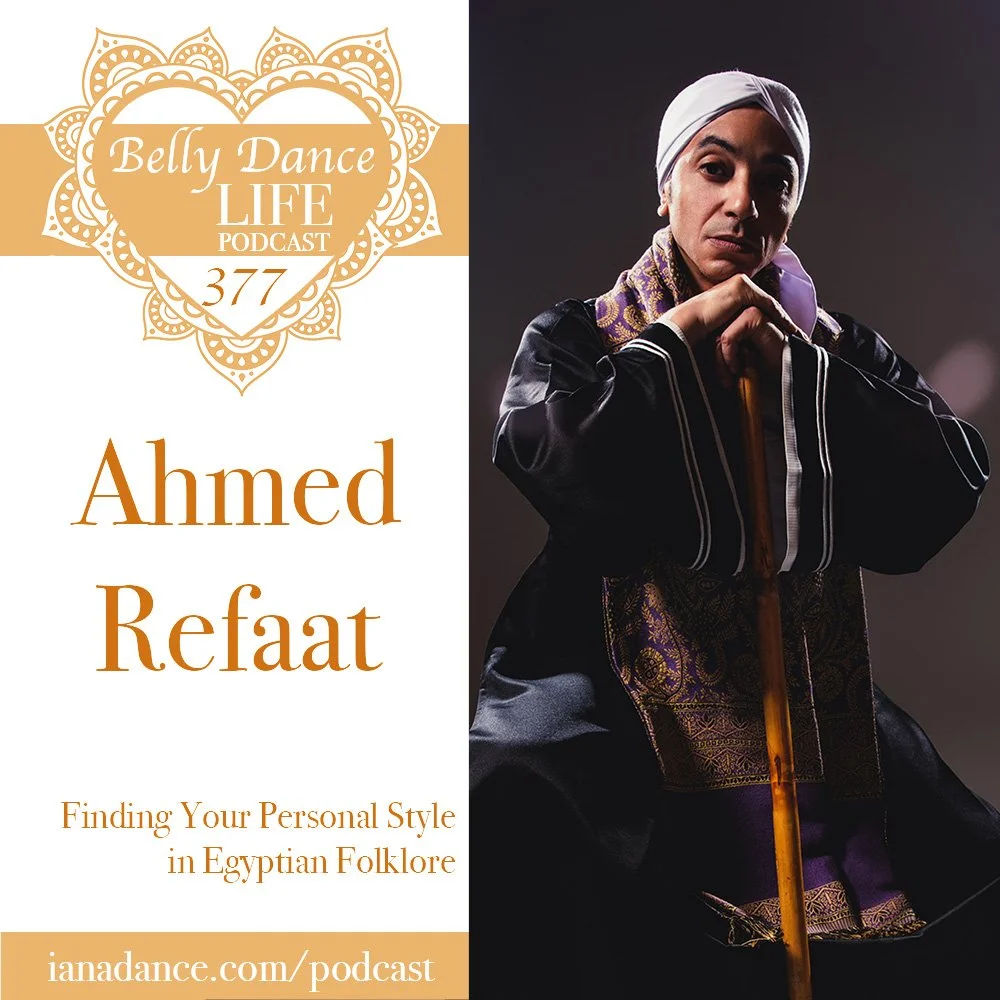
Ahmed Refaat is an Egyptian folkloric dancer, choreographer, and master teacher with over 35 years of experience dedicated to preserving and sharing the richness of Egyptian dance culture. Beginning his dance journey at the age of nine at El Gezira Youth Center under renowned teacher Mokhtar Mustafa, Ahmed later became an instructor himself, training new generations of dancers from a young age. He has performed and taught at major festivals across Europe, Asia, and the Middle East, including appearances in the Mahmoud Reda anniversary performances in Alexandria, Rome, and Madrid. Today, he is a sought-after international teacher, performer, and choreographer, known for his deep cultural knowledge, strong artistic vision, and passion for helping dancers understand not only the movements, but also the feeling, music, and spirit behind Egyptian dance traditions.
In this episode you will learn about:
The difference between folkloric dance and oriental dance—and why mixing them carelessly creates confusion
Why two dancers can use the same technique but feel completely different while performing folklore
How Egyptian choreographers transform real-life movement into stage performance through imagination
The reality of being both an artist and an entertainer—and why there is no shame in that
How studying Egyptian folklore can deeply improve a dancer’s oriental dance
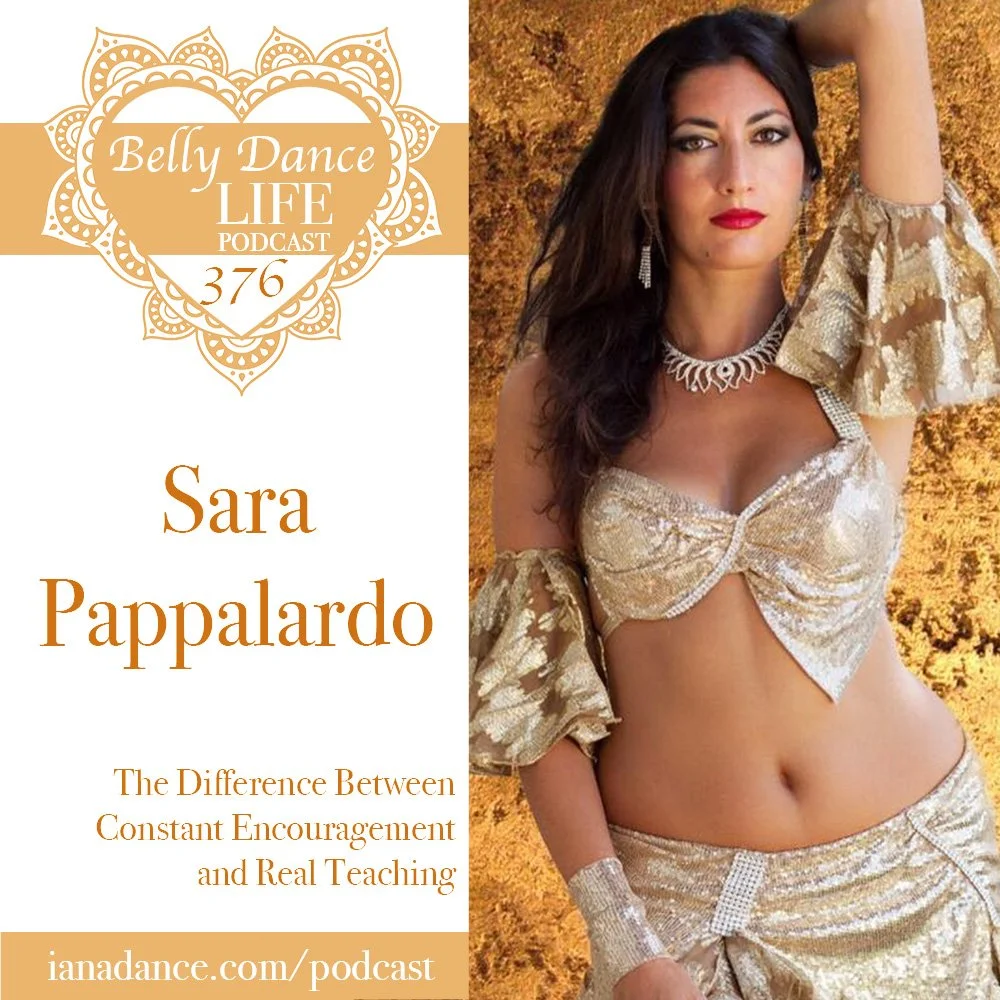
Sara Pappalardo is an Italian Oriental and Bollywood dancer, choreographer, teacher, and festival organizer based in Catania, Sicily. Founder of the dance school Tery al Kubra and artistic director of the internationally recognized Khamsin Festival, Sara is known for blending strong technical foundations with expressive freedom and deep musical understanding. Specializing in Muwashahat, she has also developed her own teaching method for finger cymbals and rhythm, helping dancers build a stronger connection to Arabic music and musical interpretation. Alongside her work in oriental dance, Sara explores Indian dances and fusion styles, bringing warmth, humor, and a deeply personal teaching approach to students across Italy and internationally.
In this episode you will learn about:
Living with endometriosis for over 20 years—and how belly dance became therapy, healing, and body acceptance
What studying Indian classical dance taught Sara about discipline, focus, and falling back in love with dance
Why good teachers should sometimes say “you’re not ready yet”—and why that can be a gift
How finger cymbals can completely transform a dancer’s understanding of rhythm and musicality
The beauty of fusion dance—and how mixing influences can become a way of expressing your full self
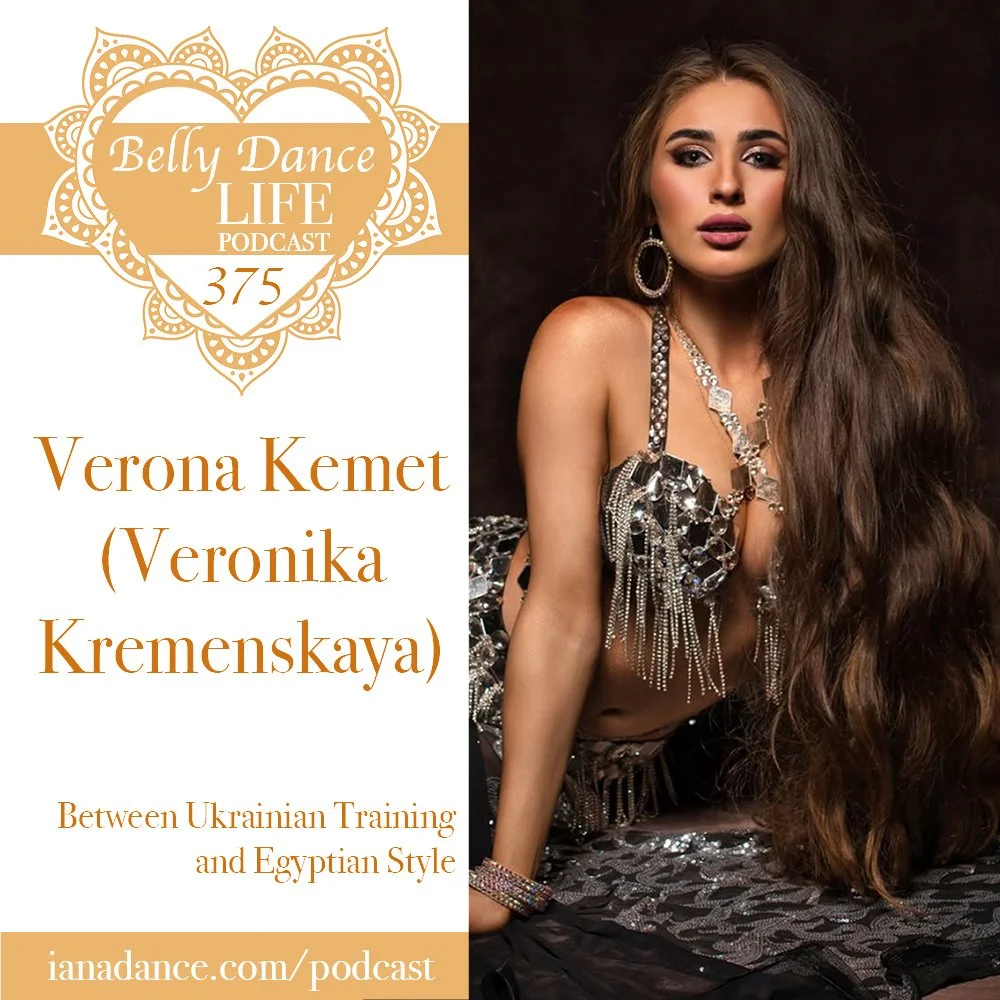
Verona Kemet (Veronika Kremenskaya) is a Ukrainian belly dancer, known for her strong musicality, expressive style, and deep connection to Egyptian dance aesthetics. She has taught workshops and master classes across Europe, the Middle East, Asia, and Latin America, including Spain, Italy, Korea, Saudi Arabia, Kuwait, Lebanon, Brazil, and Egypt. A highly accomplished competitor, Veronika is the winner of the Royal Crown at Cleopatra Festival 2025, among many other international events. Her artistic style has been shaped through long-term study with renowned Egyptian masters including Mohamed Shahin, Khaled Mahmoud, Kareem Gad, and Sahar Samara, blending technical precision with a strong commitment to musical interpretation and authentic oriental dance.
In this episode you will learn about:
Growing up in Ukraine and choosing belly dance over every other style at just six years old
Training, competing, and continuing festival life while navigating war, blackouts, and daily instability
Finding an artistic identity between Ukrainian training and Egyptian style
The difference between “just improvising” and truly knowing how to improvise
The pressure of beauty standards in modern belly dance—from tanning to stage makeup and image expectations
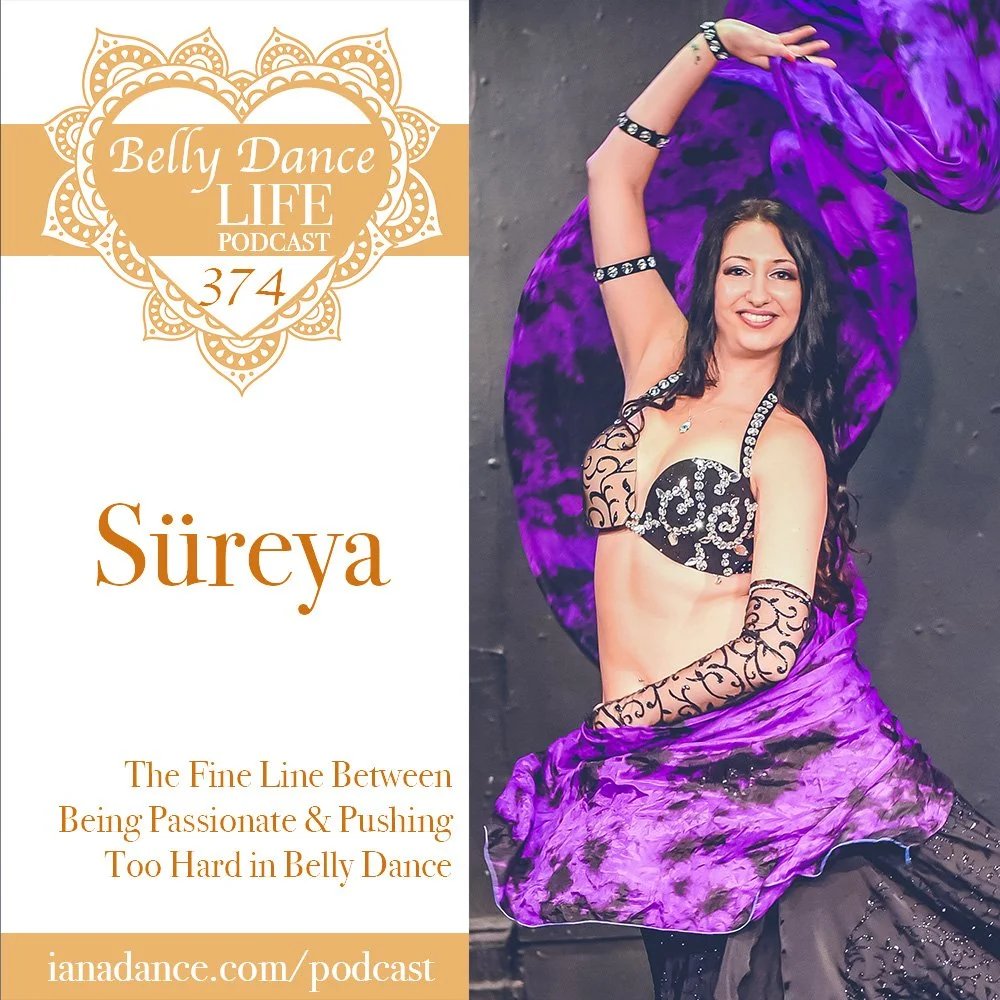
Süreya is a London-based, internationally recognized Turkish belly dancer, choreographer, and instructor known for her dynamic stage presence, strong musicality, and versatility across multiple Middle Eastern dance styles. Deeply connected to her Turkish cultural roots, she has trained extensively in Turkish, Egyptian, Lebanese, Iraqi, and Khaleegy dance, as well as ballet and theatrical fusion. A multi-award-winning performer, Süreya has taught and competed in over 10 countries, including Turkey and Egypt, earning recognition at major international festivals and competitions such as Rakkas Istanbul, the International Belly Dance Battle, and Dum Tak Festival. Alongside performing at prestigious venues and events across the UK and internationally, she is also known for her passionate teaching style, commitment to continuous learning, and dedication to sharing authentic oriental dance with new generations of dancers.
In this episode you will learn about:
Growing up loving belly dance in Turkish culture while feeling pressured to hide it
How burnout affects dancers mentally more than physically—and ways to recover from it
Why nutrition, fitness, and structure become essential for sustaining a dance career
The importance of lifelong learning and studying with many different teachers
Competing in nine categories while unknowingly dancing with pneumonia—and the reality behind pushing too hard
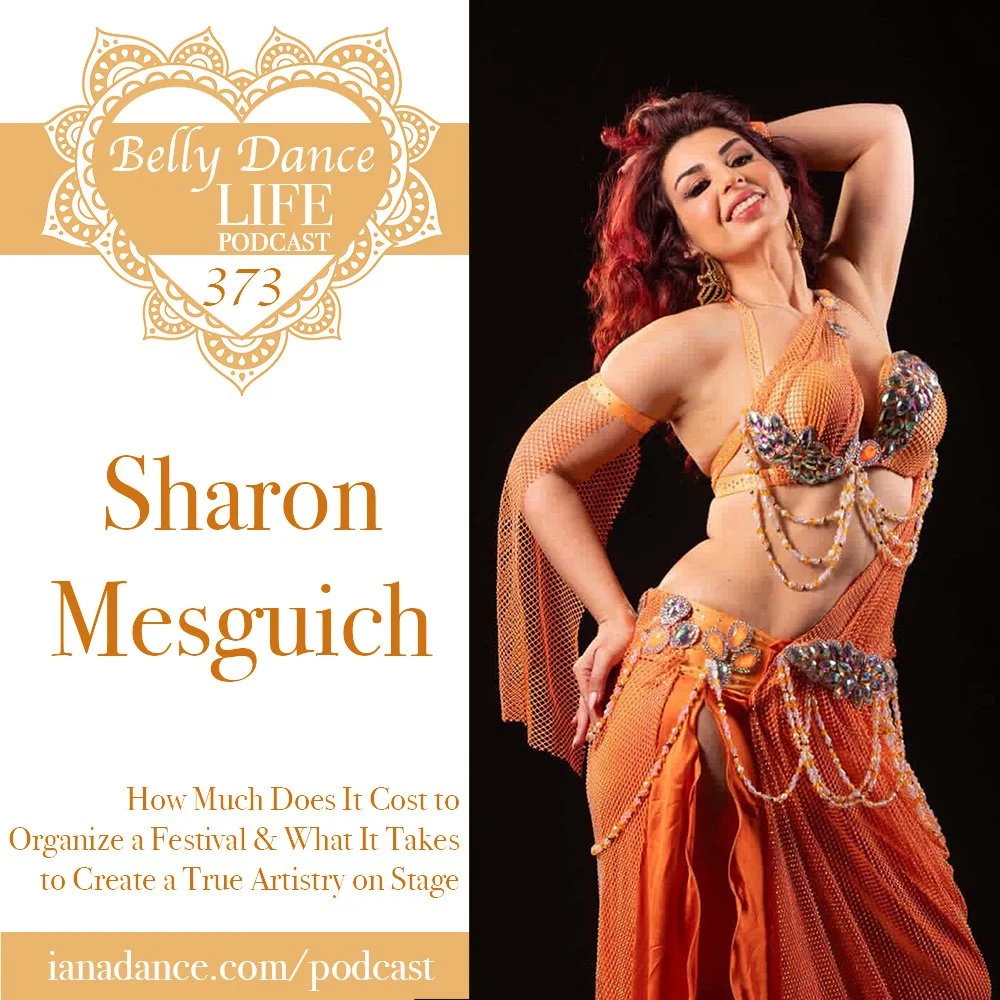
Sharon Mesguich is a French, Tunisian, and Algerian belly dance artist, teacher, and festival organizer known for her dynamic stage presence and deep connection to Egyptian style. Introduced to oriental arts from a young age, she discovered belly dance in 1999 and has since built an international career, performing at major venues and events while teaching across Europe, the Middle East, Asia, and beyond. She trained extensively in Egypt with renowned masters such as Dina, Mahmoud Reda, and Mayodi, shaping her musicality, technique, and expressive style. In 2004, she founded her school “Les Danseuses du Sinaï” in Montpellier, and later created the Oriental Marathon Festival, now one of the leading belly dance events in France. Known for her energy, generosity, and strong artistic identity, Sharon is dedicated to preserving the essence of oriental dance while supporting new generations of dancers through performance, education, and community.
In this episode you will learn about:
What it really takes to organize a large-scale belly dance festival—and why it’s far more complex than it looks
The behind-the-scenes reality of hosting a dance cruise, from logistics to unexpected chaos
How improvisation in belly dance is not truly “improvised”—but built on deep musical knowledge
The difference between dancing steps and creating a real emotional connection on stage
How to develop your own style by learning from many teachers without copying them
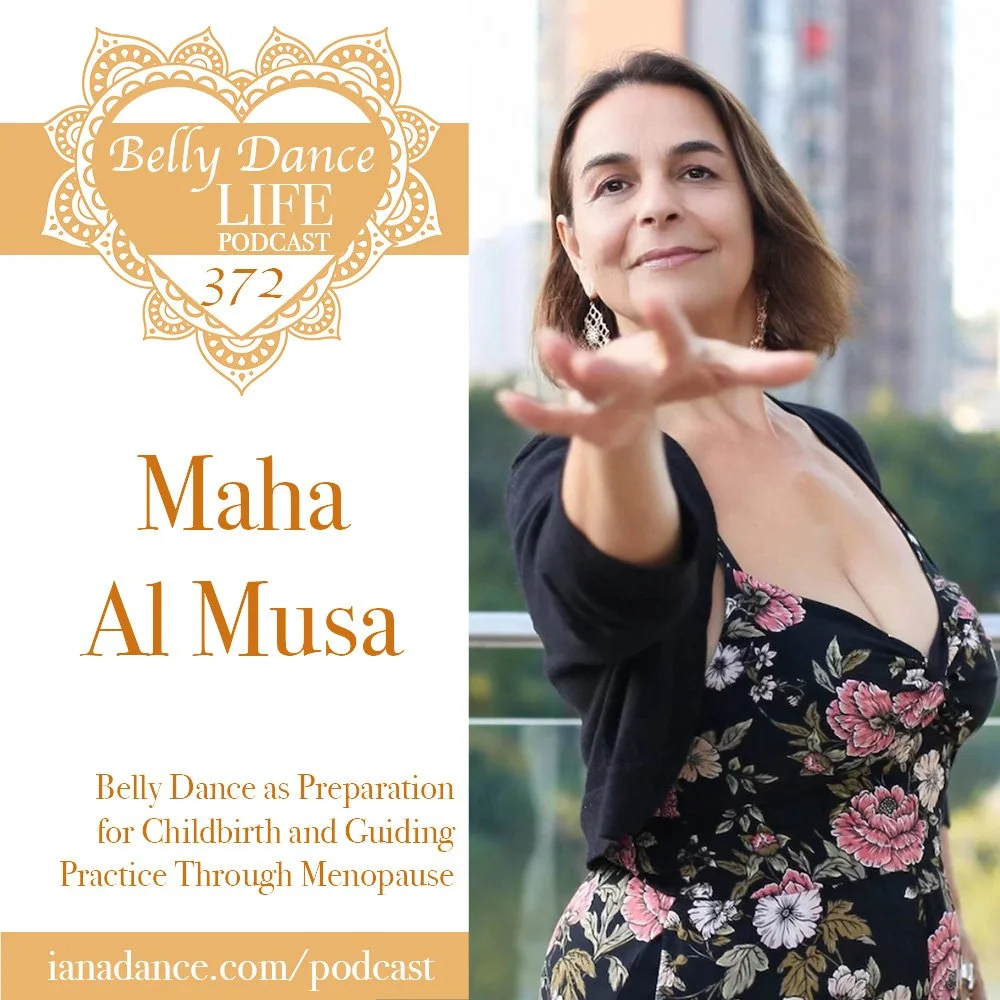
Maha Al Musa is an award-winning international childbirth educator, speaker, and the founder of EmbodyBirth and BellydanceBirth®, a pioneering approach to pregnancy and birth preparation she has been teaching since 1997. A leading advocate for natural birth, breastfeeding, and women’s embodied wisdom, she is the author of the acclaimed book Dance of the Womb: The Essential Guide to Belly Dance for Pregnancy and Birth, along with a widely recognized practice video series. Maha has presented at major conferences and institutions worldwide, sharing her work across Australia, the USA, India, and China. A mother of three, she is known for integrating personal experience with decades of teaching, including giving birth to her daughter at 46 in a home water lotus birth. Her work has received international awards and endorsements from respected figures in the birth community, and continues to influence both mothers and birth professionals globally.
In this episode you will learn about:
Why most women are disconnected from their bodies—and how dance can rebuild that trust
Reasons why traditional belly dance was never about choreography—but about energy, emotion, and shared presence
Why professional belly dancers often struggle with birth—and the impact of muscle tension and control
How fear, medical systems, and external authority can disconnect women from their own instincts
Approaching menopause as a powerful rite of passage rather than decline
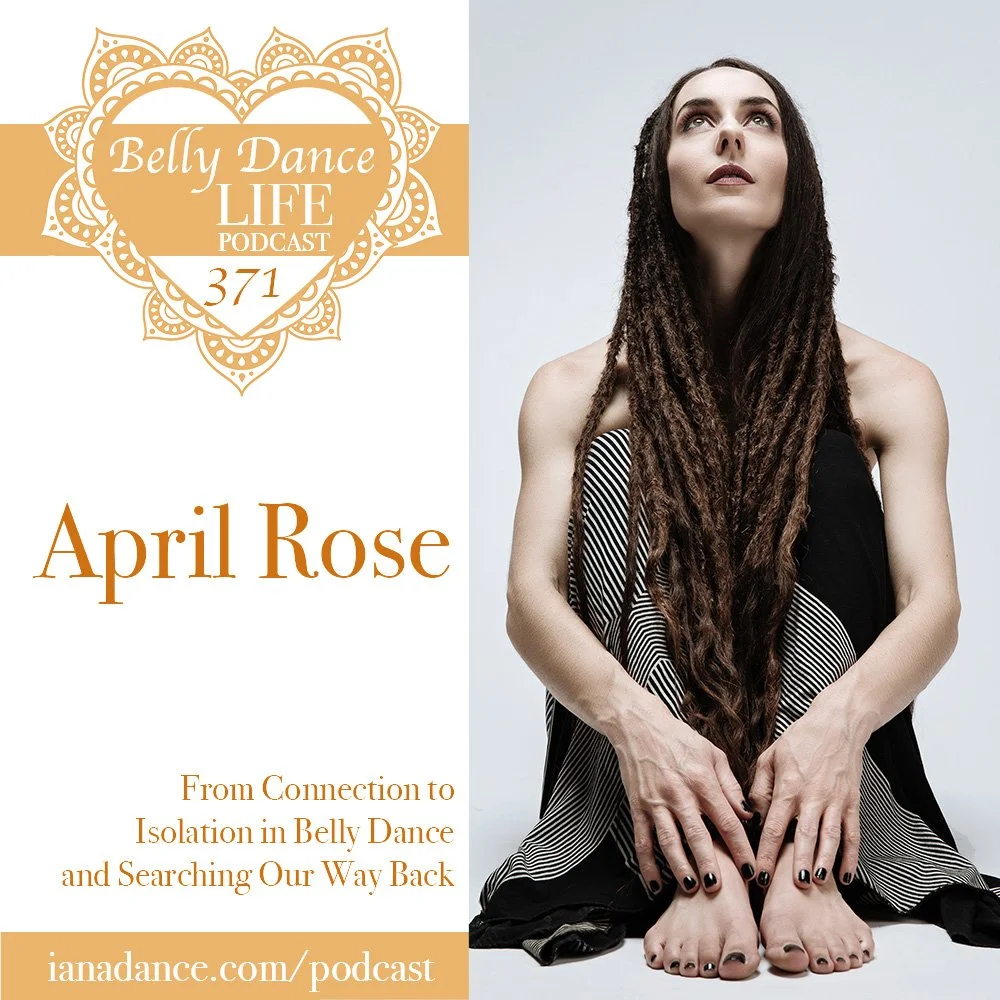
April Rose is a belly dancer, teacher, and creator of the Dance Cohesion method, known for her precise technique, integration of finger cymbals and frame drum, and emphasis on group improvisation and musical connection. Based in Austin, Texas, she has taught and performed in over 25 countries, sharing a fusion approach rooted in Middle Eastern, North African, Turkish, Hellenic, and Central and South Asian dance influences. With a background that includes a bachelor’s degree in Dance and a master’s in Culture and Performance from UCLA, April combines academic research with embodied practice, exploring dance as a tool for presence, creativity, and human connection. She is also the founder of the Boss Bellydancer training program, where she mentors dancers in building sustainable and meaningful professional careers.
In this episode you will learn about:
What multi-generational dance spaces can teach us beyond technique
How alternative dance communities expanded ideas of beauty, identity, and self-expression
The balance between respect for cultural roots and freedom to explore the dance
The reality of building a sustainable dance career without burnout
Why dance is ultimately a practice of presence, creativity, and human connection
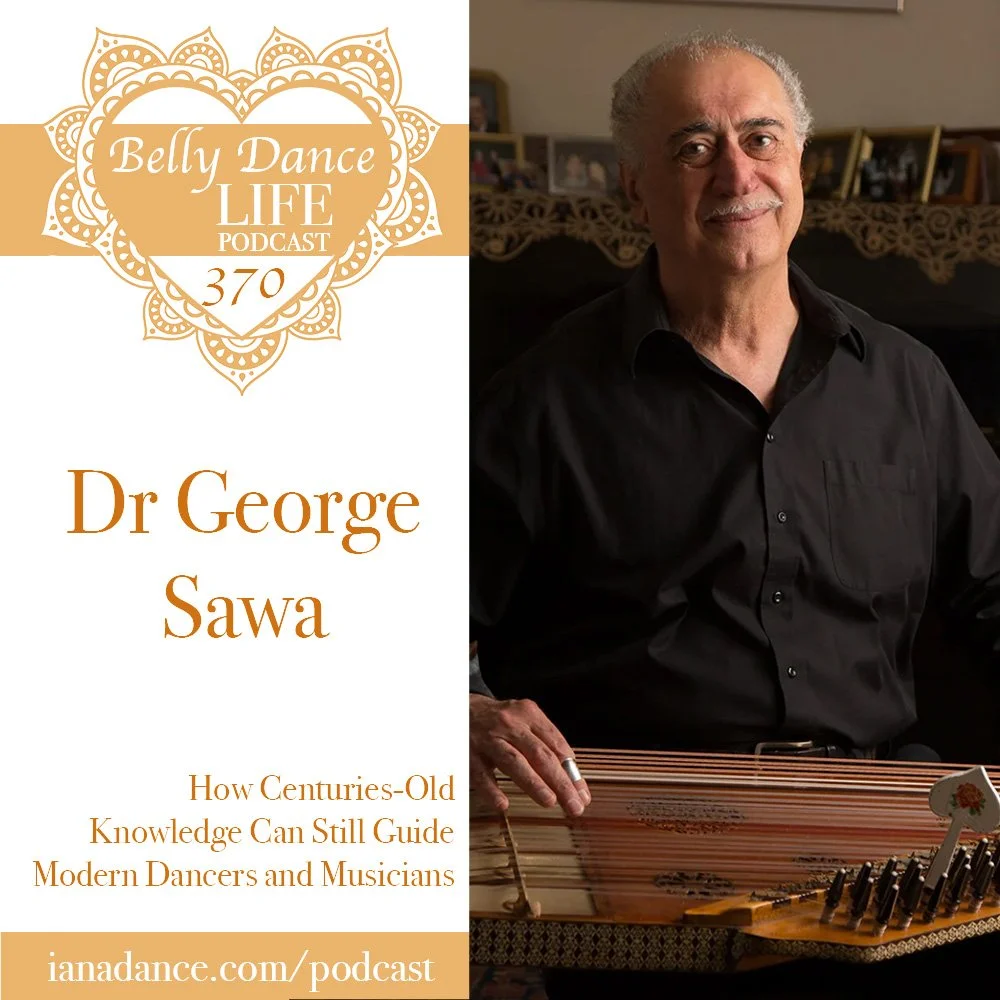
Dr. George Sawa is an internationally recognized musicologist, performer, and educator specializing in Arabic music history, theory, and performance. Born in Alexandria, Egypt, he brings over 50 years of experience, with training from the Higher Institute of Arabic Music and a PhD in historical Arabic musicology from the University of Toronto. He has taught at the University of Toronto and York University, and lectured and performed worldwide. A prolific author on medieval and modern Arabic music, his work bridges historical research with contemporary practice and has become an important resource for the dance community. He was awarded the Lifetime Achievement Award by the Egyptian Ministry of Culture for his contributions to Arabic music research.
In this episode you will learn about:
How translating 11th-century Arabic music dictionaries reveals detailed insights into dancers, musicians, and aesthetics of that time
Why even medieval musicians warned dancers about tricky drummers—and the importance of knowing the music
The reality of fusion in history—and why some combinations worked while others failed
How European influence shaped Egyptian music and led to the rise of large orchestras
Why modern dancers struggle to interpret older music—and what is required to truly dance to it
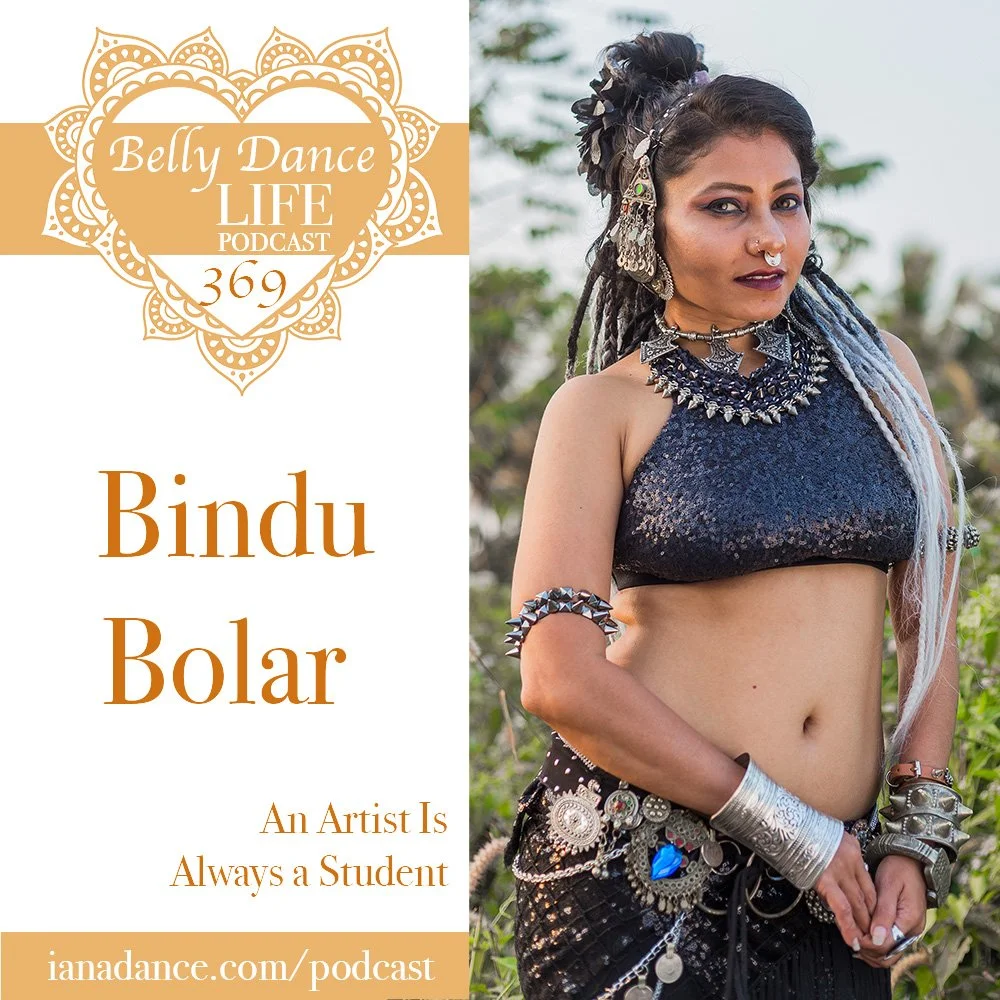
Bindu Bolar is an award-winning Indian dance artist and a pioneer of Tribal Fusion Belly Dance in her country, known for creating her signature style, “Belly Animation,” which blends belly dance with popping and animation. She is the founder and artistic director of Lights Camera Dance in Bangalore and has built an international career as a performer and teacher, leading workshops across the USA, Europe, and Asia. After initially balancing a career in software with dance, she chose to fully pursue her artistic path despite social pressures. Bindu has trained with leading figures including Rachel Brice, Zoe Jakes, and Carolena Nericcio, and was the first Indian dancer to win an International Belly Dance title in the Solo Tribal category. She continues to evolve as an artist and educator, with a strong focus on individuality and lifelong learning.
In this episode you will learn about:
Why movement can become a form of communication beyond words
What it means to move beyond technique and become an artist who makes people feel
The reality of pursuing dance in a conservative environment—and the stigma around belly dance
How dancers navigate family pressure, social judgment, and career risks
Reframing success and failure into milestones and lessons in a lifelong artistic journey
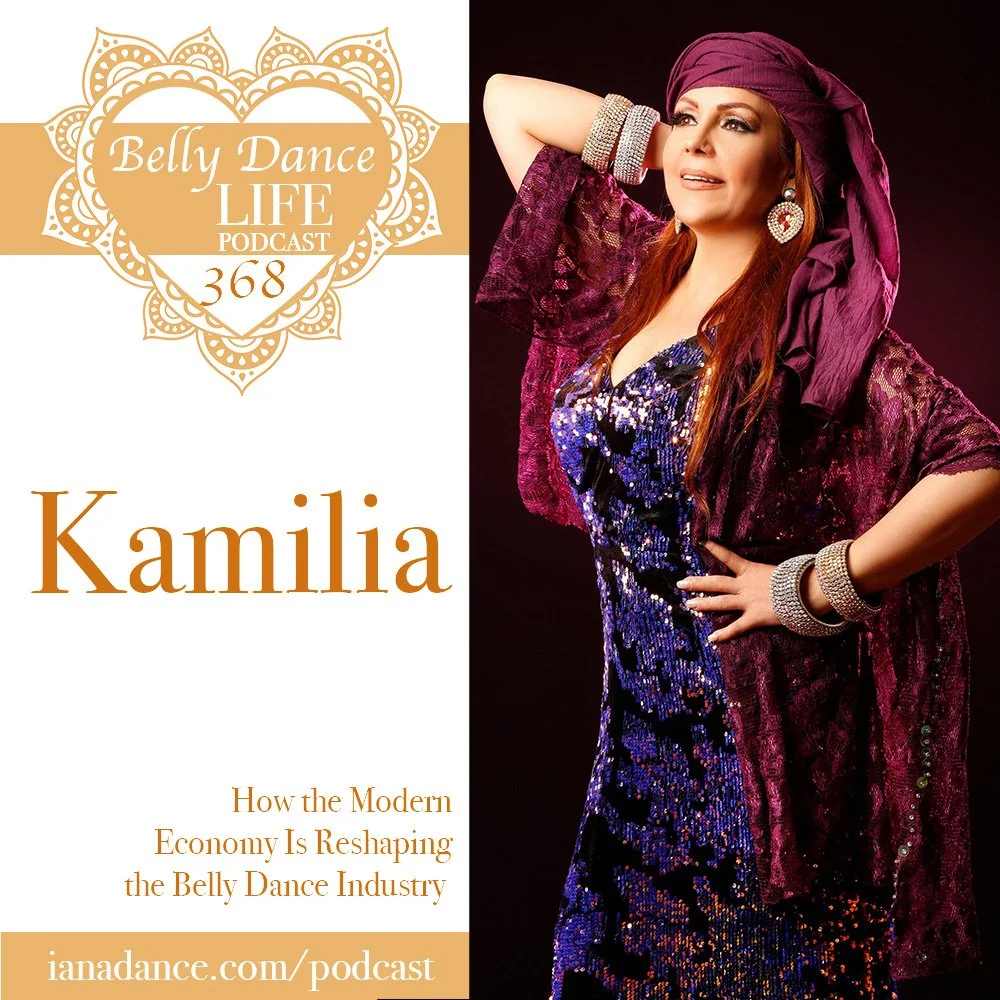
Kamilia is a Brazilian-born belly dancer who built an international career performing across Lebanon, the United Arab Emirates, and Egypt, where she became known for her powerful stage presence and deep connection to Oriental music. Beginning her dance journey at the age of six, she went on to become one of the youngest dancers featured on LBC TV and trained under renowned figures including Caracalla. At the height of her performance career, she appeared in top five-star hotels in Cairo, sharing stages with icons such as Lucy, Mona Said, Fifi Abdou, Dina, and Hendeya, and performing with large live orchestras of up to 45 musicians. Today, Kamilia works as a teacher, artistic producer, and event organizer, dedicated to building a supportive and professional global dance community.
In this episode you will learn about:
How Oriental dance has shifted from local Arabic dominance to a global, foreign-led scene
How economic changes transformed belly dance performances into shorter, simplified formats
What does it mean to be prepared for the dance improvisation
Why foreigners must train their ears differently to truly understand Arabic music
What it means to remain a “forever learner” after 30+ years in dance
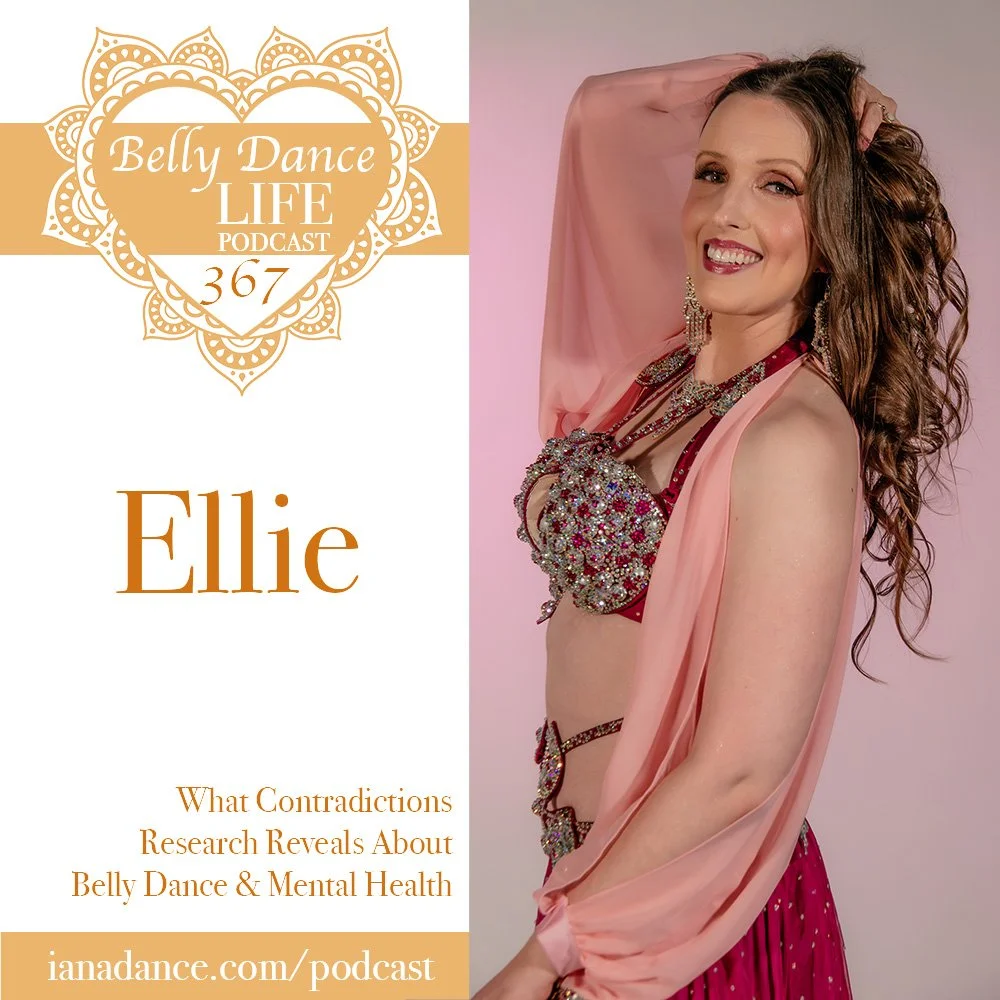
Ellie is a belly dancer, teacher, and researcher who approaches Raqs Sharqi with a deep respect for its cultural roots and a focus on connection through movement. Dancing since childhood, she discovered belly dance in 2014 and has since spent over years teaching and performing, cultivating a practice centered on confidence, femininity, and ongoing learning. Alongside her dance career, Ellie holds a PhD in Mental Health and brings a research-based perspective to understanding the psychological and emotional experiences of dancers. She has trained and certified with leading international instructors, including Kaeshi Chai and Keti Sharif, and further deepened her connection to the dance through studies in Egypt and Turkey.
In this episode you will learn about:
Why belly dance can feel both empowering and intimidating at the same time
The difference between hobbyists and professionals — and the hidden pressures of making dance a career
The darker side of the dance world — competition, insecurity, and even bullying within the community
Simple but powerful tools for self-care — from shimmies to emotional awareness
And how belly dance continues to create connection, belonging, and a sense of home across the world
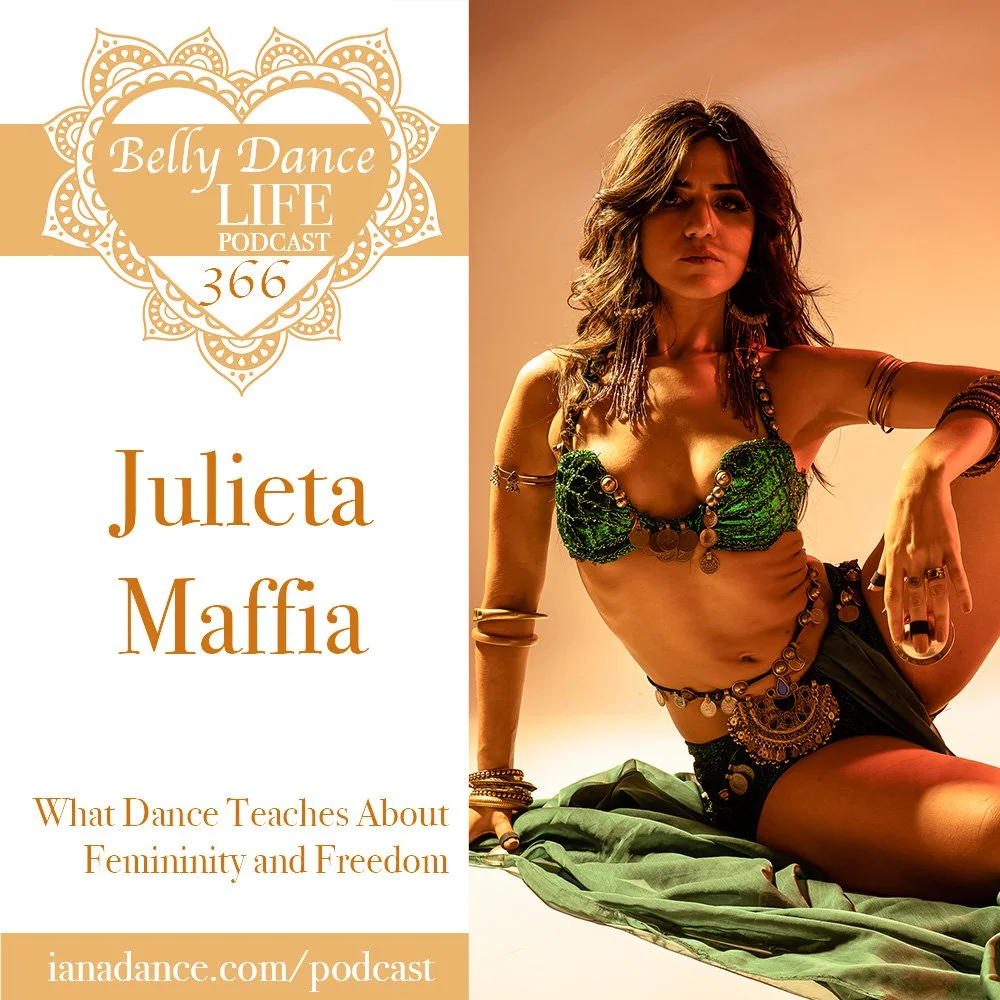
Julieta Maffia is a dance artist from Buenos Aires, Argentina, specializing in what was formerly known as Tribal Fusion Bellydance. She is the founder of Saturnus Studio, where she teaches regular classes and develops a wide range of artistic projects. Her work has been recognized internationally, allowing her to present the Argentinian approach to this dance form across different cities worldwide. Through her travels, Julieta continues to expand and refine her artistic voice, integrating diverse influences into her creation, teaching, and performance.
In this episode you will learn about:
The ongoing search for femininity and sensuality beyond stereotypes and expectations
How politics and media shaped public perception of belly dance in Argentina
Why growth happens through discomfort, failure, and real performance experience
How stage performance can unlock a level of freedom unavailable in daily life
Why workshops inspire—but real transformation happens through consistent training
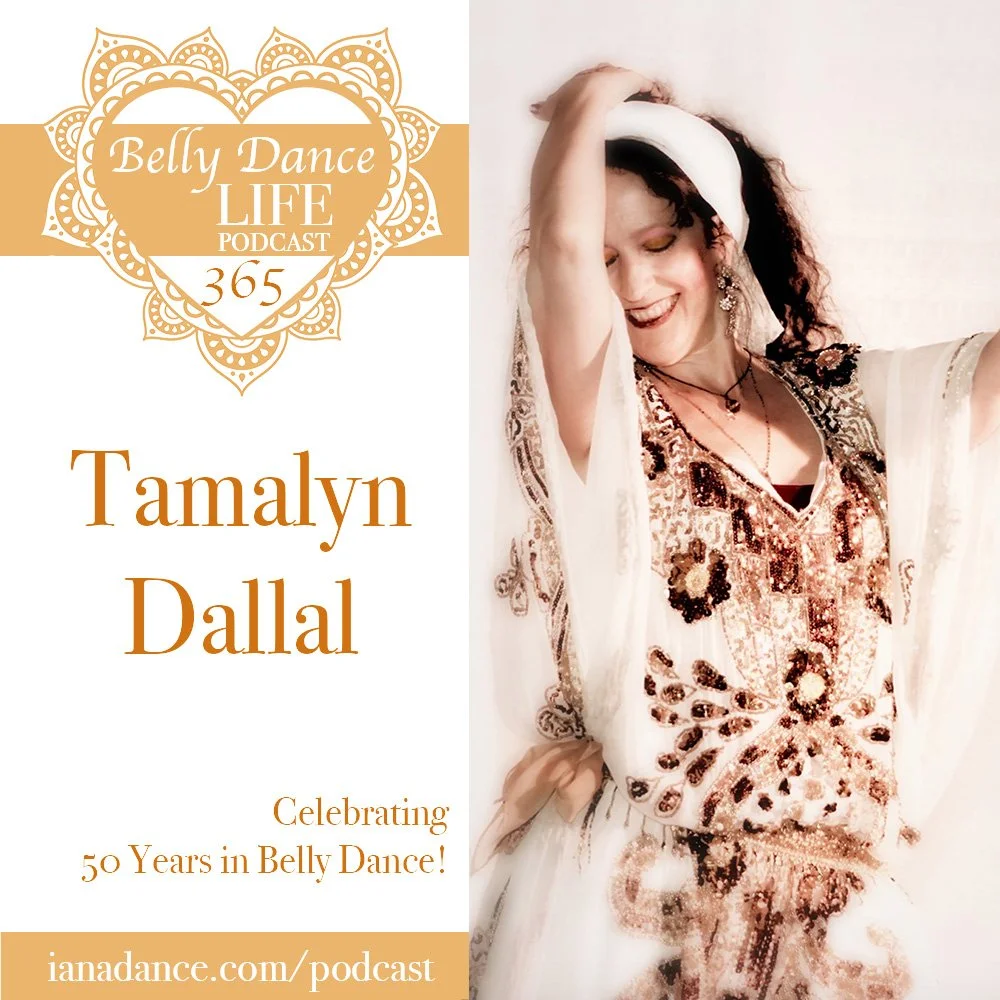
Tamalyn Dallal is an internationally renowned belly dancer, teacher, and author celebrating over 50 years in dance. She began her career in 1976 and toured South America in the 1980s performing for Arab communities before founding the Mid Eastern Dance Exchange in Miami Beach, a nonprofit school and performing company that operated from 1990 to 2007 and trained many professional dancers. She later created and produced the Orientalia International Dance Festival for 14 years, presenting leading artists from around the world and expanding the festival internationally. Tamalyn has performed or taught in 44 countries, was one of the original Bellydance Superstars, and has written four books, produced music recordings, and directed ethnographic dance films including Zanzibar Dance, Trance and Devotion and Ethiopia Dances for Joy.
In this episode you will learn about:
What it means to celebrate 50 years in belly dance and how the industry has transformed over five decades
How teaching online requires a completely different kind of presence, connection, and preparation
How choreography can expand a dancer’s vocabulary—but why true performance must go beyond memorized steps
The challenge of comparison in the age of Instagram—and why individuality matters more than perfection
How dancers can adapt to trends without losing their artistic voice
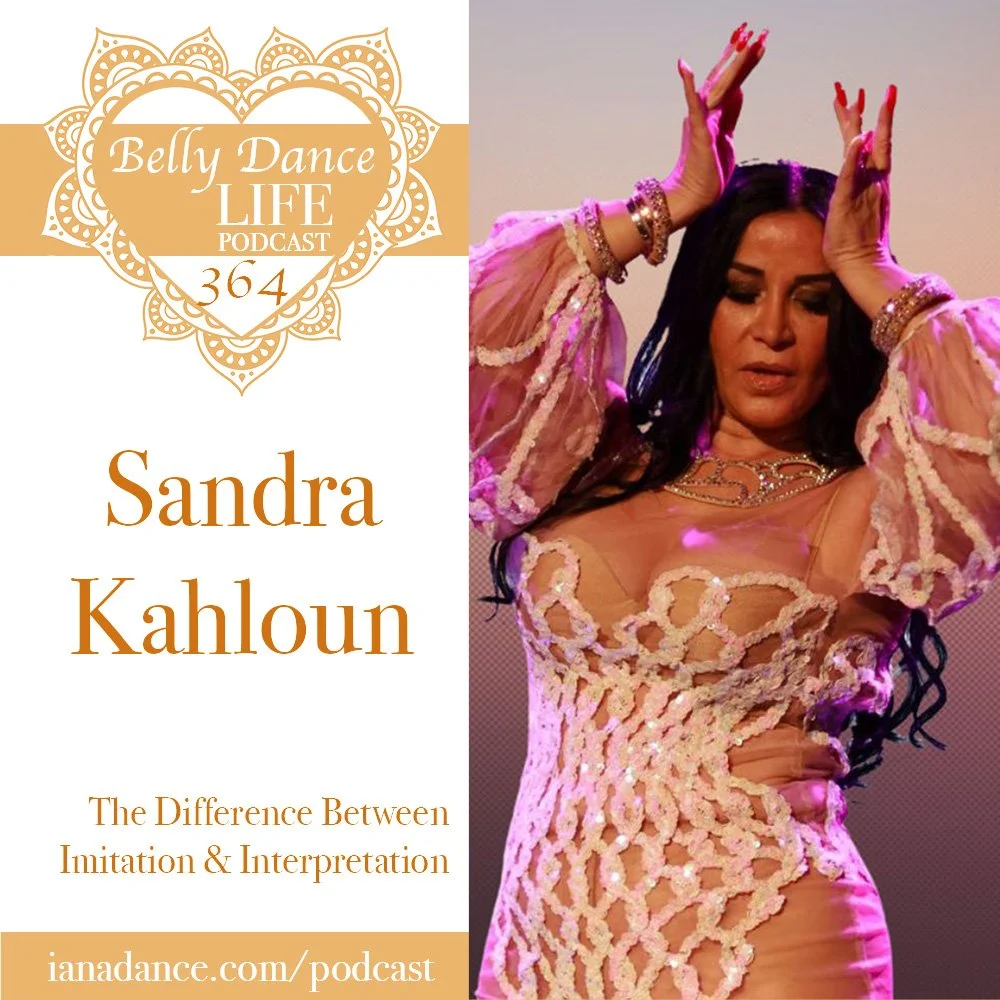
Sandra Kahloun, born in Tunisia and raised in the world of Oriental music, grew up surrounded by some of the greatest names of Egyptian art. Her father produced the renowned Egyptian orchestra Abdel Aziz Mahmour in 1970s Paris, and her mother was an interpreter of Oum Kalsoum’s repertoire, giving Sandra a deep musical foundation from childhood. She trained extensively in Cairo with masters such as Ibrahim Akef and Sammy Abdelhalim, studying dance and repertory for over a decade at the Theatre and Arts Academy of Cairo. In 1986, she created “Sandra’s Method,” a codified teaching system centered on musical interpretation, repertory structure, and improvisation. Founder of one of the largest Oriental Dance Academies on the Côte d’Azur, she has trained dancers and choreographers worldwide and is known for her rigorous musical standards, technical precision, and dedication to preserving the depth and integrity of Egyptian dance traditions.
In this episode you will learn about:
Why classical belly dance is making a comeback — and why more students now crave musical depth over trends
The difference between copying choreography and truly interpreting a song
What it really means to be a teacher — and why great dancers are not automatically great educators
How Sandra’s structured method trains dancers for improvisation, not memorization
Why festivals and quick workshops cannot replace long-term musical training
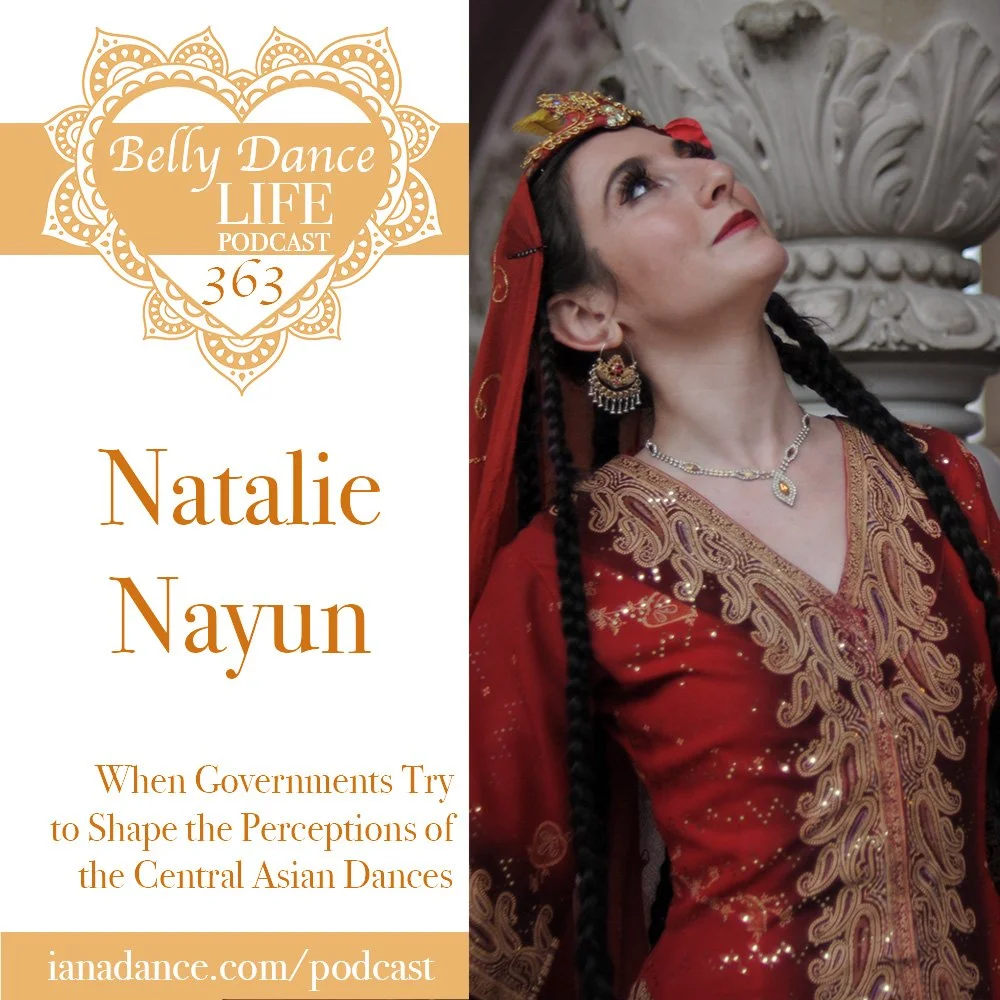
Natalie Nayun is an international teacher and performer specializing in contemporary and folkloric dance traditions from Central Asia and the Middle East. With over 20 years of dance experience and 15 years of teaching, she has studied extensively in Uzbekistan, Tajikistan, Turkey, and Oman, conducting research and training through grants including the HAAS Scholar Award, CLS, and FLAS for Persian language study. She is a well-known soloist and Assistant Director of Ballet Afsaneh, choreographer for the UC Berkeley Central Asian and Middle Eastern Dance Company, Sorayya, and former director of Adara Dance Company. Natalie has completed residencies with state dance ensembles in Tajikistan and Uzbekistan and continues to travel regularly to the region for research and collaboration.
In this episode you will learn about:
The powerful difference between social dance and theatrical folk versions shaped by government agendas
What Natalie discovered studying in Tajikistan and Uzbekistan: 5 a.m. training, government ensembles, village libraries — and people drumming on tables to show her their dance
How weddings, birth rituals, and even mourning ceremonies keep dance alive as a lived, communal practice
The creation of a global online platform dedicated to the Central Asian dances, which supported 40+ teachers worldwide during the pandemic time and afterward
Why art is often the first thing silenced by governments— and what that reveals about its power
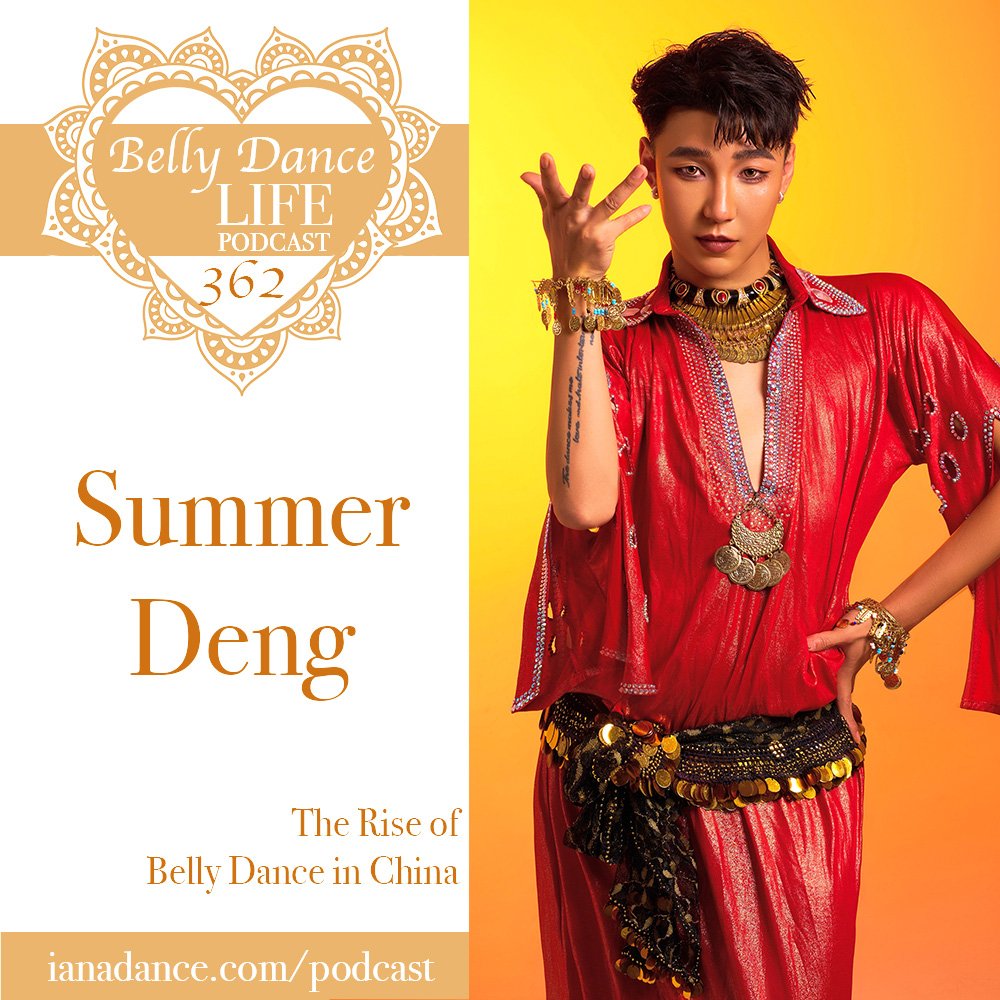
Summer Deng is one of the most sought-after Chinese professionals in the world of Oriental dance, celebrated for his exceptional technical precision, artistic expression, and groundbreaking contributions as a male dancer. He has performed, taught, and judged across Asia, Europe, the Middle East, and the Americas, conducting hundreds of workshops and intensives in over 80 cities in China alone. Known for his versatile style—blending high-energy, dramatic movements with fluid, intricate technique—he has inspired countless dancers through his masterclasses, helping them grow, transform, and deepen their connection to Oriental dance. Winner of the Gold Award at the Nagwa Fouad Cup in South Korea and top honors at Raks Shakki in France, Summer continues to break traditional gender barriers and mentor a new generation of dancers worldwide.
In this episode you will learn about:
What it meant to be one of the first male belly dancers in China—and face 10 years of silence from his family
Why Summer walked away from Chinese classical dance to fully devote himself to Raqs Sharqi
How copy-paste choreography culture is weakening artistic identity in China
His mission to build a transparent, fair festival system in China starting in 2015
The rise of China and Korea as serious forces in the Asian belly dance competition scene
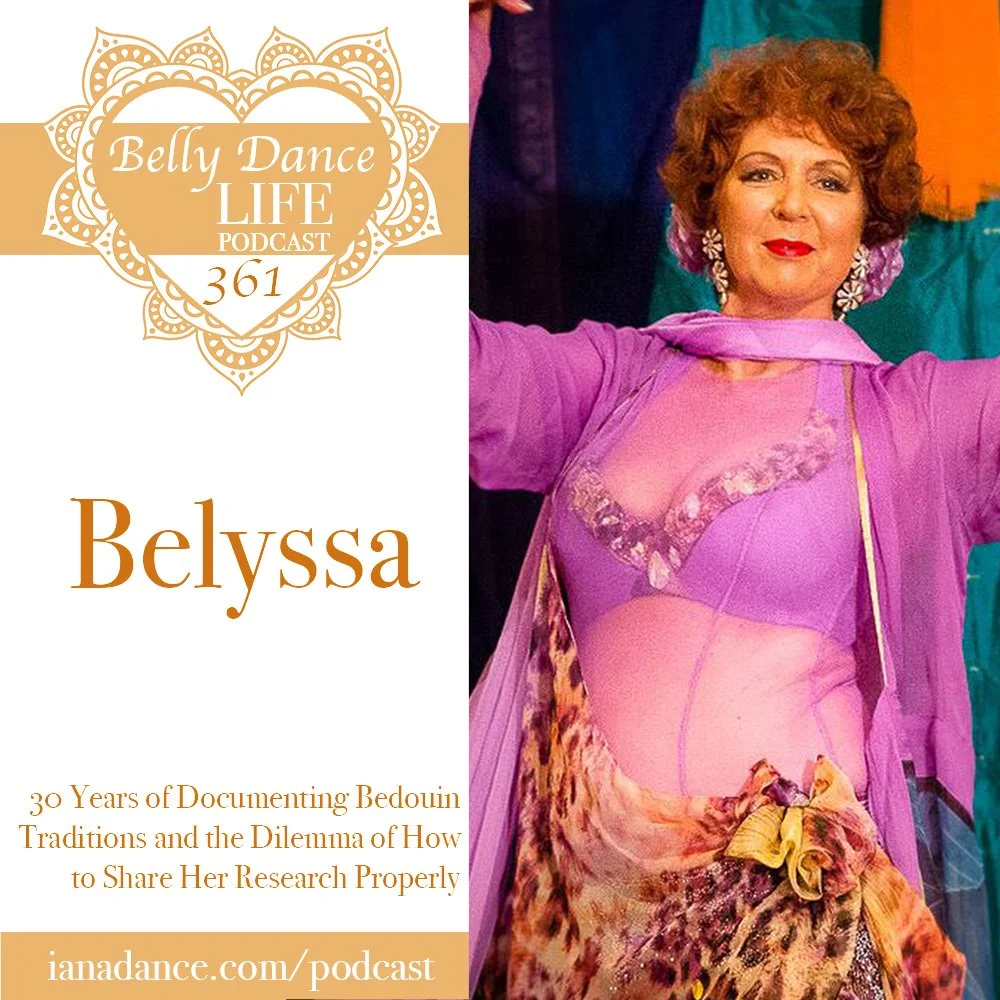
Belyssa is a pioneering figure in Australian belly dance who founded the Belyssa Academy of Danse Orientale and the Flames of Araby troupe, establishing a legacy of dramatic, classical artistry. Over the past 30 years, Belyssa has dedicated herself to documenting the raw, earthbound rhythms and movements of isolated Bedouin tribes in the Sinai and Western Desert, far removed from the theatrical polish of Cairo stages. This deep anthropological work defines her current teaching philosophy, "Just Dance," which focuses on transmitting authentic micro-mannerisms and a profound, respectful connection to community traditions rather than mere choreography. Today, she holds a massive, sensitive archive of cultural documentation and continues to mentor dancers globally, advocating for the ethical preservation of dance as a living memory of its people.
In this episode you will learn about:
How dance lives in social contexts that most performers never witness
What she discovered about Bedouin celebrations, gender dynamics, and who actually dances — and when
The ethical dilemma of carrying stories that are not fully yours when sharing her research publicly
Her firsthand experience of Ramadan and how it shifted her perception of cultural moments
The difference between staged folklore and lived embodied practice
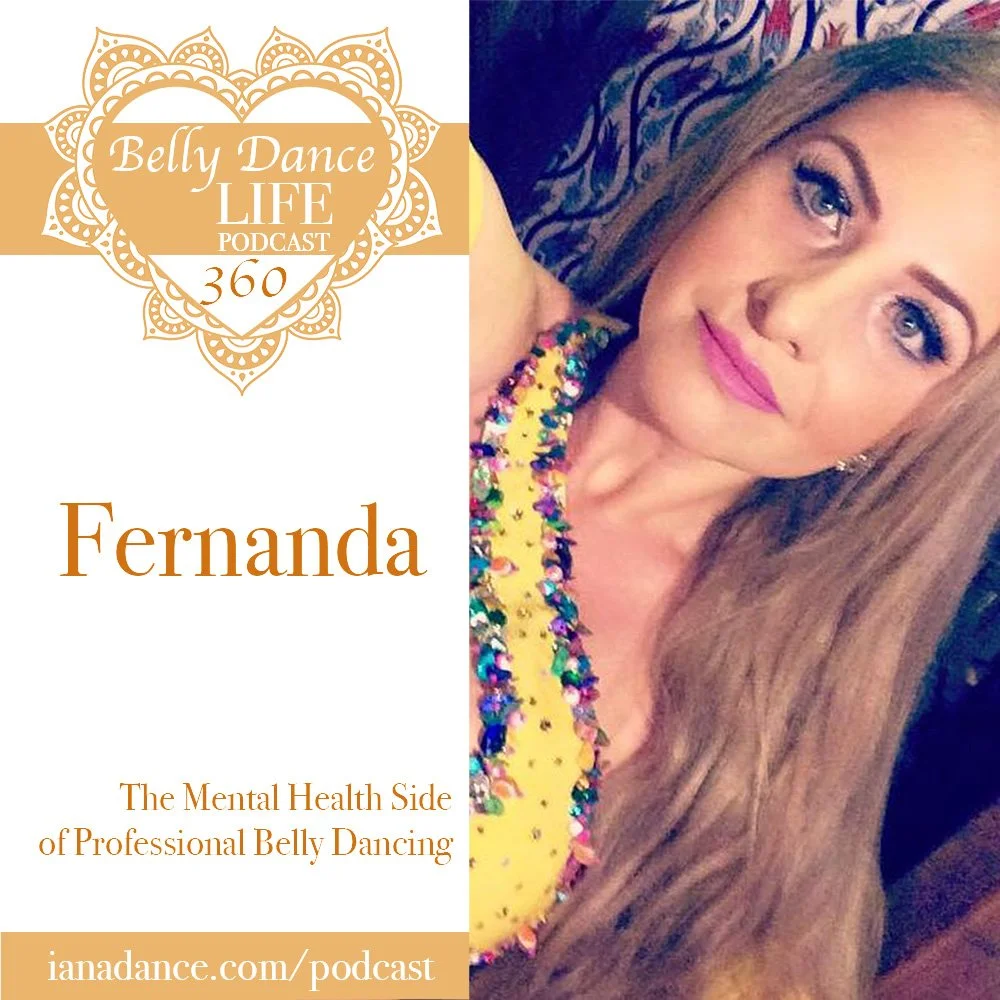
Fernanda Reschke is a Brazilian-born Oriental dance artist, educator, and trauma-informed psychotherapist whose work bridges movement, culture, and healing. She began her career as a dancer and choreographer at a young age and later trained in counseling and naturopathy, holding a bachelor’s degree in holistic health and wellbeing. Fernanda spent many years living and performing professionally in the Middle East, specializing in Egyptian Raqs Sharqi and folkloric traditions of the SWANA region. Now based in Australia, she is internationally recognized for her warm, inclusive, and culturally respectful teaching approach. As a PACFA-accredited psychotherapist and advanced Somatic Experiencing practitioner, Fernanda supports dancers in reconnecting with their bodies, emotions, and sense of belonging while honoring Raqs Sharqi as a living cultural art form.
In this episode you will learn about:
The hidden mental health challenges of working belly dancers
Body image pressure, harassment, and unspoken industry norms
How validation, visibility, and social media affect dancers’ nervous systems
Why not every hardship is trauma — and why that distinction matters
What “taking care of mental health” actually looks like in daily life
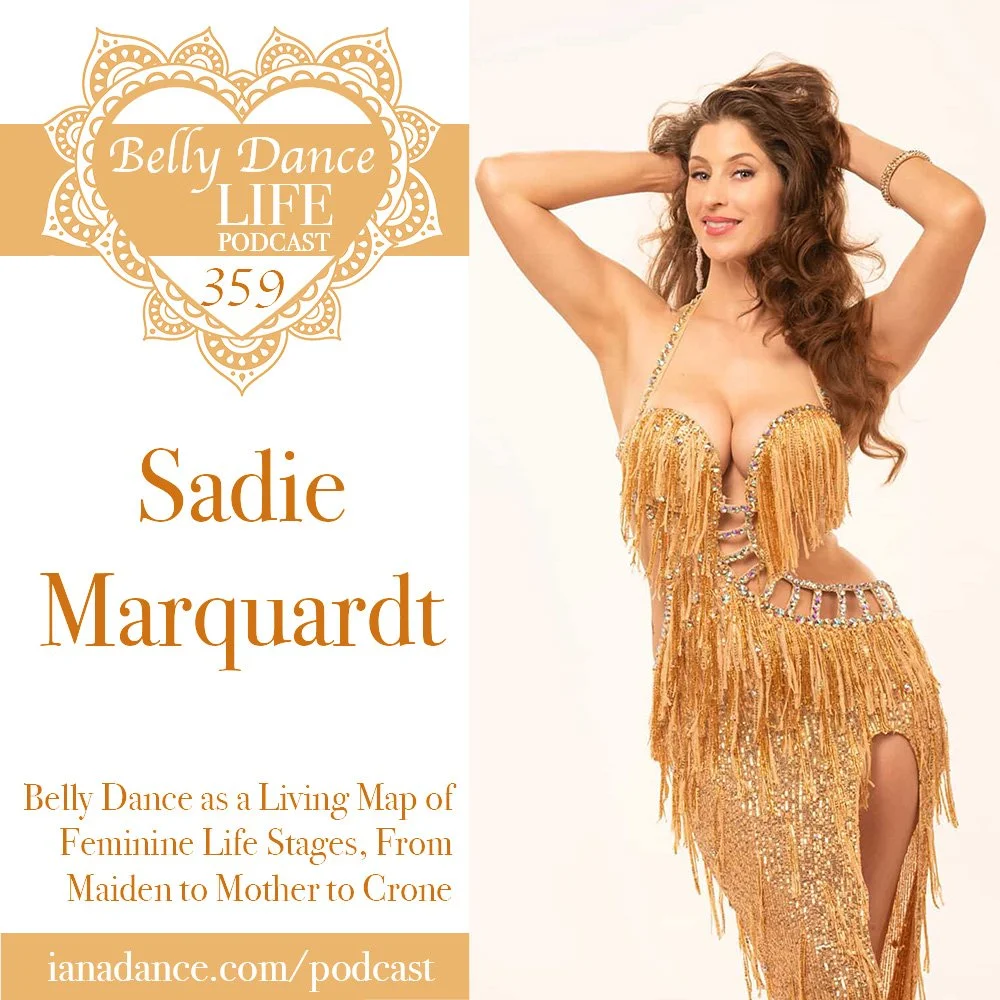
Sadie is an internationally recognized Oriental dance artist, educator, and innovator dedicated to empowering people through the art of belly dance. She has produced dozens of bestselling instructional videos, amassed millions of views through viral online content, and represented Oriental dance before a global audience on America’s Got Talent. Sadie is the founder and director of Raqs Online and the Raqs Flow training program, which offers a strong technical foundation while maintaining deep connection to cultural roots, musicality, and embodied expression. In addition to teaching and performing worldwide, she curates destination dance retreats that blend movement, self-exploration, nature, and conscious living. Based in Denver, Colorado, Sadie is passionate about holistic, sustainable living and weaves together dance, music, nature, and human connection in both her teaching and retreats, inspiring dancers around the world to grow artistically and personally.
In this episode you will learn about:
How Sadie’s relationship with dance has evolved over her career
The ongoing dilemma between following artistic calling and choosing stability
Navigating aging, visibility, and self-worth in a youth-centered dance culture
Why the “maiden–mother–crone” archetype matters in belly dance today
Why Sadie chose to return to university and study psychology at this stage of life
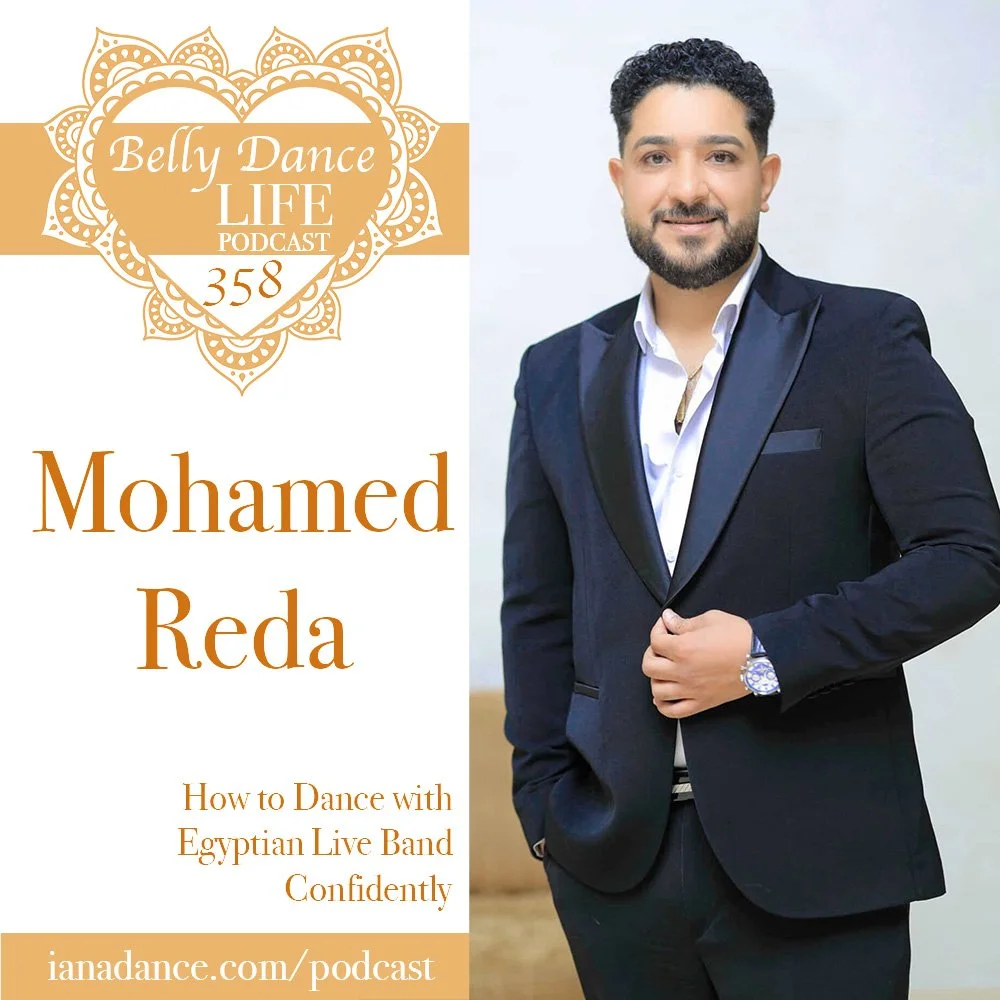
Mohamed Reda Saad is a prominent Egyptian musician and the leader of the Cairo Band, one of Cairo’s most sought-after ensembles for major dance festivals and cultural events. Continuing the artistic legacy of his father, the renowned musician Reda Saad, Mohamed has both preserved and expanded this heritage, specializing in traditional and contemporary Egyptian music created specifically for professional Oriental dance performance. Known for its refined arrangements and exceptional musicianship, the Cairo Band performs regularly at prestigious events in Cairo and on international stages. In parallel with his work as a performing musician and band leader, Mohamed is also an experienced music engineer who has recorded and produced numerous albums for Oriental dance and collaborates with dancers worldwide to create custom-made music tailored to their performance needs.
In this episode you will learn about:
The difference between musicians who play for singers and those who play for dancers, and why Egyptian drummers follow the dancer, not the other way around
The most common mistakes dancers make with live bands—entrances, endings, and accents
How dancers can communicate with musicians using simple, universal stage signals
How dancers should prepare for rehearsals to truly benefit from limited time
The behind-the-scenes reality of creating custom music for dancers and why recording dance music takes weeks—not hours
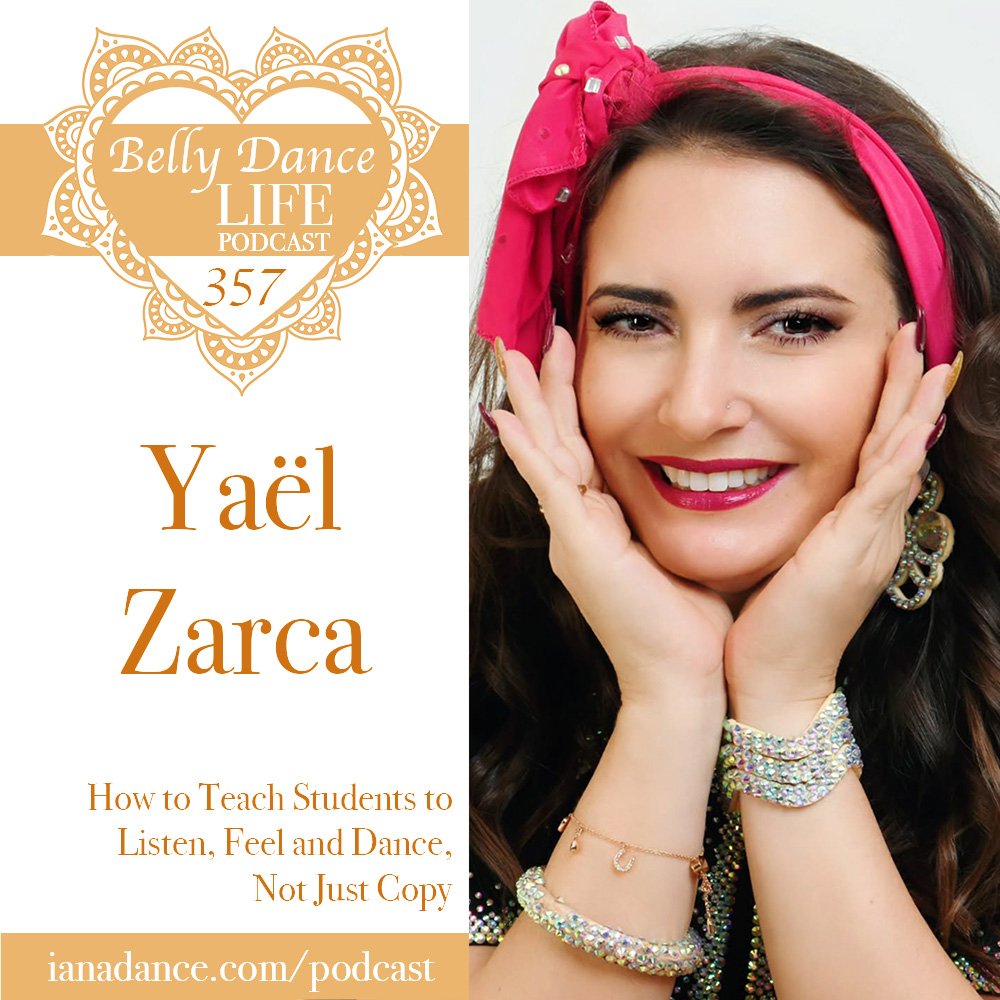
Yaël Zarca is an internationally recognized Oriental dance artist and one of the leading figures of Egyptian dance in France. She discovered Oriental dance in 1999 and has since built a remarkable career spanning Parisian studios, major international stages, television appearances, instructional DVDs, and creative projects within the dance world. Known for her expressive, elegant style, Yaël blends deep Egyptian tradition with modern sensibility, placing strong emphasis on musicality, emotional interpretation, and impeccable technique. An outstanding pedagogue, she teaches Sharqi, Baladi, and Egyptian folklores in Paris, across France, and worldwide, sharing a dance rooted in feeling, culture, and transmission. Her professionalism, artistic integrity, and commitment to teaching have made her a respected and influential voice in the global Oriental dance community.
In this episode you will learn about:
How motherhood reshaped her priorities, dance practice, and definition of success
Why improvisation is essential—and how to teach it without terrifying students
How feeling good as a woman is essential to becoming a better mother - and its relationship with dance
Why Egyptian style is now labeled “old school” in global dance scenes
Yael’s decision to charge her students only on an annual basis—and how such commitment changes everything

Martina Tellini is an Italian professional belly dancer, teacher, and choreographer known for her dynamic, powerful, and natural style. Born in Florence, she began her artistic path with music, singing, and acting before dedicating herself to dance. Martina trained extensively with leading figures of Oriental Dance, including Randa Kamel, Tito Seif, Yousry Sharif, and Wael Mansour, and went on to win numerous international competitions across Europe and Asia, as well as becoming a finalist at the prestigious Raqs of Course Festival in Cairo. She has performed, taught, and judged worldwide. Deeply committed to artistic individuality, Martina’s teaching focuses on strong technique, unconventional choreography, and helping dancers discover their own unique voice. Alongside her belly dance career, she is also the president of the Renaissance dance association Il Lauro, performing historical dance across Italy and Europe.
In this episode you will learn about:
Starting belly dance directly in festivals and masterclasses, not beginner classes
How progressing too fast can cost you foundational technique
When audience love can mask what you need to work on — but competition feedback exposes it
The role of choreography vs. improvisation at different career stages
How pregnancy reshaped priorities, body awareness, and pace
Season 8 (2025):

Roxxanne Shelaby is a Southern California–based performer, teacher, and producer whose work is rooted in her Lebanese/Brazilian heritage and a lifelong immersion in Egyptian Style Oriental Dance. Raised in her family’s legendary nightclubs, Fez and Cascades, she grew up surrounded by live Middle Eastern music and dance, learning directly from iconic artists such as Feiruz Aram, Marie Silva, Sahra C. Kent, and members of Egypt’s Komeya Troupe. Roxxanne began performing at age five and professionally at sixteen at the request of Farida Fahmy, later studying with masters including Mahmoud Reda, Fifi Abdo, Aida Nour, and Ahmed Hussein. She spent 11 years performing with and serving as Assistant Director of Sahra C. Kent’s Ya Amar! Middle Eastern Dance Company, appearing in major U.S. festivals and international performances. Beyond performing, Roxxanne produces the showcases with live Arabic music, teaches internationally, and is the producer/director of the acclaimed Fez Documentary, preserving the history of belly dance on the U.S. West Coast while honoring its pioneering artists.
In this episode you will learn about:
The story of The Fez club in Hollywood and why it changed belly dance history forever
The surprising origin story of the Maya movement term and the dancer it was named after
The journey from “this should be a book” to creating a 90-minute documentary against all odds
The loss of long-form performance and what modern dancers are missing because of it
Why watching other dancers perform is as important as performing yourself
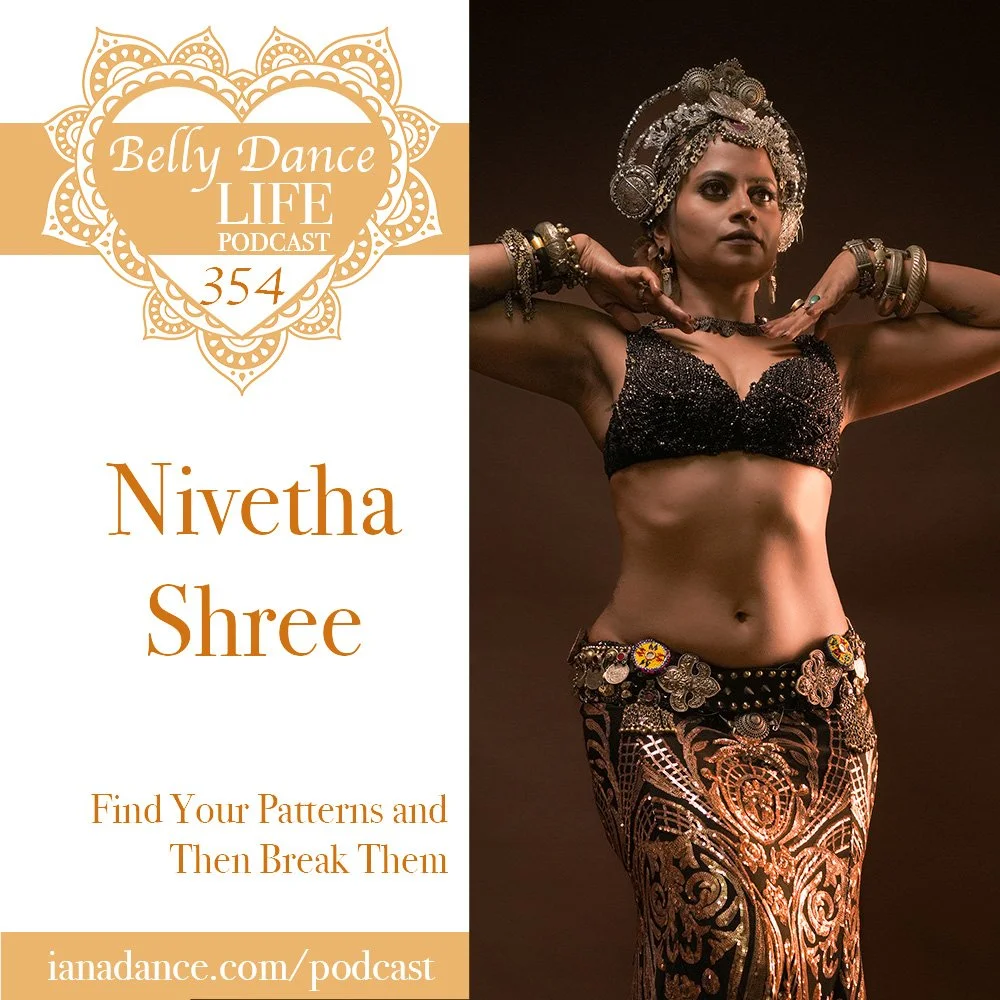
Fascinated by the arts since childhood, Nivetha Shree discovered Belly Dance at the age of 21 and has since trained with renowned teachers around the world. She holds certifications in DanceCraft – Key of Diamonds by Zoe Jakes and Krysalis – Invocation by Kami Liddle, and is an FCBD® Teacher, proudly leading the first officially recognized FCBD® Sister Studio in India. A Level 2 Yoga practitioner certified by the Government of India, she integrates a holistic body–mind awareness into her dance practice and teaching. As a solo artist and director of Saara – The Tribe, Nivetha has performed on leading dance platforms and, through Saara – The Bellydance Space in Bangalore, cultivates a supportive environment where dancers grow with confidence and self-expression. Her performances and workshops across India, Germany, the UK, and Australia reflect her mission to share the depth, artistry, and joy of Belly Dance worldwide.
In this episode you will learn about:
How growing up with a dancer father shaped Nivetha’s creative foundation and artistic discipline.
Why costuming became an extension of her storytelling rather than just decoration.
Her deep connection to music as the core inspiration for choreography and improvisation.
The philosophy behind her fully improvised performances and how she accesses “flow state.”
Co-creating energy with the photographer instead of just posing.
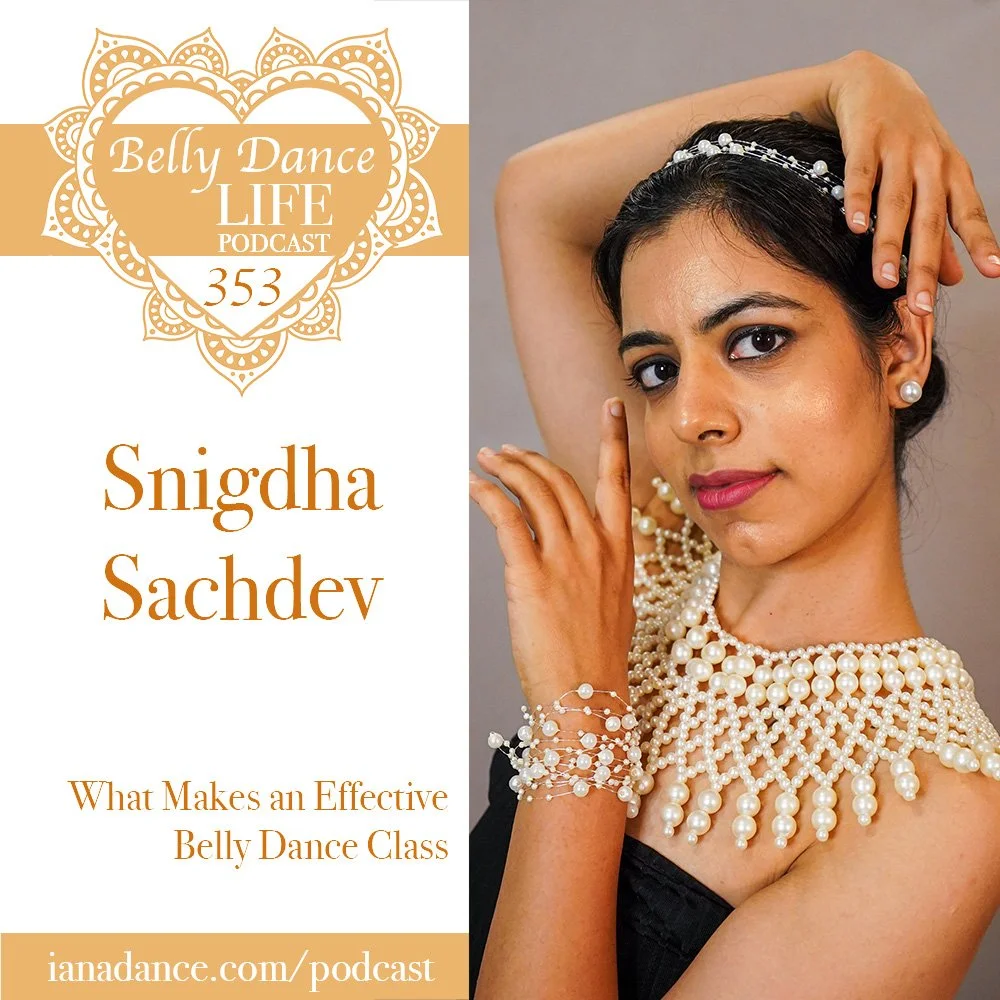
Snigdha Sachdev is a Delhi-based fusion belly dance artist and dedicated yoga enthusiast. A Biotechnology graduate with a master’s degree in Stem Cell Technology, she discovered her pull toward belly dance at a very young age. Her dance journey began with extensive training in Jazz, Ballet, Contemporary, and Kathak—foundations she later blended to deepen her belly dance technique and develop her own distinctive movement style. In 2019, Snigdha co-founded The Dance District, a studio that has since expanded to multiple locations across Delhi NCR. Today, the studio offers a range of dance forms, and Snigdha leads the belly dance division, where she continues to share her passion, discipline, and unique fusion approach with dancers across the region.
In this episode you will learn about:
The secret to creating choreography that actually feels alive: improv first, structure later
Her class-building process: 90 minutes of prep for every hour of teaching
The “punishments,” the homework, and the tough-love philosophy her students know well
Why collaboration thrives in India’s tiny but fiercely supportive belly dance community
The ethics of taking inspiration vs. copying—and how she credits her teachers with integrity

Gracie Mandujano was born in Honduras, a land rooted in ancient Mayan traditions, and from an early age felt called to reconnect with life’s true purpose and the depth of her courageous spirit. Guided by yoga and dance, she returned to her physical body and divine power, dedicating herself to ancestral arts and becoming a healer and light worker. Her lineage eventually led her back to the ways of her ancestors, committing to the Camino Rojo and the Danza de la Luna, where she studies traditional forms of ceremony, prayer, and healing. Uniting these paths, Gracie and Estelle co-created a series of transformative containers under the school Modern Organic Dance & Sacred Arts, sharing this sacred space of essential growth with women and men across the world.
In this episode you will learn about:
Gracie’s journey from dentistry to discovering tribal fusion and Oriental dance.
The hidden energetics behind “inward” and “outward” movements in Oriental dance.
How class energy, rhythm choices, and even the moon cycle shape her teaching.
The story of healing a pre-cancer diagnosis through intentional dance practice.
The birth of “Modern Organic Dance” and why belly dance didn’t feel like the right label.

Esmeralda Colabone has dedicated herself to Arab dance and culture since 1999. From 2002 to 2014 she worked with Belly Dance Brazil and Lebanon’s famed La Maison de L’Artiste, becoming the agency’s youngest dancer at 19 and spending 12 years performing across the UAE, Qatar, Oman, Tunisia, Algeria, Morocco, Syria, and Lebanon. She was the first Brazilian to tour the Maghreb and held one of Tunisia’s longest foreign dance contracts—experiences that shaped her both artistically and personally. After her “Enta Omri” video went viral in 2015, her influence spread worldwide. She helped popularize Lebanese style globally through her 2014 workshop and even co-created the first belly dance shoes with Capézio Brazil. A soloist, teacher, choreographer, judge, writer, and producer known as “The Turban Dancer” and “The Tunisian Treasure,” she has performed in 38 countries, inspiring dancers everywhere with her musicality, presence, and lived connection to the Arab world.
In this episode you will learn about:
The painful gap between YouTube criticism and the power of her live performances.
Feeling “outdated” in an industry racing with new trends and younger dancers.
The birth of the Silver Tour and her decision to call it “one last time.”
The hidden reason behind her tribute performances—and how they helped her survive emotionally.
Feeling more like a displaced performer rather than a true teacher.

Leli Neeraja is a dancer and teacher who has dedicated over a decade to guiding others toward inner balance through movement. Her work is a continuous exploration of fusion between East and West, blending the grace of Indian classical dance with the expressive freedom of contemporary forms. She spends several months each year in India, deepening her study of traditional disciplines that help her explore and love her inner world. These experiences have profoundly shaped her artistic voice, where echoes of Odissi and other Indian styles merge seamlessly into her unique Fusion dance. Deeply inspired by the beauty, refinement, and spirituality of Indian culture, Leli feels a calling to share its essence in Italy—keeping her artistic journey ever-evolving through new encounters, discoveries, and creative adventures.
In this episode you will learn about:
The spark that made Leli leave music to pursue dance full-time.
How studying Odissi in India made her body “vibrate” with new awareness.
The deep connection between dance and yoga through alignment and breath.
Dance as her therapy for anxiety, anger, and panic attacks.
Launching a handmade clothing line inspired by Indian textiles.

Suhaila Salimpour, of Sicilian-Greek and Kurdish-American heritage, is a second-generation belly dancer and a pioneering figure in the global dance community. A former house dancer at the legendary Byblos nightclub in Beverly Hills, she toured internationally for over a decade, performing across the Middle East, Europe, Asia, and North America. As the visionary creator of the first codified pedagogy and certification system in belly dance, she transformed both performance and teaching, building a worldwide network rooted in discipline, anatomy, and cultural respect. Now directing the Salimpour School of Dance, she continues her mother’s legacy through global online education, choreography, and community leadership. A recipient of the Gerbode Foundation’s 2024 dance award and the Isadora Duncan Special Award (2023/24), she also serves on multiple dance boards and is completing her MFA in Dance at Saint Mary’s College of California.
In this episode you will learn about:
Suhaila’s decision to pursue an MFA in Dance after decades on stage
The need for Arab and immigrant voices in academia
Her research on how colonization codified cultural dance forms, and the idea of “outside and inside colonization”
The growth of the Salimpour School into a full online institute
Three generations of Salimpour women carrying the dance forward

Badriyah is a professional oriental dancer based in Belgium, dedicated to Egyptian classical and folkloric styles, modern fusion, and the Golden Age of belly dance. With over a decade of teaching experience, she offers regular classes at Shoonya Dance Centre in Ghent and travels across Europe to teach and lecture. A former lead and troupe member of Jillina’s world-touring company Bellydance Evolution, Badriyah has performed more than 60 shows across 13 countries, from Hollywood to Morocco. Passionate about preserving dance heritage, she is also the founder of the Raqs Sharqi Museum project and a devoted collector of vintage belly dance artifacts dating from the 18th to the 20th century, bridging the past and present of this art form through both performance and research.
In this episode you will learn about:
How becoming a mother and going through a divorce reshaped Badriyah’s life, art, and priorities.
The transformation of her dream of “Raqs Sharqi Museum” from a private project into a global cultural collaboration.
How the war in Gaza profoundly affected her worldview, anxiety levels, and artistic expression.
Practical methods for managing anxiety and creative burnout — from micro-task planning to “first aid for the mind” through movement.
Her unique approach to storytelling in Golden Era acts — blending historical recreation with deeply personal authenticity.

Melissa Gamal is an award-winning dancer, instructor, and event producer based in Toronto, Canada. As the director of the Ya Amar School of Dance, Melissa is dedicated to providing comprehensive training in Egyptian dance, blending refined technique with a strong awareness of history and cultural context. Her work has taken her across North America and to Egypt, where she continues her studies to bring the most authentic and up-to-date knowledge to her students. In recent years, she’s gained recognition for her elegant Golden Era style and her mastery of sagat—culminating in a remarkable performance at the Cairo Opera House in 2021.
In this episode you will learn about:
The turning point that made her quit a stable 9-to-5 job to follow dance full time.
The moment she decided to open her own studio instead of staying “comfortable” with already established organization.
The story behind her performing as a zill player at the Cairo Opera House.
The advice she’d give her younger self about self-doubt and body image.
Why dancers must go beyond aesthetics and stand in solidarity with cultures of origin.

Virginia Danielson (PhD, Ethnomusicology, University of Illinois, 1991) is an associate of the Harvard Music Department and a visiting scholar at New York University Abu Dhabi. She is the author of The Voice of Egypt: Umm Kulthum, Arabic Song and Egyptian Society in the 20th Century (University of Chicago Press, 1997), the first English-language biography of the Arab world’s most celebrated singer. Through rich ethnographic insight and historical analysis, Danielson traces how Umm Kulthum—known as “the voice of Egypt”—rose from rural beginnings to become a unifying cultural icon whose songs shaped modern Egyptian identity and Arab popular culture. Danielson’s work illuminates the complex interplay between gender, media, and nation-building in 20th-century Egypt, showing how one woman’s artistry transcended social boundaries to define an era.
In this episode you will learn about:
How a village Imam’s daughter became Egypt’s most celebrated voice through talent, strategy, and relentless discipline.
The clever business deals and radio contracts that secured Umm Kulthum’s financial and artistic independence.
The myth-making and media control behind her carefully protected public image.
The musical evolution of Umm Kulthum’s ensemble, blending classical Arabic poetry with modern Western instruments.
Why audience described her concerts as a national ritual where “life stopped” every Thursday night.

Elen Oriental (Elen Chikhladze) is a Georgian choreographer and dance instructor from Tbilisi, specializing in oriental dance since 2002. Beginning her artistic journey at the School for Athletic Fine Arts and later the Department of World National Dances, she graduated with honors from the College of Choreography and the N. Pridonishvili School of Popular Dance in 2001. As President of the International Association of Oriental Dance in Georgia and founder of her own belly dance school, Elen emphasizes the historical depth, elegance, and physical artistry of the dance. Her teaching method combines elements of gymnastics, yoga, and dance to strengthen muscles and joints while fostering psychological readiness, enabling students to master the demanding yet captivating techniques of oriental dance.
In this episode you will learn about:
The danger, stigma, and literal risks of working as a belly dancer in Georgia during the chaotic post-Soviet years.
How Elen fought back against prejudice by going on national TV, writing in magazines, and reframing Oriental dance as an art form.
The story behind her iconic Arabic–Spanish fusion pieces, why they made audiences cry, and why she later chose to move beyond them.
The critical difference between “advanced” and truly “professional” dancers.
Why she insists on studying with Egyptian teachers rather than chasing festival choreographies.
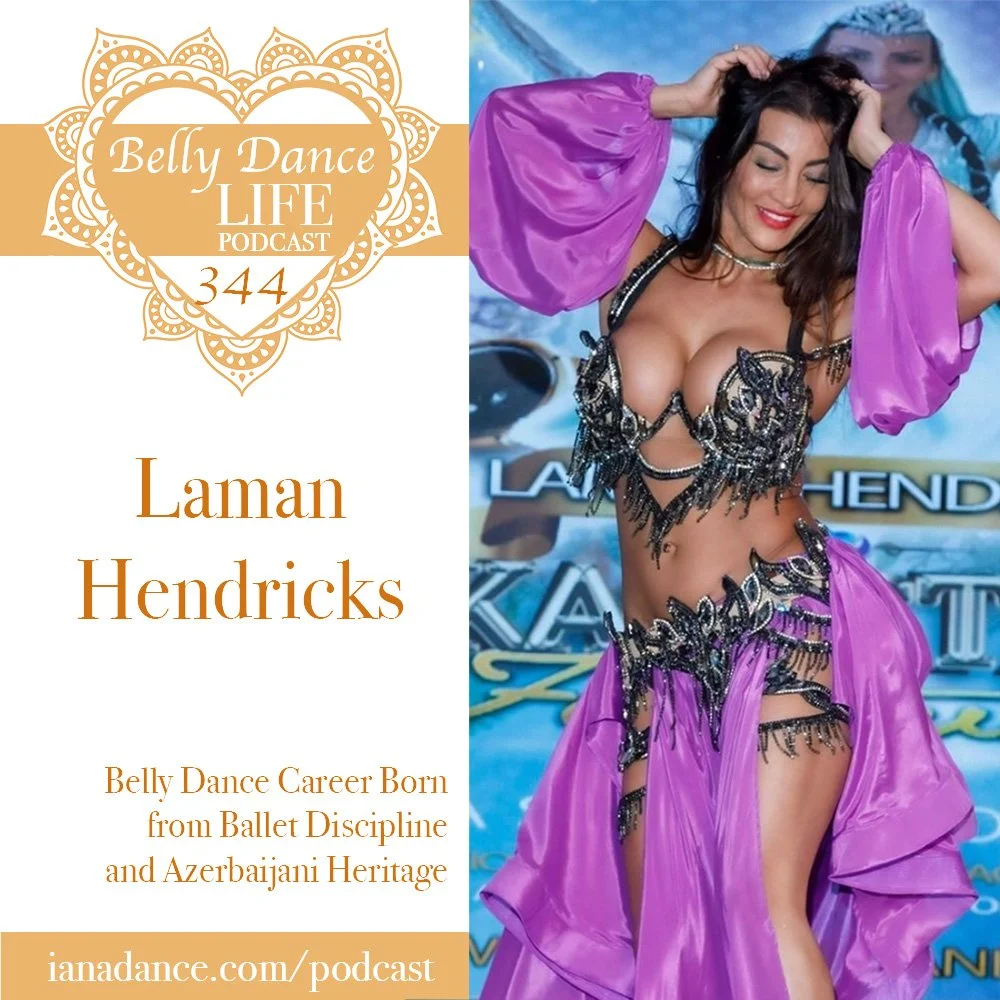
Laman Hendricks is an acrobatic gymnast, Azerbaijani and Caucasus folk dancer, teacher, and choreographer, as well as the Artistic Director and Founder of Dances of Caucasus. Born and raised in Azerbaijan and Turkey, she trained in classical ballet and folk dance at the Baku Choreography Academy while also competing as a member of Azerbaijan’s national gymnastics team and founding the country’s first post-Soviet women’s cycling team. A silver medalist in both cycling and mountain climbing, Laman has combined her athleticism with artistry, earning recognition at the 2015 Rakkas Istanbul International Dance Festival for her innovative performance as a male Caucasus dance part. She has since performed and taught at festivals and events across the United States and internationally, sharing the rich traditions of Azerbaijani dance while continuing to explore the intersections of ballet, gymnastics, Middle Eastern dance, and folk heritage.
In this episode you will learn about:
How a 1001 Nights ballet production sparked her lifelong curiosity about belly dance.
The transition from professional ballet training to belly dance, and tips for loosing up your shimmies.
The challenges of cultural stigma around belly dance and the tension of being recognized only as a folkloric dancer.
Folklore versus belly dance, and how folk dances enrich belly dance but are undervalued at festivals.
How Azerbaijani and Caucasus dances remain a parallel passion alongside Laman’s belly dance career even today.
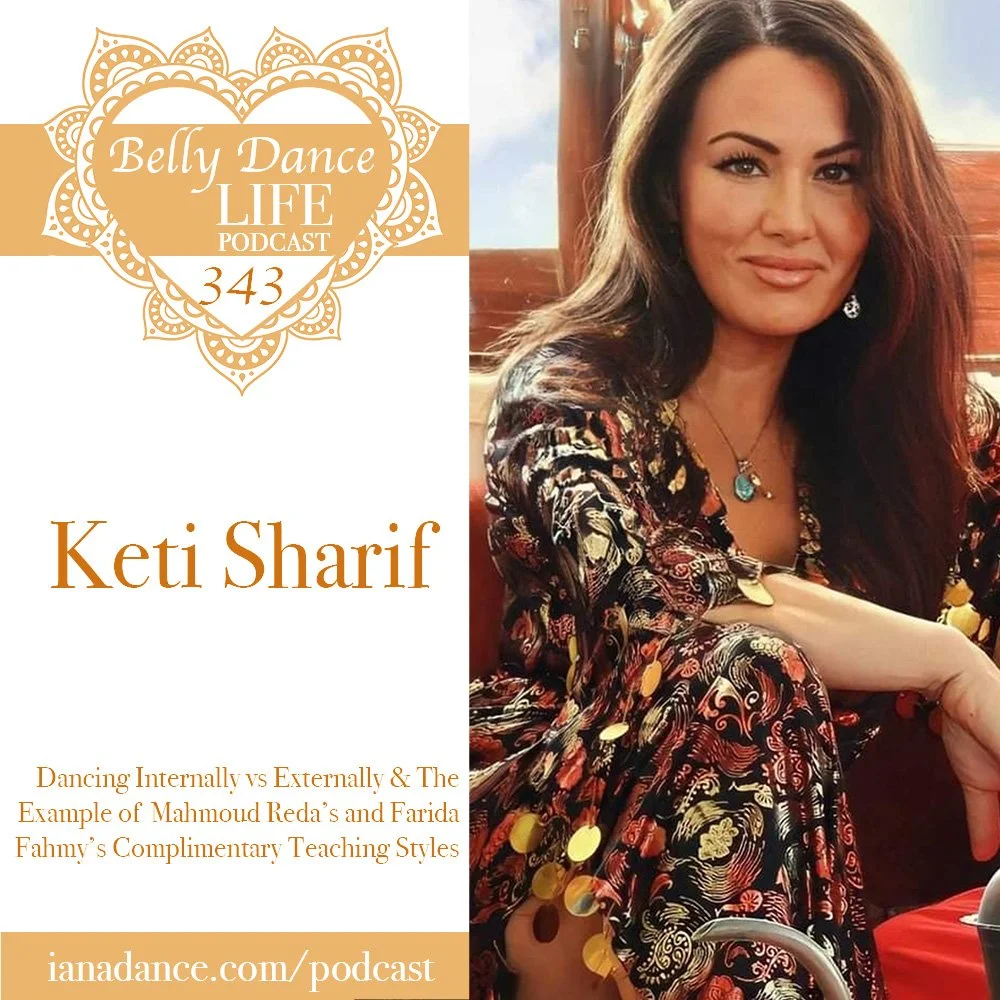
Keti Sharif is an Australian dance teacher, performer, and choreographer who lived in Egypt for two decades, directing the Sphinx Festivals and collaborating with legends Mahmoud Reda and Farida Fahmy. Creator of the A-Z Bellydance methodology—taught to over 6,000 students in 40 countries—Keti combines live Egyptian music, cultural dance traditions, and somatic movement to deepen musicality, artistry, and wellbeing. Her vision of belly dance as both a healing path and a communal art has shaped her global teaching, performances with international artists, and her role in preserving Farida Fahmy’s legacy through publications and archives. Today, she continues to teach, write, and inspire dancers worldwide through her studio, online academy, and cultural projects.
In this episode you will learn about:
Connections between Chinese medicine and Zar rituals.
The concept of “movement connectivity” and how body halves, upper-lower, and spinal movements influence creativity and decision-making.
The contrast between authentic Egyptian embodiment and Westernized, fast-paced choreographies.
Keti’s unique experience training with Mahmoud Reda and Farida Fahmy, and their complementary teaching styles.
Farida Fahmy’s writing legacy, the preservation of Reda troupe history, and the emotional journey of documenting her life.
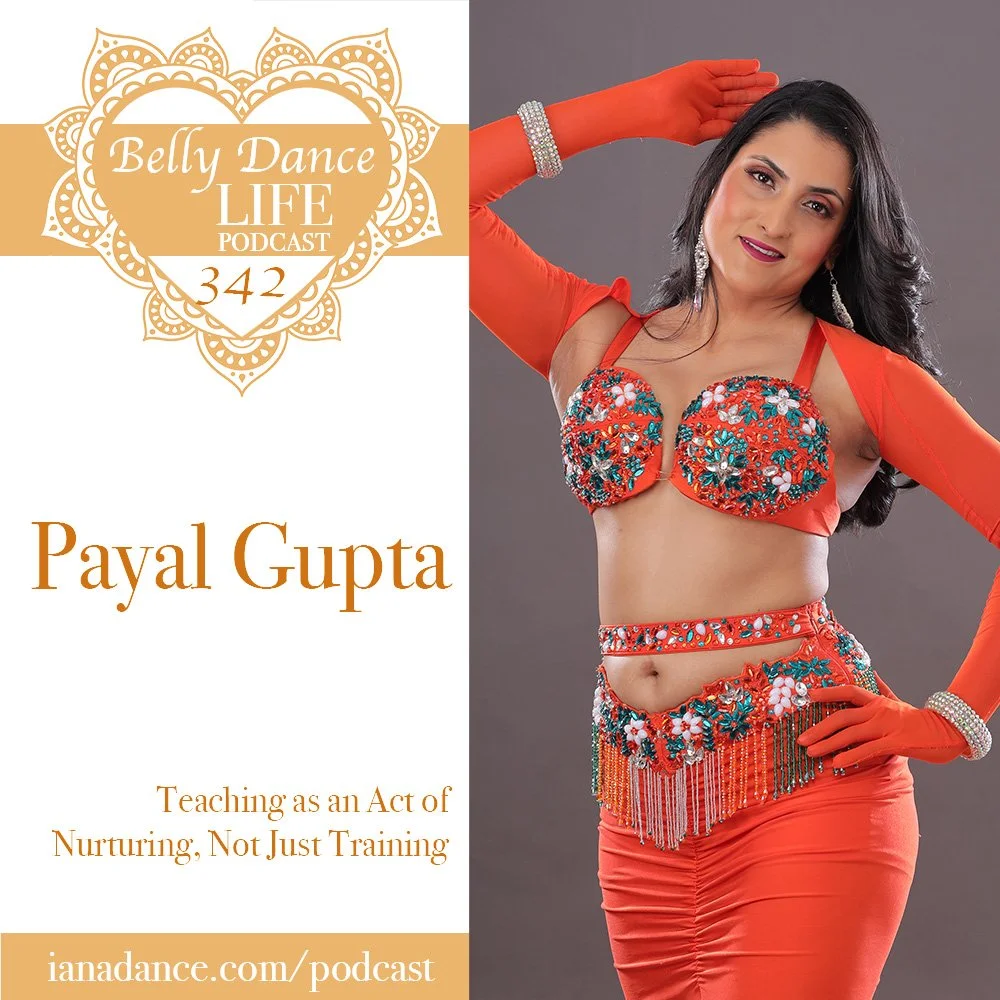
Payal Gupta is one of India’s most sought-after master teachers of belly dance, celebrated for her structured classes, private lessons, workshops, performances, and intensives. Since 2008, she has trained over 10,000 students from all walks of life, earning recognition as a leading figure in the field. Coming from a culturally rich background where the performing arts hold deep value, Payal has been passionate about dance since the age of seven, exploring a wide range of styles before finding her true calling in belly dance. An Electrical Engineering graduate and lifelong dance enthusiast, she eventually chose to leave her corporate path to pursue dance as a career, sharing her love for belly dance with students across India and beyond.
In this episode you will learn about:
Overcoming shyness and stage fright, and later guiding her own students through performance anxiety.
The role geography played in Payal’s early success as one of the leading local teachers in her area.
The difficulty of leaving behind her 15-year dance “empire” in Bangalore and starting over in Mumbai.
Lessons that motherhood taught Payal, and the concept of nurturing students instead of just teaching them.
Comparing dance life and opportunities in Mumbai and Bangalore.
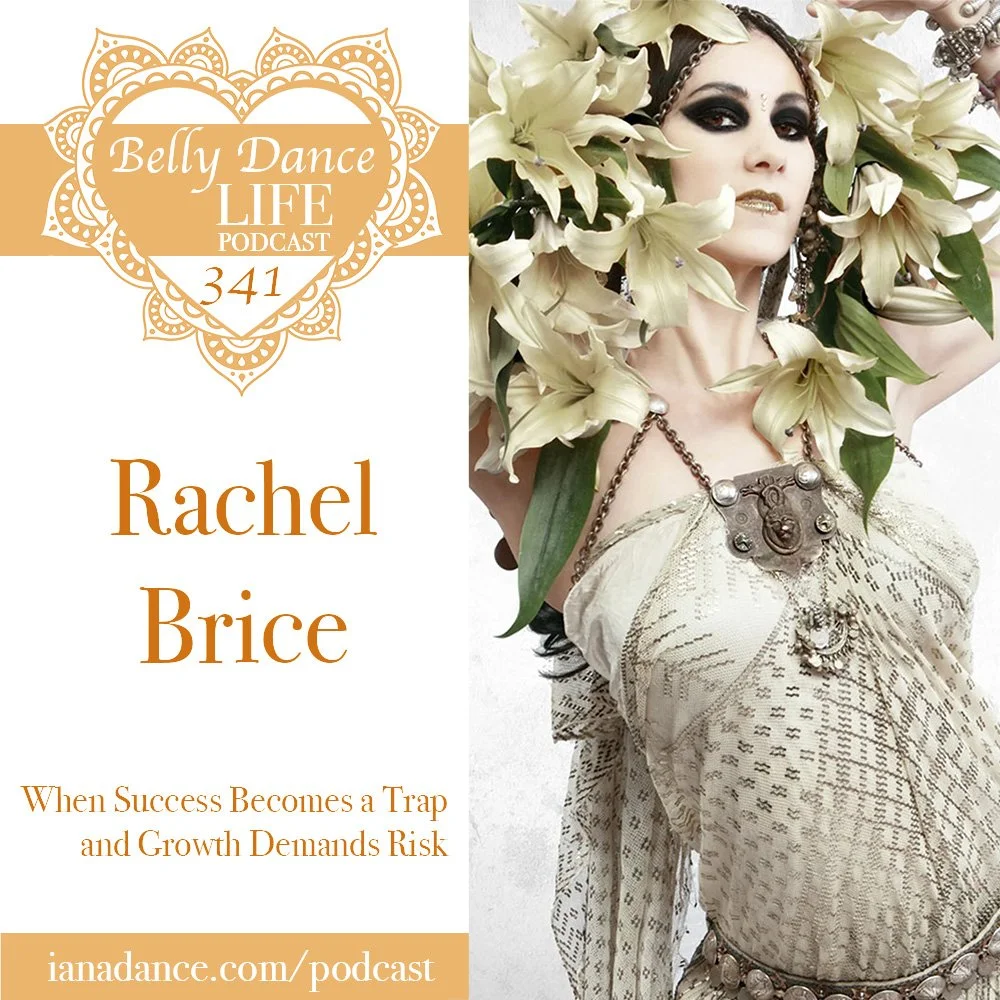
Rachel Brice is an internationally renowned dancer, teacher, and choreographer recognized as one of the key figures in the evolution of tribal fusion belly dance. A former member of the Bellydance Superstars and artistic director of The Indigo Belly Dance Company, she blends decades of experience in American cabaret, FatChanceBellyDance Style, and world dance traditions with her own distinctive artistry. Based in Portland, Oregon, she founded Studio Datura, created the 8 Elements of Belly Dance training, and continues to share her work worldwide through Datura Online and international tours.
In this episode you will learn about:
Rachel’s first spark for belly dance and the role of goth culture and live music in eventually shaping her unique dance style.
The downside of early success: why it can make you afraid to risk and try new ideas.
Behind-the-scenes lessons from her Bellydance Superstars experience on leadership, rehearsal discipline, and handling pressure on tour.
Why she believes “do what you love and you’ll never work a day” is a myth — and what actually happens instead.
Rachel’s plan to partially retire in 2029 so she can return to more play, creativity, and collaboration.
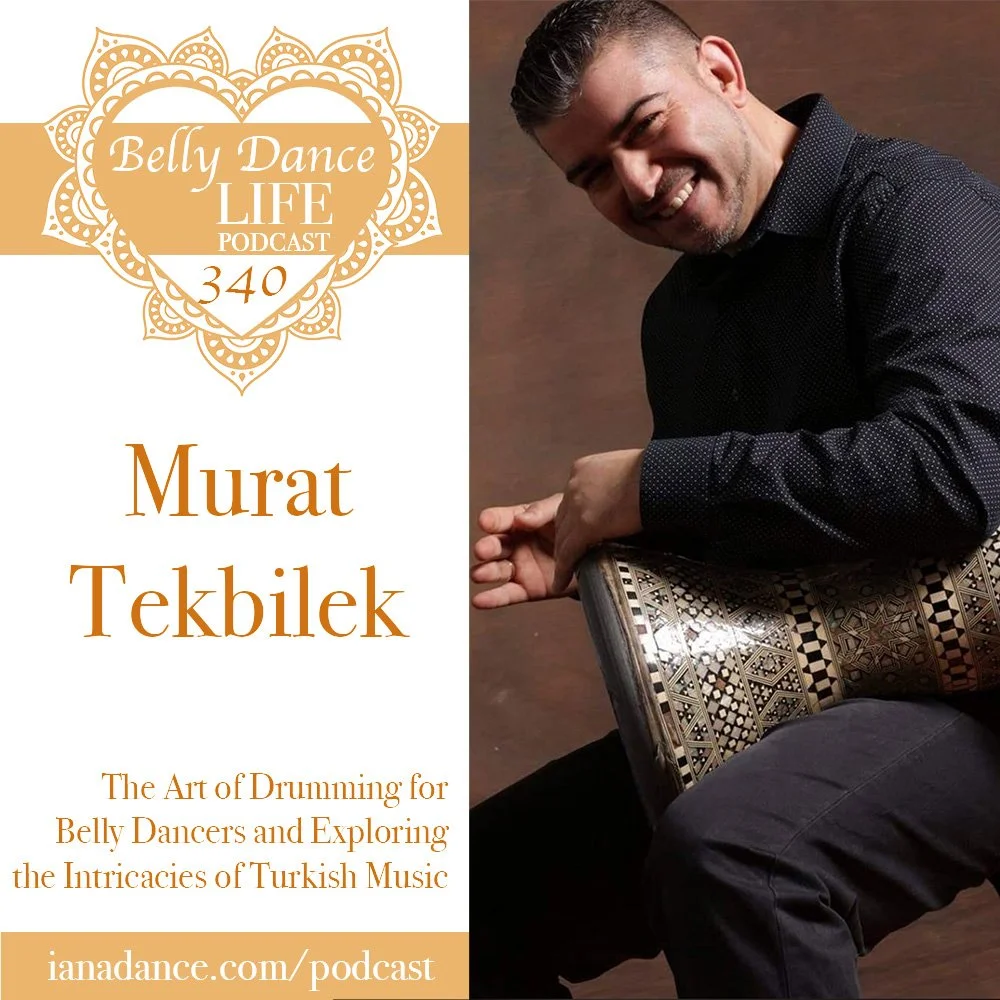
Murat Tekbilek is a Turkish percussionist celebrated for his dynamic artistry and deep roots in Middle Eastern music. Growing up in a family of renowned musicians, he has performed since childhood and spent over a decade as the lead percussionist in his father Omar Faruk Tekbilek’s ensembles. Specializing in darbuka, def, and bendir, Murat has appeared on stages worldwide, from intimate belly dance shows and weddings to international concerts and festivals. His career bridges Arabic and Turkish musical traditions, blending classical rhythms, Sufi influences, and contemporary collaborations, while carrying forward the vibrant legacy of his family’s music into a new generation.
In this episode you will learn about:
Early inspiration from Murat’s father and uncle, who played in the legendary band The Sultans.
How being a Middle Eastern musician in the U.S. meant playing for diverse cultural communities.
Why eye contact and nonverbal communication are the secret to magical dancer–musician connection.
Differences between Arabic and Turkish music cultures in how percussion is treated.
Learning complex odd-meter rhythms in Turkish classical music and how they reshaped Murat’s playing.
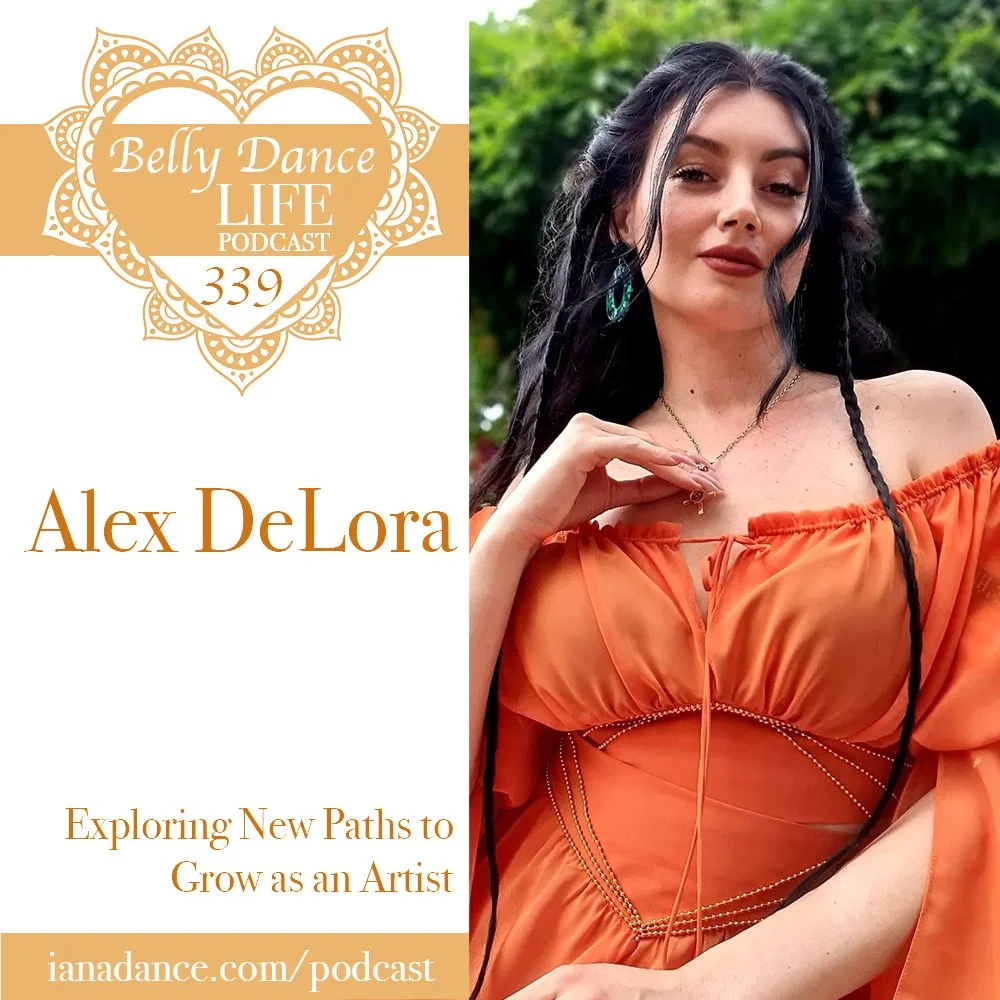
Alex Delora is an internationally acclaimed belly dance performer, teacher, and choreographer who has been sharing her art worldwide since 2012. Invited to more than 50 countries to teach, perform, and judge competitions, she is especially recognized for her unique technique and charisma in drum solo style. In 2020 she launched her first online program, Drum-Matic BellyDance, followed by the creation of her fashion brand, Alex Delora Design, which has since expanded into handmade and ready-to-wear collections. Today, Alex focuses on teaching at international festivals, offering private coaching, and developing new online courses, while continuing to inspire over a million followers through her vibrant social media presence.
In this episode you will learn about:
Performing more with live orchestras and how to establish connection with musicians.
High-heels training: a different movement system, lyrics-led listening, and amplified emotions.
Learning to remove mental blocks around sensuality in dance.
Seeing dance styles as different roles or characters to embody.
The effect of gym training on the belly dance technique.
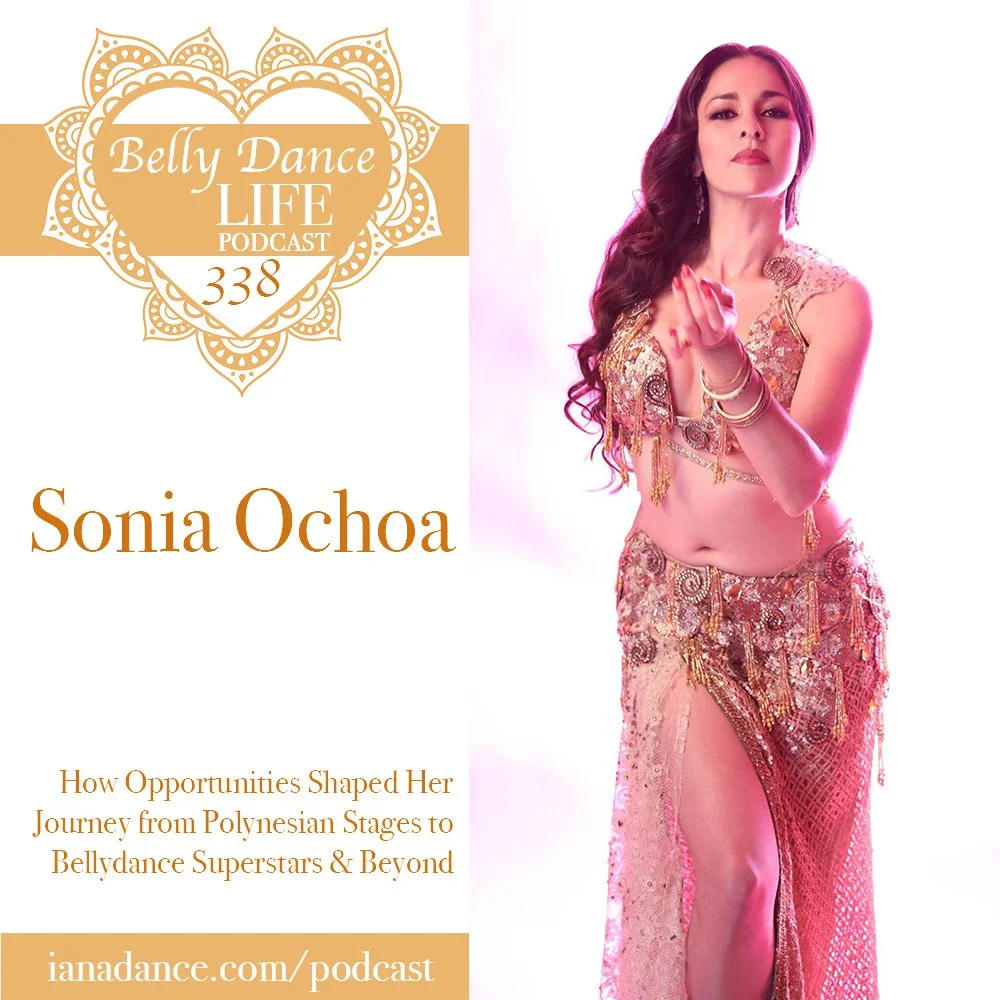
Sonia Ochoa is a versatile dancer, choreographer, and teacher with over 25 years of experience on international stages. Rising to prominence as a principal dancer with the Bellydance Superstars (2002–2010), she toured the world performing in renowned theaters and television shows under the direction of Miles Copeland. A lifelong student of movement, Sonia has traveled extensively through India, Egypt, and Spain to study Odissi, Egyptian folk dances, flamenco, and classical Spanish dance, weaving these traditions into her own signature style. Based in Los Angeles, she directs the Sonia Ochoa Dance Co., leads workshops, judges competitions, and collaborates with artists locally and abroad. With her deep passion for music and dance, Sonia continues to bridge cultures and inspire global audiences through the beauty and diversity of artistic expression.
In this episode you will learn about:
The importance of understanding goals when studying multiple dance forms.
Similarities and differences between Polynesian, ballet, flamenco, and belly dance.
How joining the Bellydance Superstars shifted Sonia’s career path.
Sonia’s perspective on fusion—valuing both creativity and cultural respect.
How flamenco and belly dance share both strong/masculine and soft/feminine qualities.

Amera Eid is one of the leading figures who brought belly dance to Sydney and helped it grow across Australia. For more than 40 years, she has performed and taught around the world, sharing her love for the dance with students and audiences everywhere. She is also a talented fashion designer who created the first belly dance boutique in the Southern Hemisphere in 1987, creating stunning costumes for performers, fashion shows, and films — from Moulin Rouge to Kylie Minogue’s Sydney 2000 Olympic outfit. Beyond dance, Amera is deeply committed to foster care. As a foster carer and adoptive mum, she works to recruit, train, and support others in giving safe and loving homes to children in need.
In this episode you will learn about:
The challenge of pursuing belly dance with no family support and almost no local training opportunities in the 1980s.
Founding one of Sydney’s first belly dance schools and a boutique that became a hub for dance community.
Working as a professional dancer across the Middle East, preferring Lebanon over Egypt for contracts.
Returning to Australia due to industry age bias and shifting focus to teaching.
How Australia’s belly dance scene differs from Europe in competitions and festivals.

Shahdana is an international belly dancer from Argentina whose artistic journey began not with dance, but with music—studying piano and musical composition for nearly two decades, including performing in a tango orchestra. Her deep connection to music later found a new expression in belly dance, where Arabic rhythms became her primary focus. But it was a moment of emotional clarity—dancing to Piazzolla’s tango and breaking into tears—that reminded her to honor her roots. That decision to merge tango with belly dance not only defined her unique style but opened international doors, beginning with her first overseas performance in Korea. Today, Shahdana is celebrated for her emotional depth, musicality, and distinctive fusion of tango and belly dance, teaching and performing around the world.
In this episode you will learn about:
Late start is not a barrier to build a dance career
How setting a 7-year goal helped Shahdana stay focused through years of rejection.
The role of intuition and networking in building a dance career.
Why she emphasizes interpreting tango with authenticity rather than mimicking tango dancers.
How to develop a unique style through consistent improvisation and personal storytelling.

Jill Collins is a dynamic dancer, choreographer, and educator whose versatile career spans contemporary, theatrical, and Middle Eastern dance. She began performing professionally as a teenager and later earned her BFA in Dance Education from the University of the Arts in Philadelphia. After relocating to Los Angeles in 2007, she joined Jillina’s Sahlala Dancers, eventually becoming Artistic Director and owner in 2021. Jill has toured internationally for over a decade with Bellydance Evolution, serving as both featured dancer and rehearsal director, as well as co-director of the company’s training branch, BDEx. In 2015, she founded Cathartic Art, a collective dedicated to advocating for mental health through creative performance. In addition to her work with Sahlala, she performs with LA Choreographers & Dancers and holds teaching credentials from Dance Masters of America and SharQuí: The Bellydance Workout.
In this episode you will learn about:
How a Craigslist audition unexpectedly launched Jill’s journey into belly dance with Jillina’s Sahlala Dancers.
The challenges of transitioning from ballet to belly dance—especially shifting posture and grounding.
How the gig and performance landscape changed after the pandemic, including shifts in audience attention and show structure.
The ups and downs of taking over Sahlala Dancers during the pandemic and rebuilding it from near scratch.
Her current focus on work-life balance, adding Zoom rehearsals, and developing educational outreach performances.

Shreeprada (Shree) is a captivating Indian Tribal Fusion dance teacher known for her layered style, artistic depth, and commitment to creativity. With a background in Bharatanatyam and a Master’s degree in Textile Design from the Indian Institute of Crafts and Design, she brings a unique fusion of movement and visual artistry to her work. Trained in printing, embroidery, weaving, dyeing, and knotting, Shree has an exceptional ability to conceptualize and design textured surfaces—skills that mirror her intricate dance style as well. Passionate about sharing the magic of Tribal Fusion, she inspires dancers worldwide through her recorded courses and online classes.
In this episode you will learn about:
The impact of colonization and media on Indian clothing norms and perceptions of dance.
How Shree discovered belly dance through television and dealing with cultural taboos in India.
The strong visual and cultural parallels between Tribal Fusion and Indian folk aesthetics.
The creation of "Tribal Fusion India" to showcase diverse Indian voices in the style.
How she uses social media strategically to attract aligned students rather than just followers.
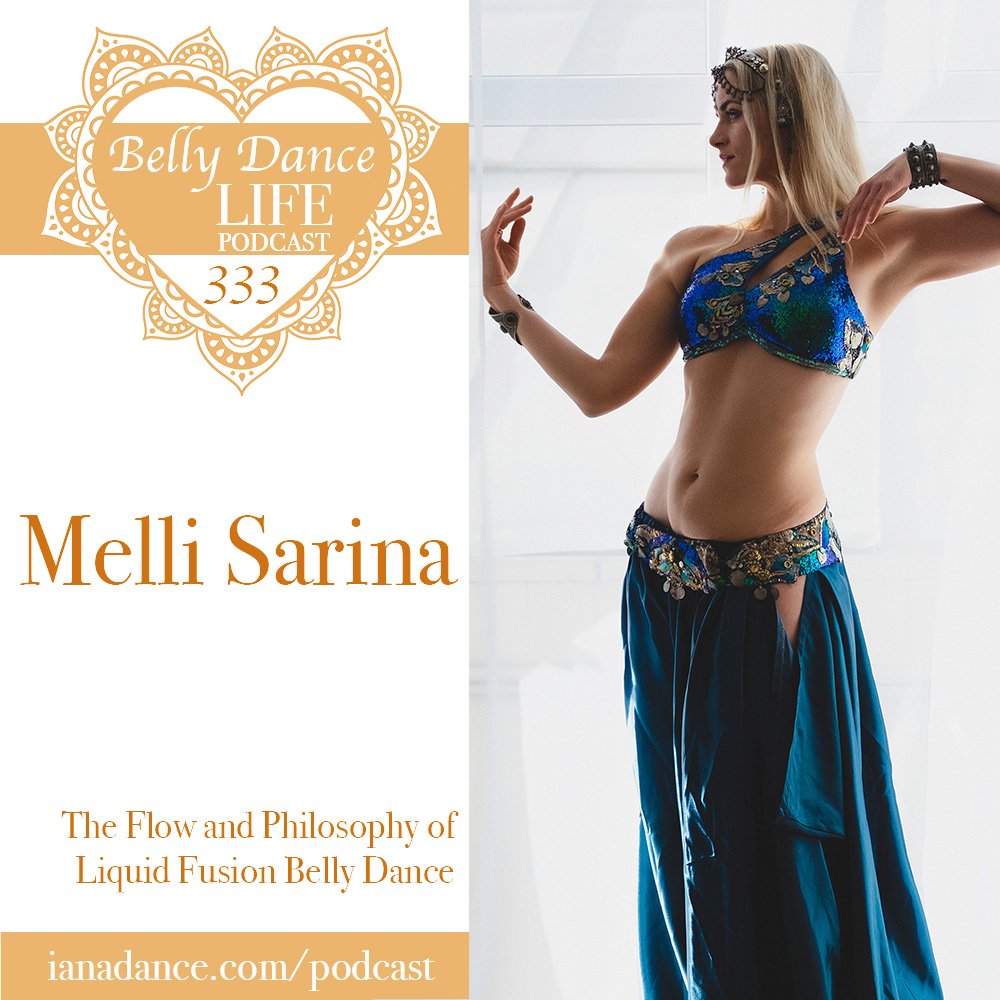
Melli Sarina is a pioneer in the Tribal Fusion and Fusion Belly Dance scene with over 26 years of dance experience. Based in Augsburg, Germany, she discovered her passion for Tribal Fusion at sixteen after a transformative workshop with Sharon Kihara. Her signature style—known as “Liquid Fusion”—blends Zoe Jakes' DanceCraft-inspired technique with the fluid artistry of urban waving, creating a powerful fusion of isolations, body control, and expressive flow. With intensive training from masters like Zoe Jakes, Kami Liddle, Mira Betz, and Jill Parker, including 49 hours at The Tribal Massive in Las Vegas, Melli has become known for her precision, biomechanics focus, and deep muscle awareness. She teaches online classes and leads her own Liquid Fusion intensives designed around body awareness, mobility, and personal movement needs. A celebrated performer and educator, she has graced stages across Europe and the U.S., earned titles like 2011 Tribal Star Award winner and 2010 Vice Tribal Bellydancer of the World, and continues to shape the next generation of fusion dancers with her technique-driven, heart-centered approach.
In this episode you will learn about:
The influence of urban dance styles—especially waving—on Melli’s movement vocabulary.
The creation and meaning behind the term “Liquid Fusion Belly Dance.”
How discovering pelvic floor awareness transformed her understanding of belly rolls.
The value of working with a somatic therapist rather than just dance teachers for deeper growth.
Her thoughtful approach to teaching levels in Liquid Fusion Belly Dance.

Lidiane is a Brazilian belly dancer currently based in Egypt, known for her expressive style, stage presence, and deep dedication to the art of Oriental dance. She began her journey as a teenager in Brazil and eventually left behind a stable career to pursue her dream of dancing professionally in Egypt. Since arriving originally in Sharm el-Sheikh, and eventually moving to Cairo, Lidiane has performed nightly shows, reshaped her technique, and immersed herself in the cultural nuances of the Egyptian dance scene. Through discipline, emotional resilience, and a commitment to authenticity, she has built a name for herself not only as a dancer but as a performer who embodies the spirit of the stage both on and off it.
In this episode you will learn about:
Why competitions never brought her medals—but did lead to her most important lesson about confidence on stage
Leaving a secure job in Brazil to pursue dance in Egypt
Reshaping her technique and musicality to survive the demands of Egyptian stages
Learning about branding and applying those skills to her belly dance career
Why gym workout is an important part of her lifestyle

Estelle Zaghloul Ramia is a Lebanese-born, Costa Rica-based belly dancer, choreographer, and cultural ambassador who rose to fame after winning the first season of Hezzi Ya Nawaeem on Lebanese TV and later became the first belly dancer to perform on the national stages of Costa Rica and Nicaragua. In recognition of her artistic and community impact, she was honored in 2017 as one of Costa Rica’s Women’s Empowerment Icons. Her most recent project, Modern Organic Dance and Sacred Arts, is a creative and spiritual collective she co-founded, combining dance, music, videography, ritual, and energy work to create immersive, transformative experiences rooted in sisterhood and sacred expression. She shares her work through performances, teachings, and online platforms.
In this episode you will learn about:
Oriental dance as a vessel for ancestral memory and feminine empowerment
What it means to dance with the elements and how fire, water, air, and earth can shape your movement practice
The role of ritual in Estelle’s classes, from altars and candles to setting intentions before movement
What blocked shimmies can reveal about your deeper energetic or emotional patterns
How Egyptian mythology holds simple truths about energy, healing, and feminine power

Pinky Selim is a banker by profession, a dancer by passion, and the founder of the AUC Alumni Folklore Group, a troupe dedicated to reviving Egyptian folkloric dance. While studying at the American University in Cairo, she was deeply involved in the university’s folklore club, and after graduation, she couldn’t imagine letting go of this art form. In 2013, with the support of AUC’s Alumni Office, she launched AUC Alum Folk to preserve and celebrate Egyptian heritage through performance and education. Inspired by legends like Mahmoud Reda and Farida Fahmy, Pinky has choreographed and staged numerous shows that bring folklore to life for new generations. As a proud mother and twin sister, she leads a growing troupe of dancers of all ages, teaching workshops and organizing performances that honor the richness and diversity of Egyptian folk traditions.
In this episode you will learn about:
How a simple alumni club became a full dance company
The deep influence of her father on Pinki’s view of music and culture
The growing disconnection between young Egyptians and their own cultural heritage
Why teaching folklore felt urgent in a culture where kids mock their own language
What it takes to lead amateurs who dance like pros
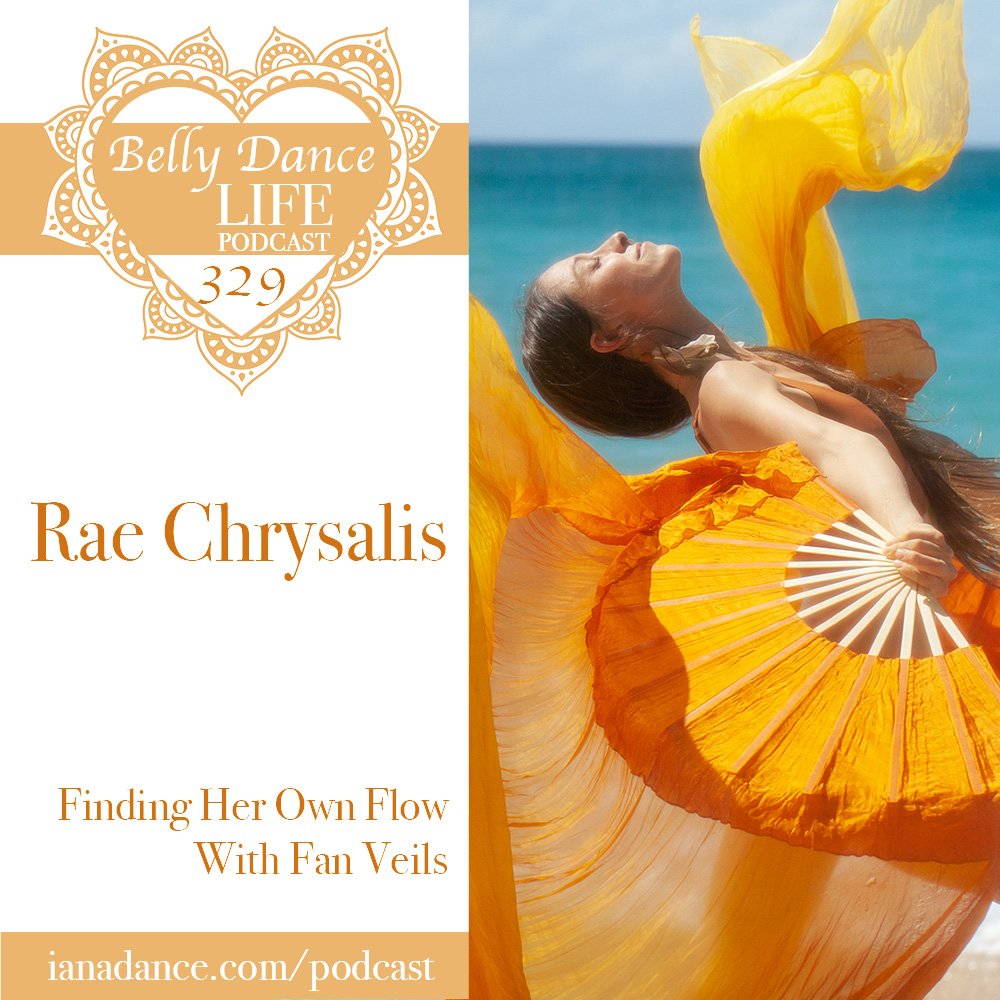
Rae Chrysalis is a classically trained dancer, embodiment coach, and leading voice in the silk fan community with over 30 years of experience in movement and performance. She is the founder of Chrysalis Silk Studies, an online school that has trained students in more than 60 countries in the art of silk fan dance. Rae’s work is at the forefront of Silk Fan Fusion, helping shape the future of this emerging art form through her signature blend of technical dance foundations, flow arts, and soul-driven expression. She has toured with artists like Seven Lions and Ayla Nereo and performed at premier festivals including Shambhala, Lightning in a Bottle, and Envision. As both performer and educator, Rae is celebrated for her ability to make advanced movement accessible while creating transformative spaces for deep embodiment and artistic discovery.
In this episode you will learn about:
How Rae discovered fan veils and made them her signature tool
Common mistakes dancers make during their learning process, how Rae built her teaching system over years of exploration
Why belly dancers are drawn to her work to deepen their connection with fan veils
How to choose fan veils that match your style and purpose
What is the essence of ritual art, and Rae’s personal journey into it

Dawn Devine, also known as Davina, is a costume designer, author, and lifelong dancer with a passion for belly dance and all things that sparkle. Best known for her popular books on how to design and construct belly dance costumes, she has built a unique career at the intersection of dance, fashion, and education. With a background in tap, jazz, modern, and ballet, Davina discovered belly dance as a teenager and has since taken the stage as a performer, teacher, and creative mentor. She is dedicated to helping dancers create beautiful, well-fitting costumes and is constantly writing—whether it’s books, blog posts, or magazine articles. A true costume historian at heart, Davina also enjoys diving into archives to uncover the origins and evolution of fashion, textiles, and stagewear.
In this episode you will learn about:
How Davina’s passion for sewing turned into costume repairs for local dancers and eventually her own costume book
Learning self-publishing from sci-fi zine culture, selling her first 50 books on spot, and writing over 20 books since then
Challenges of affording professional costumes in the 80s and the importance of the costume making skills
Her research into vintage Assiut fabric and what makes it so magical
Deep dive into zills—why dancers need more context, not just technique

Portia Lange is a renowned belly dance educator, performer, and entrepreneur, best known as the founder of Belly Motions, a Miami-based studio turned global platform blending Middle Eastern dance with fitness and empowerment. With over 20 years of experience, she has developed a unique, inclusive teaching method that welcomes all ages and abilities. A champion of Cairo’s Nile Group Competition, a Miami Herald Top 20 Under 40 leader, and a two-time ELLE Oriental cover star, Portia has also trained instructors worldwide through her Belly Dance Fitness Instructor Training Program. She is the creator of MIAMI RAKS FEST and continues to inspire thousands through both in-person and online programs that celebrate confidence, joy, and self-expression through dance.
In this episode you will learn about:
How exploring different cultures through dance can become a path to finding your own identity.
How Arabic, Turkish, Romani, and Mediterranean influences shaped her unique style.
The power of dance and music in healing, empowerment, and self-expression.
A thoughtful take on cultural appreciation vs. appropriation.
Why true presence matters more than perfect movement in dance.

Núria Rovira Salat, trained in anthropology and born in Spain, transformed her passion for Oriental and Romani cultures into dance, songs, and choreographies. She studied with masters like Lamia Saffiedine and Pétia Iourtchenko, teaching Arab-Berber and Maghrebi dances and performing widely in France. Núria teaches and performs widely across France and at major festivals, continually evolving her dance practice by blending traditional forms with contemporary expression. Since 2010, Núria has built a rich singing career with groups such as Finzi Mosaïque and Kavkazz, blending Mediterranean, Balkan, and Latin influences. Her cover of "Lágrimas Negras" has over 15 million views on YouTube. Founder of Ensemble QUIMERA, she explores Mediterranean traditional music with contemporary reinterpretations. Collaborating with notable artists and creating choreographies like “Azahar,” Núria fuses Romani, Balkan, and Arab styles to celebrate cultural diversity from the Bosphorus to Gibraltar.
In this episode you will learn about:
How exploring different cultures through dance can become a path to finding your own identity.
How Arabic, Turkish, Romani, and Mediterranean influences shaped her unique style.
The power of dance and music in healing, empowerment, and self-expression.
A thoughtful take on cultural appreciation vs. appropriation.
Why true presence matters more than perfect movement in dance.

Sara Al-Hadithi is a Baghdad-born, London-raised dance artist, cultural consultant, and autism advocate currently based in the USA. Deeply connected to her Iraqi heritage, Sara brings a unique perspective to Middle Eastern dance, particularly Iraqi styles, informed by both her personal background and the legacy of her father—a renowned Iraqi vocalist and folkloric authority. She has become a respected voice in the global dance community, offering students not only technical training but also a rich understanding of cultural context and significance. Beyond the stage, she is the founder of Autism Care Los Angeles (ACLA), an initiative inspired by her journey as a devoted mother to a non-speaking autistic son. With each role she embraces—dancer, educator, mother, and advocate—Sara channels her passion into creating spaces of cultural understanding, artistic depth, and compassionate care.
In this episode you will learn about:
Key differences between Iraqi dance and belly dance, including their movement philosophies and cultural contexts
Common misconceptions about Iraqi dance
The meditative and trance-like essence of Iraqi dance movement
How Iraqi dance has evolved in recent years
Modern trends and pop influences of dance and entertainment scene in Iraq

Ayla Joncheere is a scholar and cultural entrepreneur with over 18 years of experience in India and a deep expertise in the performing arts of Rajasthan. Following a long academic career in higher education, she founded Kalbeliya World, an initiative supporting digital literacy among Kalbeliya dancers in India through virtual dance classes. She also serves as the creative director of Maghenta, a platform for Indian-inspired arts. Drawing on her extensive on-the-ground experience, Ayla regularly provides consultancy on intercultural communication with Indian companies, Hindi language education and translation, and practical guidance for filmmakers, NGOs, students, and professionals working or relocating to India.
In this episode you will learn about:
How Ayla became interested in Kalbeliya dance, decided to quit school at the age of 16, and traveled to India
The use of the term “gypsies” within the Kalbeliya community
Analyzing the famous movie Latcho Drom
The role of costume and jewelry in Kalbeliya dance
How the recent popularity of the dance has changed gender dynamics within the community

Rachel Kay Brookmire is the founder and creative director of Sahara Dance, one of the largest and most well-established belly dance schools in the United States. Based in Washington, DC, Sahara Dance has been a thriving center for Middle Eastern dance for over two decades, offering 30+ weekly classes, nine performance groups, and a hybrid model for both in-person and virtual students. Rachel is also the creator of Sahara Dance Foundations, an intensive teacher training program, and directs the professional ensemble Raqs Sahara and student troupe Raqs Caravan East. A specialist in Egyptian raqs sharqi, Rachel blends technical precision with lyrical expressiveness and is known for her detailed, community-centered teaching style. She has performed widely, taught thousands of students, and produced major theatrical performances and international retreats. In 2023, her school proudly represented Middle Eastern dance at the World Culture Festival in Washington, DC, with 100 dancers performing a Jillina-directed choreography on the National Mall.
In this episode you will learn about:
Becoming a troupe leader in Egypt at the age of 16
The nuances of bringing folklore from life to stage
Mahdy’s experience of moving to the Netherland and starting his teaching career there
His decision to focus primarily on professional level students instead of beginners
How to be responsible and supportive judge at a competition

Rachel Kay Brookmire is the founder and creative director of Sahara Dance, one of the largest and most well-established belly dance schools in the United States. Based in Washington, DC, Sahara Dance has been a thriving center for Middle Eastern dance for over two decades, offering 30+ weekly classes, nine performance groups, and a hybrid model for both in-person and virtual students. Rachel is also the creator of Sahara Dance Foundations, an intensive teacher training program, and directs the professional ensemble Raqs Sahara and student troupe Raqs Caravan East. A specialist in Egyptian raqs sharqi, Rachel blends technical precision with lyrical expressiveness and is known for her detailed, community-centered teaching style. She has performed widely, taught thousands of students, and produced major theatrical performances and international retreats. In 2023, her school proudly represented Middle Eastern dance at the World Culture Festival in Washington, DC, with 100 dancers performing a Jillina-directed choreography on the National Mall.
In this episode you will learn about:
Transitioning from regular job to a dance career
How to understand if you are ready to teach
Dealing with a team of 15 teachers, and keeping consistent curriculum throughout the school
Why performing on stage is a magical part of your dance and personal growth
Managing workload and avoiding burnouts

Maya Youssef is a multi-award-winning composer and qanun virtuoso, acclaimed by the BBC as the "Queen of the Qanun." Recognized as the world’s leading mentor in Maqam and Taqsim, she has spent over a decade guiding hundreds of Arabic music enthusiasts and dancers in deeply understanding and embodying Arabic music — without relying on dry theory or vague clichés. Maya offers practical, dancer-friendly insights into recognizing Maqam by ear, understanding the true structure of Taqsim, and interpreting the emotional dynamics in the works of legends like Umm Kulthum and Farid al-Atrash. She is currently preparing a free "Maqam for Dancers Challenge" to help dancers forge a meaningful connection with Arabic music through embodied experience.
In this episode you will learn about:
What is Maqam
Nine most commonly used Maqamat, and how they “behave”
The structure and rules of Taksim improvisation
How to predict Tarab moment
Why is it important for dancers to learn about Maqam and Taqsim

Ojasvi Verma is an accomplished Indian dancer, content creator, and entrepreneur whose journey began on YouTube in 2016, growing to an audience of over 800K subscribers and nearly 1 million Instagram followers. Trained in a variety of dance forms including Bharatnatyam, Waacking, Jazz, Salsa, and Belly Dance, Ojasvi has developed a unique fusion style blending Oriental Belly Dancewith other genres. She has taught over 3,500 students worldwide through her online and offline classes. Alongside her creative work, Ojasvi launched "Ojasvi’s Bellydance Closet," a costume line designed to offer affordable and elegant dance wear for performers. Recognized for her influence both on stage and social media, she has performed at prestigious events including TEDx, Mumbai Hafla, and shows for UNICEF, and has been featured in numerous media outlets and awarded for her contributions to dance and digital artistry.
In this episode you will learn about:
How belly dance helped Ojasvi to stay dance-active and recover from the knee injury
Taking it slow with your training, and benefits of focusing on the beginners moves for a long time
Stereotypes surrounding belly dance in India
Developing unique fusion style, including Ojasvi’s signature back moves
Taking a decision to put on hold a super successful dance wear business in order to find fulfilling balance in life

Raïssa Leï is a multifaceted individual celebrated for her creative and cultural contributions. She is an advocate for the warrior spirit of Amazigh women, reflecting her dedication to preserving and promoting Amazigh heritage and values. Her work often highlights themes of freedom, resilience, and cultural pride. Raïssa is featured in interviews and podcasts that explore her journey and the impact of her advocacy on empowering women and communities. Raïssa is renowned for blending traditional North African tribal dances with modern styles like hip-hop and Waacking, creating a unique fusion that celebrates Amazigh heritage while embracing contemporary artistry. She directs the Kif-Kif Bledi troupe, showcasing her leadership in promoting North African culture. Through her art and public engagements, Raïssa actively challenges stereotypes and colonial erasure, using dance as a medium to reclaim and celebrate Amazigh identity.
In this episode you will learn about:
The Amazigh culture in Moroccan landscape
Stereotypes and misconceptions surrounding Amazigh community
Quitting a “regular” job to focus full time on activism and spreading awareness about the Amazigh culture
How fragile the copyright protection of the intellectual property of a choreographer is
Dealing with random people and organizations using your photos for commercial purposes

Mar is an Egyptian American woman and source dancer based in Los Angeles who founded Move And Radiate Inc. (M.A.R.). She created M.A.R. to provide a safe and non-judgmental space that steers away from competition & perfectionism. Mar’s classes are a home away from home to many MENA women & a new home to women who are excited to embrace the Egyptian culture. Her work includes empowering & uplifting women from her community and abroad to step into their power, connect with their bodies & heal from within. Her deep passion for her vibrant culture inspires her to educate and build confidence amongst women through the art of belly dance. She aims to restore confidence, boldness, strength, and unity amongst women. M.A.R. is now a national & global name w/ students taking classes from all over the country & world. Mar’s mission can be seen in & through her dance company. As Mar likes to say, “It’s bigger than belly dance.” She strives to spread love & she welcomes all women into this space!
In this episode you will learn about:
What is limiting your potential
Vanessa’s decision to stay in the USA
Learning at look at a bigger picture
How to deal with criticism, rejection and self-doubt
Mentorship program “Trasform”
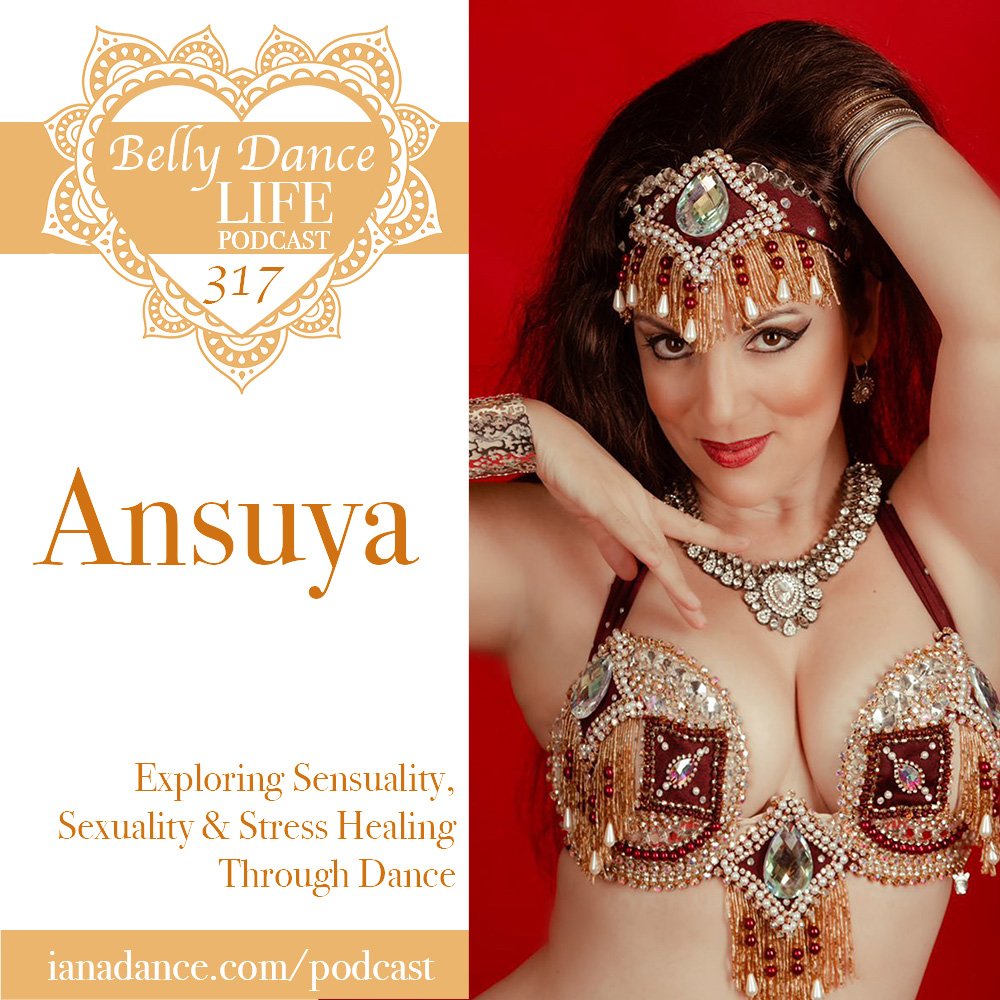
Ansuya is an award-winning belly dancer, instructor, and pioneer in online belly dance education. Raised in the artistic world of American Cabaret Bellydance by her mother, Jenaeni Rathor, Ansuya began performing at the age of four and went on to become a three-time Golden Belly Award winner, a Bellydance Superstars member, and a sought-after performer in Hollywood and international theaters. Her career spans television appearances, music videos, choreography for film, and collaborations with celebrities. Known for her expressive, fusion-based style, she integrates yoga and sensual empowerment into her teachings. Today, she continues to inspire dancers worldwide through her online training programs and certifications.
In this episode you will learn about:
Being a daughter of a belly dancer, and learning her first choreo at 4 years old
Treating props as spirits
Ansuya’s experience with Belly Dance Superstars
Belly dance as a tool to release stress, or a source of stress
Pushing the acceptable boundaries of exploring sensuality and sexuality through dance

Aliah is a renowned professional belly dance artist, international teacher, and judge. With a career spanning over a decade, Aliah has performed and taught in numerous countries including China, Switzerland, Norway, France, and many more. She is the founder of the Aliah Bellydance fashion brand and choreographer of the Aliah Oriental Dance Studio in Warsaw. Aliah has a rich background in competitions, having won several awards, and her students have achieved notable success in Belarus, Poland and beyond. Since 2015, she has been based in Warsaw, where she continues to inspire and educate through her classes and the Dance Weekend in Warsaw festival.
In this episode you will learn about:
Aliah’s experience on TV project
Building successful school in Poland
When and why to start participating in competitions as a beginner
Combining international travels with teaching locally
Managing two festivals

Marlene Tafle is an Argentine dancer specializing in Raqs Sharqi, with a profound passion for Egyptian culture. She began her dance journey at the age of 13 and earned her teaching degree from the Maiada Arabic Dance Academy in 2011. In 2014, Marlene opened her dance studio, Helwa, in Buenos Aires, which became Helwa Online in 2020. Over six years, she taught hundreds of students and organized numerous events. With over a decade of teaching experience, she employs a student-centered methodology that fosters personal growth and emotional connection through music. Marlene has performed extensively in solo shows and with live orchestras, and she has trained with international masters. In 2022, she moved to Cairo to work as a freelance dancer and has since collaborated with Mohamed Shahin's team on various events. Currently back in Argentina, Marlene continues to inspire and grow the local and international dance community.
In this episode you will learn about:
Empowering yourself to move towards your goals
Marlene’s first trip to Egypt
Taking the leap to open a studio, and then eventually closing it
Comparing performance experience in Egypt, Emirates and Tunisia
Organizing events in Egypt vs Argentina

Vanessa of Cairo is an international performer, award-winning choreographer, and instructor specializing in Egyptian dance and folklore. A native Texan with a BFA in ballet, she honed her craft in New York City, studying with Broadway legends before moving to Egypt in 2008. As the first American woman to own a production company there, she performed and produced shows in Sharm El Sheikh and held a 30-month residency at Cairo's Sofitel El Gezirah. Vanessa has taught, performed, and judged competitions worldwide and is now the Artistic Director of Jawaahir Dance Company in Minneapolis, continuing to inspire students through classes, workshops, and her mentorship program, "Transform."
In this episode you will learn about:
What is limiting your potential
Vanessa’s decision to stay in the USA
Learning at look at a bigger picture
How to deal with criticism, rejection and self-doubt
Mentorship program “Trasform”

Veronika Shulkevich is a renowned Ukrainian belly dancer, choreographer, and educator from Odessa, celebrated for her contributions to oriental dance. Beginning her dance journey at a young age, she gained international recognition by winning numerous competitions and teaching at prestigious festivals like Ahlan Wa Sahlan in Egypt. As the founder of VEROSHDANCE, she trains aspiring dancers and conducts workshops all over the world, blending traditional and contemporary styles in her performances.
In this episode you will learn about:
Teaching dance classes in Ukraine during the war time
Managing her own clothing brand
Working with professional models
Tips for improvisation & improving musicality
Veronika’s routine before going on stage

Acia Legras comes from a family deeply rooted in the arts, having started her artistic career at a young age with the Folkloric Troupe of Réunion, which was directed by her family. This involvement allowed her to learn traditional dances like Séga and Maloya, as well as gain experience in various musical instruments native to her island. Her family's influence played a crucial role in shaping her passion for dance, particularly when she was introduced to authentic Egyptian folklore at just seven years old, sparking her lifelong dedication to belly dancing.
In this episode you will learn about:
Childhood years in artistic family
Touring and rehearsing shows vs attending regular school
Finding passion with Egyptian dance
Teaching postpartum dance classes
Sharing her passion to dance with her own daughter and students.

Cassandra Fox is a prominent Canadian belly dancer based in Ontario, Canada. She has garnered attention for her unique blend of belly dancing and Caribbean dance styles, reflecting her Jamaican heritage. Cassandra's early interest in dance led her to pursue a career that combines performance and education. She shares her passion through various platforms, including YouTube, Instagram and Patreon, where she posts videos showcasing her dance routines and offers tutorials on dance techniques and costume making. In addition to her dance career, Cassandra is known for her work as a costume maker, further enhancing her artistic expression in performances. Her vibrant dance style and engaging content have helped her build a significant following within the dance community.
In this episode you will learn about:
Online boom during lockdown times
Separating your dance activities from your self-identity
Difficulties during a post-pregnancy recovery
Dealing with a postpartum depression
Approach to social media comments
Season 7 (2024):

Zahra Zuhair is an internationally acclaimed performer, instructor, and choreographer celebrated for her authenticity, musicality, and dedication to Middle Eastern dance. With a foundation in raqs sharqi from a young age, she has studied extensively across North Africa and the Middle East, specializing in Egyptian dance with prominent teachers like Mahmoud Reda, Raqia Hassan, and Dina. Founder of the Ghazella Dance Company and PoNaNa Dance Theatre, Zahra has choreographed productions blending Middle Eastern stories and dance. She also co-founded DanceGardenLA studio and has led beloved retreats and study tours, fostering excellence in Oriental dance. Now based in Columbus, Ohio, Zahra continues to teach and inspire the global dance community.
In this episode you will learn about:
Belly dance in the 1970 vs now
How performance venues and audience influence the art
Finding your personal voice in dance
Interacting with trends in a healthy way
Popularizing dance among kids

Igor Kischka is a notable Brazilian belly dancer and choreographer, recognized for his vibrant performances and contributions to the art of belly dance. He has gained a reputation not only in Brazil but also internationally, showcasing his talent through various performances and workshops. In addition to performing, Igor Kischka is dedicated to teaching and sharing his knowledge of belly dance. He conducts workshops and classes that emphasize the importance of authenticity and personal expression in dance. His philosophy encourages dancers to stay true to themselves while exploring their artistic potential.
In this episode you will learn about:
Dealing with body shaming
Overcoming trauma and abuse influence
Finding piece with your own mirror reflection
Tips for teachers on how to approach students who don’t accept themselves
Being vulnerable on stage

Ciya, an artist since childhood, began her journey with ballet, later exploring circus arts and contortion. At sixteen, she discovered oriental dance, which became her true passion. Over her career, Ciya has performed at prestigious events, including for the Moroccan royal family and Gabon’s presidential family, and appeared in the film L'Immortel. She has danced with notable Parisian companies and created her own, Sheherazade’s, in 2009. Currently, she leads the Egypt'Ciya Ballet, selecting top dancers annually to represent her artistic vision. As a dedicated teacher, Ciya has run her own dance school, Espace R'Danses, in Montrouge since 2015, known for her technical focus and interactive, student-centered approach. Since 2012, she has also contributed to professional training at the Sultana Association, teaching aspiring instructors and expanding the reach of this rich dance form.
In this episode you will learn about:
Pedagogy principles in dance
How to get ready for the class
Promoting belly dance classes and shows in France
Changing stereotypical opinions about belly dance
Coordinating dance groups

Mahin is an internationally acclaimed dance educator, known for her expertise in Middle Eastern dance and her science-based approach to movement. She holds a B.S. in Exercise and Wellness from Arizona State University and is an ACSM Certified Personal Trainer, integrating her scientific knowledge of body mechanics into her dance instruction. Creator of the popular “Bellydance Quickies,” Mahin teaches workshops worldwide, weekly classes at her studio One World Dance & Music, and online. Celebrated for her musicality, classical technique, and exceptional zill playing, Mahin’s motto, “In the ears, out the hips,” reflects her deep connection to Arabic music and dance.
In this episode you will learn about:
Different connection with the audience when performing at restaurant vs theatre
Tips on how to overcome stage nervousness, and how to help your students
Funny ‘disaster’ stories from performance experience
The value of knowing how to make your own costumes
Balancing teacher-student relationships

Levana is an acclaimed Spanish belly dancer, performer, and instructor celebrated across Europe for her artistry and dedication to oriental dance. With over 20 years of experience, Levana’s background includes rigorous training in ballet and competitive gymnastics, which gives her an elegant, powerful presence on stage. She is not only recognized for her performances and teaching but also as the founder and organizer of the renowned Etoiles d'Orient festival in Palma de Mallorca, where she brings together top international talent in oriental dance each year. Levana’s work continues to elevate the art form, inspiring students and audiences alike in Spain and beyond.
In this episode you will learn about:
Levana’s decision to become a full-time dancer
Running a school and festival
Bringing “Ukrainian” vibe to the competition
Navigating stressful situations during the event
Managing a team of people to work with

Soraya Art Factory is a professional dancer, entrepreneur, and cultural mediator at Place des Arts in Montreal. She is celebrated for her vibrant energy, eclectic style, and professionalism. Soraya’s dance journey began in Morocco, where she took her first belly dance class in 2007. Inspired by Egyptian icons like Neima Akef, Tahia Carioca, Samia Gamal, Fifi Abdo, Dina, she pursued her passion for dance. In 2015, she left her law career to travel, share her love for dance, and train globally. Her unique style blends Afro, belly dance, salsa, and more, with a strong emphasis on musical interpretation. Today, she lives in Canada, continuing to share her passion for dance.
In this episode you will learn about:
How Soraya started her dance journey back in Morocco
Her experience of moving to a different country
Learning different dance styles at the same time
What is true body awareness during your dance
Variety of Moroccan dances

This is a best of episode! You will hear how various types of conditioning exercises are the integral part of their training.
You will hear from Hayal, Shahrzad, Jasirah, Dipika, Nabila and Heather (Henna) Louise.
—————————————————
Check these full interviews with the podcast guests:
Ep 271. Hayal: Functional Training For Belly Dancers
Ep 214. Shahrzad: Changes in The Cairo Dance Life During The Last 4-5 Years
Ep 19. Jasirah: How to Practice on Your Own. Tips & Tricks
Ep 281. Dipika Vijay: Comparing Dance With Design And Geometry
Ep 105. Nabila: It's Never Too Late to Start and Succeed
Ep 291. Heather (Henna) Louise: Focus On The Experience You Wanna Have

Christine “Shiraz” Şahin is a dance practitioner-scholar and ethnographer specializing in contemporary Egyptian raqs sharqi (“belly dance”) and other MENAT (Middle Eastern, North African, and Turkish) dance genres. She has a Ph.D. in Critical Dance Studies from the University of California, Riverside, and a Bachelor of Arts in Anthropology from the University of Delaware, and is currently serving as Acting Assistant Professor of Dance in the Department of Dance at the University of Washington in Seattle. She also specializes in geriatric fitness and mind-body wellness. Her research has been published in Kohl: A Journal for Gender and Body Research.
In this episode you will learn about:
Christine’s book “Core Connections. Cairo Belly Dance in the Revolution's Aftermath”
Belly dance as a tool of empowerment
The influence of 2011 revolution on the dance scene in Egypt
Strong connections between art and politics
How you can support Palestine

Amina Goodyear began her performance career in the mid-60's at the Bagdad Cabaret dancing nightly in San Francisco's North Beach district during that city's golden era of Middle Eastern dance and until the Arabic clubs closed in that area. She founded her dance company, The Aswan Dancers, in 1975, and celebrates over 40 years of continuous performance and entertainment. She also founded the Cairo Cats, now a percussion ensemble led by her daughter Susu Pampanin, among many other music and percussion projects. Amina was inducted into the American Academy of Middle Eastern Dance (AAMED) Hall of Fame with a Lifetime Achievement award in New York in 1994. She also received a Humanitarian Award in 2001 from MECDA, a Lifetime Achievement award in 2003 from BDUC in Long Beach and a Lifetime Achievement award in 2015 from Isis and the Belly Dance Chronicles in Texas.
In this episode you will learn about:
Belly dance realities of 1960s
Learning to dance under the guidance of musicians
Giza Club project
Sexualization of belly dancers now and before
Biggest changes in belly dance industry over the last 60 years

Aleksandra Kilczewska, known by her stage name "Apsara Afsanera," is a dancer, choreographer, and alternative model based in Warsaw. She is a pioneer in her country, specializing in Persian dance as well as other Silk Road styles, including Uzbek, Tajik, Afghan, Azeri, and Uyghur dance. In addition to her expertise in these forms, she is also a skilled Tribal Belly dancer. Before delving deeply into Silk Road dances, Apsara trained extensively in various Indian dance styles and has a strong foundation in ballet, modern, jazz, and contemporary dance techniques. She continuously seeks to create her unique form of expression by blending these diverse techniques, drawing inspiration from music, poetry, literature, and film.
In this episode you will learn about:
Historical connections between Persian and Georgian dances
Types of Georgian dance
Benefits of training in various dance style
The psychology of teaching kids vs seniors
University degree for dancers

Saida, born to Syrian parents in Buenos Aires, Argentina, immersed herself in classical dance from 1983 to 1991, training with esteemed masters like Olga Ferri and Ricardo Rivas. In 1991, she embraced Arabic dance, studying under Amir Thaleb’s guidance and performing with the Arabian Dance Company, where she became the principal dancer for over a decade. In 1994, Saida established her own belly dance school. By 2004, she joined the Bellydance Superstars for a major U.S. tour, thanks to an invitation from producer Miles Copeland. Collaborating with Mario Kirlis, she released two acclaimed instructional DVDs in 2005 and 2007. In 2008, UNESCO's International Dance Council honored her as Argentina's best Arabic dance performer.
In this episode you will learn about:
How she met Amir Thaleb
Starting her teaching career by hosting classes at her mom’s house
Incredible collaboration with Mario Kirlis
Saida’s experience at Bellydance Superstars
Dealing with criticism and negative feedback

Warda is a choreographer, instructor, and performer of oriental dance and folklore styles with 13 years of experience. She has organized over 15 international events and excursions to the Middle East, making her a key figure in Bulgaria's belly dance events. With performance experience in both Bulgaria and Egypt, she is deeply connected to Oriental culture, speaks Arabic, and offers workshops across the world. In 2017, Warda launched the international festival HEZZ YA WEZZ in Sofia. She established her dance school in 2018 and has taught and judged at various international festivals. In 2021, she fulfilled her dream of teaching at Egyptian festivals, and in 2022, she performed in Egypt and appeared in a music video for Mahmoud El Esseily.
In this episode you will learn about:
Studying the Arabic language, and different dialects of Arabic
Does age make difference in belly dance career
How folklore dances are different from oriental
Most important qualities the event organizer must have
Warda’s experience of living and working in Egypt

Roula Said is a multifaceted artist of Palestinian heritage based in Toronto, Canada. She is a singer, dancer, musician, actor, and poet, renowned for her distinctive contributions to the world and fusion music scenes. As an Arabic musician, Roula sings and plays the qanun. One of her notable projects is "Om Laila: Bellydance for Body and Soul," a holistic system for bellydance instruction. After more than 30 years of teaching Middle Eastern dance, she has distilled her extensive experience into a suite of offerings rooted in tradition and focused on what she calls Embodied Soul Attunement.
In this episode you will learn about:
Incredible story of the universe guided Roula to the world of belly dance
Dealing with constant pain during dancing activities
Healing trauma and blocks through belly dance
The concept of movement embodiment and seven waves
How to find joy during dark times

Brenda, born in Buenos Aires, Argentina, discovered her passion for dance at age 3, mastering Italian and Argentinian folklore, Salsa, Tango, Jazz, and later Raks Sharki. At 17, she starred at the prestigious "Al Shark" restaurant in Argentina for five years. After earning her Oriental Dance Professor Certification from Amir Thaleb’s School, Brenda's popularity soared, leading to TV appearances and international teaching engagements. In 2014, she was chosen for the Egyptian TV show "Al Rakesa." Her success in the Middle East prompted her move to Egypt, where she performed in top venues and appeared in movies and music videos. Since 2018, Brenda has released her own bellydance music. In 2022, she published "Belly Dance in Cairo," a guide for dancers and those wanting to live in Egypt. Currently, Brenda continues teaching and performing at major festivals, living between Italy and Egypt.
In this episode you will learn about:
Brenda’s decision to change her lifestyle in Cairo
Her move to Italy and how she continues her career in Egypt
Health and nutrition tips
The difference between teaching and performing activities
Brenda’s current dreams and aspirations

Sometimes it is beneficial to step aside, and dive into a different dance genre. Let’s discuss how exploring variety of dance forms can enrich and improve your belly dance.
Show Notes to this episode:
Follow Iana on Instagram, FB, and Youtube . Join the Iana Dance Club to have access to the Apsara Dream intensive mentioned in the episode.
Details and training materials for the BDE castings are available at www.JoinBDE.com
Find information on how you can support Ukraine and Ukrainian belly dancers HERE.
Podcast: www.ianadance.com/podcast

André Elbing, a renowned belly dance photographer from Germany, developed an interest in oriental dance in 1989 when he began organizing and producing shows with his long-time friend, Shahrazad. As he started photographing these events, his passion evolved into a thriving business with an impressive collection of approximately 4.5 million photos to this date. André has collaborated with the most prominent stars in the world of oriental dance, both past and present. His work has been featured in numerous dance magazines, including Halima, Orient Magazine, Tanz Oriental, Bazar Oriental, Bastet, and many more. His photographs are widely recognized, appearing on hundreds of belly dance websites, as well as on CD and DVD covers, books, and various other media.
In this episode you will learn about:
How André became involved in belly dance photography
The differences between photographing a live show and conducting a studio shoot
Tips for the best stage lights setup
How André prepares for his work at festivals
Insights into his underwater photo shoots

Pierre Khoury, a Syrian-Canadian male belly dancer from Montreal, is renowned for his expertise in Syrian/Lebanese Dabke, Raqs Sharqi, and Whirling. His talents have graced prestigious stages, including the Theatrical Bellydance Conference of New York and the International Bellydance Conference of Canada in Toronto. He recently was a guest master instructor in several venues including Hot Raqs and Cairo Shimmy Quake in California, and his workshops were acclaimed for the quality of their content. Beyond the realm of dance, Pierre brings his unique perspective as a psychology teacher at the University of Montreal to his coaching endeavors, seamlessly integrating his psychological insights into his dance instructions.
In this episode you will learn about:
Pierre's journey into the world of belly dance
The harmonious fusion of his careers and how his psychology background enriches his coaching approach
Main mindset blocks that prevent dancers from growth
Variations of Dabke, and different Syrian dances
Building dance career as a male belly dancer

Nath Keo is the artistic director and choreographer of the Sacred Centre Dance Company based in Victoria, B.C., Canada. Nath is a belly dancer who has performed in over 51 cities with more than 1,000 performances during his career. Along with releasing a few music albums, a book and instructional dance DVDs, his resume includes serving as a featured instructor and performer at the International Bellydance Conference of Canada, alongside the legendary Farida Fahmy, and as a judge at the World Bellydance Championship hosted in Seoul, South Korea.
In this episode you will learn about:
Nath experience of growing up in a refugee camp, and how it influenced his interest in dance
How Nath got involved in belly dance
Difference between belly dance & Cambodian dance and music
Fusion opportunities between two genres
Having a successful belly dance career, experience of living as a monk, to becoming a mega music star in Cambodia

This is a best of episode! You will hear a collection of tips and practices from the belly dance stars regarding their experience of creating fusion between belly dance and other dance genres.
You will hear from Meher Malik, Anjelica Scannura, Soraia Zaied and Diana Gnatchenko.
—————————————————
Check these full interviews with the podcast guests:
Ep 27. Meher Malik: Fusion, Confusion and Female Objectification
Ep 79. Anjelica Scannura: From Flamenco to Belly Dance to Stand-Up Comedy

Heather (Henna) Louise is a performer, teacher, and life long student of Middle Eastern music and dance based in Portland, Oregon. After studying belly dance for five years, life took Heather to Asia where she began her performing career in the restaurant gig scene of Tokyo, Japan. Along with her dance partners, she worked with the live band Alladeen and co-founded the Tokyo International Bellydance Competition. Since returning to Portland in 2008, Heather has taught and performed at Jamballah NW Festival, The Hawaii Bellydance Convention, competed and placed in Bellydance of the Year Competition, and won the Ms. La Danse Orientale title. She has been a featured instructor at the Middle Eastern Dance Guild of Eugene (MEDGE), as well as at Emerald Sanctuary Belly Dance Retreat, and has been a panel judge for The Belly Dance Off.
In this episode you will learn about:
Becoming a professional performer in Japan
How to break down difficult movements to students
Overcoming learning frustrations
Tips for better improvisations
Heather’s approach to personal practice, and injury prevention measures

In order to find emotional connection with Baladi, you need to understand its cultural environment, and typical archetypes that are often associated with Baladi women. Let’s dive into this topic in this solo episode with Iana!
Show Notes to this episode:
Follow Iana on Instagram, FB, and Youtube . Join the Iana Dance Club to have access to the Baladi intensive mentioned in the episode.
Details and training materials for the BDE castings are available at www.JoinBDE.com
Find information on how you can support Ukraine and Ukrainian belly dancers HERE.
Podcast: www.ianadance.com/podcast
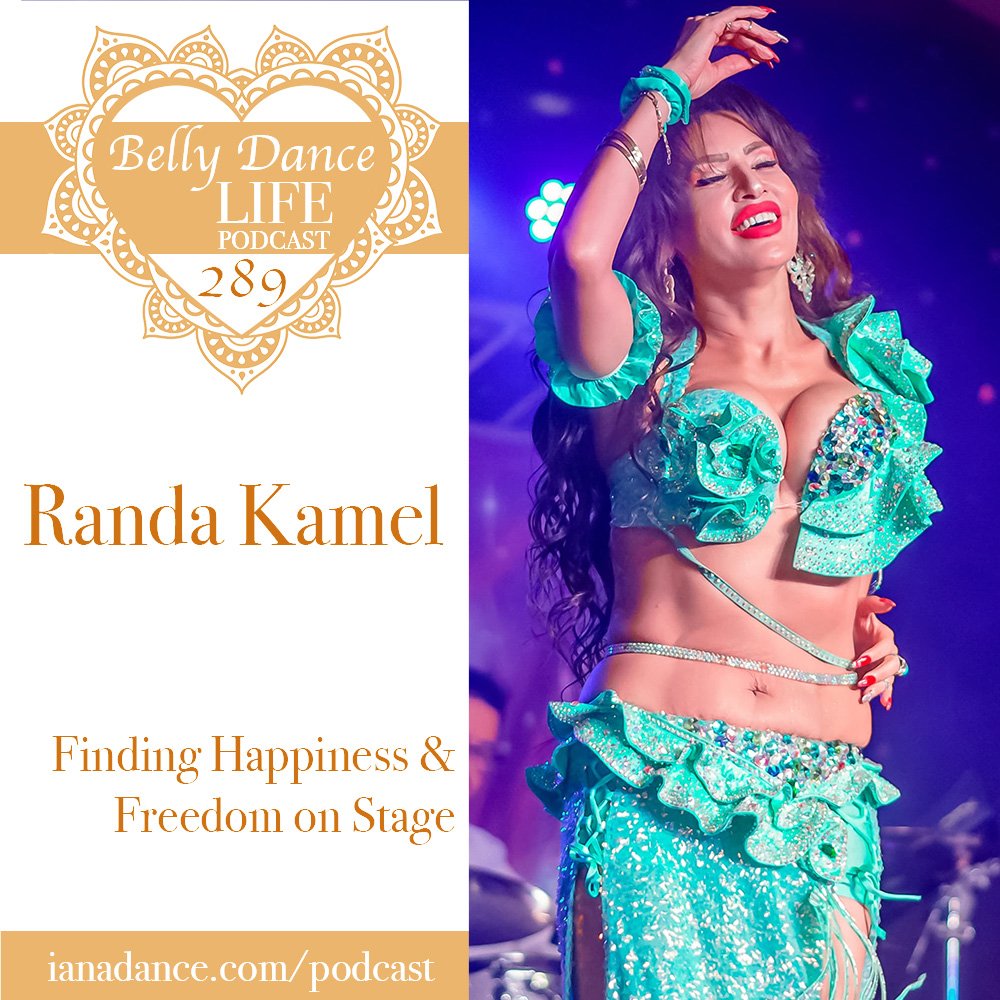
Randa Kamel is one of the most famous Egyptian dancers with her own unique style full of energy, as well as a teacher who has shared her knowledge with thousand of students all around the world. At the age of 15, she began studying folklore with the famous Reda group. After 7 years Randa transitioned into her solo career as a professional oriental dancer in Alexandria. Later moved on to Cairo, and quickly became a performer at the Meridien hotel, sharing the stage with legendary Fifi Abdou. Today Randa appears in weddings, parties and in the Nile Maxim cruise when she is in Egypt. Her own orchestra consists of 28 musicians. She also travels extensively around the world teaching at festivals, and organizes her own winter course and summer dance festival “Raqs Of Course” in Cairo.
In this episode you will learn about:
How passionate Randa was about dance since her childhood years
Her experience in Reda Troupe, and her decision to start a solo oriental career
How Randa’s choice of dance career influenced her family relationships
What her training looks like today, and if she reviews her own dance videos
Randa’s message to other dancers about this art form

Sylvia Yssei began her dance training in 2000 with Jazz, and throughout the years she included Flamenco, Spanish, Classical and Contemporary dances in her training. Later she discovered bellydance, and eventually Tribal Fusion dance and Ori Tahiti (Tahitian dance). Both became a powerful means of expression for her in a complementary, but at the same time very different ways. Along with her dance explorations, she studied Psychology at the University of Barcelona, which has definitely helped her to learn the basics of Pedagogy and the dynamics of learning, as well as to understand her students in an active and holistic way.
In this episode you will learn about:
What is Kundalini energy and where it is stored in our body
Why it is important to awaken Kundalini in us
How belly dance is connected to Kundalini energy
Ways how you can manifest Kundalini energy in you
How Sylvia became a Kundalini Awakening facilitator, and how it aligns with her dance activities

Izel Kirana started her dance journey almost 15 years ago. Originally from Barcelona, she fell in love with belly dance, tribal fusion style, and eventually Indian culture and art. 5 years ago she embarked on multiple journeys to India in search of its classical dances and folklore, training in Rajasthani folklore dance, Kalbelia dance, Kathak dance and Indian fusion.
In this episode you will learn about:
How Izel discovered tribal fusion, and eventual Kalbelia dance styles
Historical influences of Kalbelia dance
Izel’s experience of visiting India, and taking classes with local teachers
Fusion between different dance forms
Supporting the Kalbelia community by running a clothing & jewelry store

Amanda Rose is an internationally acclaimed instructor and performer based in Barcelona, Spain. In addition to over a decade of teaching experience, and almost 2 decades of experience with Raqs Sharqi, she also has a master's degree in Dance Movement Therapy from La Universitat Autònoma de Barcelona. Alongside her background in sociology and language studies, Amanda Rose’s academic experiences greatly shape her approach to dance, art, culture, and pedagogy. She has received wide recognition for Amanda Rose Online, one of the first online dance platforms in the Middle Eastern dance community, hosting a variety of online dance opportunities such as online prerecorded series, one on one coaching, competition training, and personal feedback.
In this episode you will learn about:
Switching focus from technical excellence to emotional expression in dance
How to find connections between movements and feelings
Tips for dealing with performance anxiety
What’s the difference between therapy and therapeutic experience
Amanda’s research on therapeutic capabilities of belly dance

Raphael Cormack has a PhD in Islamic and Middle Eastern Studies with a focus on Egyptian theatre from the University of Edinburgh. He is currently Assistant Professor in Arabic Studies at Durham University. An award-winning editor and translator, Cormack is the editor of The Book of Cairo and the co-editor of The Book of Khartoum. His writing on Arab culture has appeared in the London Review of Books, Prospect and TLS, among others. Raphael Cormack is the author of Midnight in Cairo: The Female Stars of Egypt’s Roaring ’20s, an exploration of Cairo popular culture through personalities such as Rose Al-Youssef, Mounira al-Mahdiyya and Oum Kalthoum.
In this episode you will learn about:
What’s the importance of 1920s in the Egyptian culture and entertainment industry
How he chose which exact female stories to highlight, and why Samia Gamal wasn’t featured in his book
His research methods
Comparing careers of Mounira al-Mahdiyya and Oum Kalthoum
What’s Raphael’s current focus on research

Colleena Shakti is an artist of great subtlety and depth. Trained extensively in Odissi classical dance under Smt. Sujata Mohapatra and well-versed in many styles of dance from India and beyond, Colleena lives an artistic path steeped in rich tradition. Yoga, aesthetics and related philosophies are an integral part of her holistic vision of art inspiring her to bridge timeless values with modern expression. She has performed for former president of India (Pratibha Patil), royal families across Rajasthan, Indian Embassy at Cairo, Chidambaram Nataraj temple and arts festivals from Japan to Australia. Colleena is the founder and director of Shakti School of Dance located in the Rang Nath Venu Gopal Temple in Pushkar, Rajasthan India where she also annually produces The Pushkar Temple Dance Festival. Recently she has added a Summer school program and retreat center at Villa Shakti Crete, Greece and launched online curriculum at her virtual school.
In this episode you will learn about:
Beginning of Colleena’s dance journey, her discovery of belly dance and later Odissi
Exploration of femininity through different dance styles
Indian fusion dance
Colleena’s training years in India
How you can study with Colleena in person and online

Julia Farid, a professional oriental dance artist, instructor, and choreographer originally from Ukraine, is renowned for her elegant and feminine dance style. Her contributions extend beyond the stage, as she has organized prestigious events like the Isadora Cup Festival, "Dream & Dance" Intensive Course, and founded Tips4hips online platform. With deep knowledge of oriental dance and captivating performances, she has become an internationally acclaimed artist, annually giving workshops and performing at numerous belly dance events worldwide
In this episode you will learn about:
Julia’s pregnancy experience
How motherhood affected her life and dance career
Advantages of in-person vs online classes
Julia’s vision for Tips4Hips
Constant growth as a dance professional

Bellydance Superstar Boženka is an award-winning, internationally acclaimed dancer performing and teaching worldwide. Boženka hosts The Mediterranean Dance Lab, a dance intensive and cultural retreat on the island of Crete, Greece, where she currently resides. She has recorded several best-selling instructional and performance DVDs and has toured extensively with the celebrated “Bellydance Superstars” as a featured soloist. Through a professional dance career of 26 years, Boženka has been invited to teach and perform in over 50 countries. Boženka instructed and choreographed international superstar Shakira for her “Mongoose” world tour in 2004 and for her 2010 world tour “Shakira”, working with the pop diva side by side to help her hone and polish her innate skills. She performed on stage with world-music artist “Alabina” during her concert tour in Miami Beach in 2005. Boženka has entertained an assortment of celebrities including Sean Connery, Donald Trump, Hugh Hefner, Madonna, Alejandro Sanz and Enrique Iglesias, amongst others.
In this episode you will learn about:
Boženka’s relationship with her own teacher, and how it influenced her career and teaching approach
Epic Ahlan Wa Sahlan 2006 competition, and reasons she decided to compete
Experience of working with Shakira for the last 20 years
Funny story during a performance for Sean Connery
The Mediterranean Dance Lab, and how it can help dancers grow

Dipika Vijay is an academically trained designer, and a belly dance artist by passion. Her belly dance company is called Badass Belly Dance and her fitness classes fly under the name Firefly Aerial Fitness. She lives in Mumbai but grew up in multiple cities in India and as a result picked up folk dance forms like Bhangra, Garba, Bollywood apart from brief training in classical Indian dance styles such as Bharatnatyam and Odissi. She has a keen interests in popping, waacking, yoga and she recently started learning body control and mobility. Now Dipika practices belly dance not only as a sensuous dance form but as a powerful tool that generates awareness of the body, mind and spirit. She uses movement to create form and form to shape thoughts.
In this episode you will learn about:
Belly dance in India
How learning design and geometry can make you a better choreographer
Improvisation vs choreography
What is the difference between creativity and art
Helping students discover their feminine side and sensuality

As belly dancers we often use the term “Baladi” in reference to a particular dance style. Also, we sometimes call Masmudi Saghir rhythm as Baladi rhythm, which is common a mistake. But in Egyptian culture the word “Baladi” isn’t the name of a dance. So what is it? Discover in this episode!
Show Notes to this episode:
Follow Iana on Instagram, FB, and Youtube . Join the Iana Dance Club to participate in the upcoming Baladi intensive.
Take the Belly Dance Habits Quiz HERE.
Details and training materials for the BDE castings are available at www.JoinBDE.com
Find information on how you can support Ukraine and Ukrainian belly dancers HERE.
Podcast: www.ianadance.com/podcast

Hend Elbalouty is a choreographer, performer and author. She holds a MA in Performing Arts from Kunsthochschule für Medien, a BA in Production Design from the Institute of Cinema Studies in Egypt and a 3-year degree in Contemporary Dance from Cairo Contemporary Dance Center. She works across mediums combining and mixing them in accordance to the project at hand. In the last few years, she collaborated and presented many multidisciplinary art pieces such as “FrauenGold'' Video Exhibition in Hamburg, “The Kitchen” Dance performance, Köln, “Absence” a group exhibition at CoCulture Art space, Berlin. In 2021, she created a performance inspired by the local street dance and music in Egypt called Maharagant, for which she was awarded the “kunstpreis der FREUNDE der KHM”. Hend strives to produce and participate in socially aware dance pieces, constantly exploring the role of art as a tool to empower the individual and bring out those neglected modes of expression.
In this episode you will learn about:
Hend’s personal dance journey, and what led to researching Mahraganat
Professional Mahraganat dancers, and what it means
The concept of a street as private community space
Why would dance possibly turn into a fight
The process of writing and producing the book

In today's episode, we're diving into a fascinating topic – using dance videos not just for social media posts, but as a powerful training tool. We'll explore why simply repeating choreography isn't enough and how to pinpoint and fix specific mistakes or weak spots in your dance. Plus, we'll chat about the importance of practicing without a mirror and how video recordings can be your secret weapon for self-analysis. So, get ready to learn some tricks for refining your dance moves, enhancing your technique, and getting performance-ready!
Show Notes to this episode:
Follow Iana on Instagram, FB, and Youtube .
Check out the Dance Habits intensive at the Iana Dance Club.
Take the Belly Dance Habits Quiz HERE.
Details and training materials for the BDE castings are available at www.JoinBDE.com
Find information on how you can support Ukraine and Ukrainian belly dancers HERE.
Podcast: www.ianadance.com/podcast

Sonya of Cairo is a professional dancer and choreographer. She has been immersed in oriental dance since childhood. Her mother, Marianne DS, founded The Sun Dance School 17 years ago in Paris, the largest association in the city. Sonya began her training with Marianne DS and has studied with some of the best Egyptian professionals. She stands out for her pure Egyptian style. Sonya currently lives in Cairo where she regularly performs. She also teaches at the largest festival in Egypt, "Raqs of Course”, organized by Randa Kamel. Sonya is considered today the rising star of the Cairo dance scene.
In this episode you will learn about:
Being the daughter of a professional belly dancer
Sonya’s first professional performances, and dealing with stage anxiety
Funny stories of performing at weddings in Cairo
Bitter taste of dance life in Egypt
Dealing with managers vs being your own manager

Arielle is a passionately dedicated dancer from the USA who currently performs daily in Cairo, Egypt. She teaches and performs bellydance, samba, folklore, fusion, burlesque, hip hop and many other styles of dance full-time. Although Arielle is American, she grew up in Egypt and has been performing Middle Eastern Dance since the age of 10. Arielle is the winner of several competitions and was a finalist on Egypt’s first bellydance competition TV show, “Al Rakessa” in 2014. Arielle returned to Cairo in December of 2019 and has been gracing the stage all around Egypt ever since! She currently teaches online group classes every Sunday and offers pre-recorded classes as well.
In this episode you will learn about:
Arielle’s childhood and school years in Egypt
Knee issues and belly dancing
The effect of fibromyalgia on Arielle’s lifestyle as a dancer
Decision to move back to Egypt to pursue a dance career
Changes in the modern dance scene in Cairo

A well-known choreographer and dancer, Alla Kushnir has won many prizes and awards. She was a finalist at the TV show “Ukraine has talent“, silver medalist of the Lebanese TV show “Hizzi Ya Nawaem”, winner of Egyptian TV show ” Al Rakesa”, among many other awards and achievements. For Alla Kushnir Oriental dancing has opened a lot of previously unknown sensations. As a dancer and choreographer, she believes that this style of dance changes a woman’s whole attitude towards herself and her surroundings. Alla is a frequent guest in various talent search competition TV shows. In 2008, she appeared in the first film “Tales of Sand” about belly dancing. She also hosted the program “Oriental Dances” on MAXXI TV channel.
In this episode you will learn about:
Alla’s multiple decisions to quit her performance career, and how destiny always brought her back to the stage
The importance of nutrition in a dancer’s life
How Alla practices and comes up with new movements
Lifestyle in Doha vs Cairo
Main elements of Alla’s daily routine

This is a best of episode! You will hear a collection of tips and practices from the belly dance stars. Find out how they approach their own training, and see what you can implement it in your life too.
You will hear from Jasirah, Cassandra Fox, Victoria Teel, Aziza, Nabila, Hayal, Jillina Carlano and Amar Lammar.
__________________
Discover what is blocking your dance progress right now, and which exact dance habits you should improve first of all.
Take the free Belly Dance Habits Quiz HERE.

Improve those couple things in your dance habits, and unlock an amazing growth in your dance skills throughout 2024!
January is time of planning and building hopes for the New Year. But often we make grand plans , and fail on showing up and performing them. Or sometimes we do show up but don't put 100% of our energy into the task. How to make sue that your list of New Year resolutions isn’t gonna be transferred to the next year, and you continue pursuing your dance goals beyond January…
Take the Belly Dance Habits Quiz HERE.
Show Notes to this episode:
Follow Iana on Instagram, FB, and Youtube . Check out her online classes and intensives at the Iana Dance Club.
Details and training materials for the BDE castings are available at www.JoinBDE.com
Find information on how you can support Ukraine and Ukrainian belly dancers HERE.
Podcast: www.ianadance.com/podcast
Season 6 (2023):

Chudney is a professional oriental dance artist who has competed and danced around the world. She opened her own oriental dance school in 2017, to give students easier access to her weekly in person classes, and share her unique personal style and technique on demand. Chudney was selected in 2016 as part of the international cast of Virginia’s “Reflections”. She was hand picked by Munique Neith to dance as part of the cast Ballet Internacional Munique Neith in Barcelona, Spain to perform at Egipto en Barcelona in 2018 and 2019. Chudney was also featured as Dorothy, in Jillina's Belly Dance Experience production of the Wonderful Wizard of Oz. She has competed in top competitions and won many accolades as a troupe member of Hippy Chicks Raks and as a professional soloist. She is most proud of being crowned East Coast Classic 2015 Cabaret Professional Champion and People's Choice winner in her hometown.
In this episode you will learn about:
Why do we have anxiety of trying new things alone
The concept of coaching vs teaching regular classes
Common mistakes that dancer do during competition preparations
Performance anxiety
How to practice your eye gaze for stage

Originally from Brazil, Hayal is a professional dancer who has been passionate about oriental dance since she was 17. She taught and danced all over the world, as a soloist and in collaboration with other dancers. She worked as a dancer and choreographer with the Portuguese company Mahtab and participated in several shows of the American troupe Bellydance Evolution with Jillina. Hayal has already worked in Brazil, Portugal, New Zealand, Egypt, Italy, Germany, Spain and of course in France, where she lives today (Lyon).
In this episode you will learn about:
Comparison between Brazilian dances and belly dance
What is functional training for belly dancers
How to improve your balance, arms mobility, and knees-hips connection
Frequency of functional training and how it works
How Hayal managed to teach a group choreographies for her show via online classes

Delya is a French belly dancer currently residing inn Switzerland. She has been involved in oriental dance for 20 years, and currently works as a full—time performer. She is the resident dancer at a 5 stars hotel in Zurich in collaboration with musicians. She does projects together with a Syrian musician Zaher Assaf who studied music at the conservatory of Damas, Syria. They regularly organize charity shows for Syria. Delya is a mother of a 4-year old daughter, who inspired her to write 2 children books: :Nour in Lebanon” (by Del Perrier), and “Danse mon amour (dance my love)”.
In this episode you will learn about:
How Delya got inspired to belly dance by Natasha Atlas
Persuading venues that belly dance can by classy and elegant entertainment for their audience
Pregnancy and motherhood as a belly dancer
Writing belly dance books for small children
The idea of creating a dance podcast.

Pedro Bonatto is an internationally acclaimed photographer and drummer. Born in Brazil and based in Canada, Pedro works in fine art and fashion photography, with works published in Elle Arabia, Fashion Canada and a number of magazines and books. As a drummer, Pedro focuses on Middle Eastern music and its relationship to cultures from aroundd the world. He is also the creator of the world music and dance group The Blue Dot Ensemble.
Show Notes to this episode:
Find Pedro Bonatto on FB, Instagram, YouTube, and website. Artist Date show is available HERE. Also, check our special Cairo Dance Guide intensive at the Iana Dance Club.
Previous Interviews with Pedro:
Ep 171 - Pedro Bonatto: How to Approach a Drum Solo Improvisation & Stop Being Afraid of It
Ep 112. Pedro Bonatto: Drummer, Photographer & Husband of a Belly Dancer
To book your stay in Cairo at Yasmina’s Bellydancers B’B, email yasmina@yasminaofcairo.com, or contact via Instagram.
Details about the Bellydance Bundle are available on Instagram, and website.
Follow Iana on Instagram, FB, and Youtube . Check out her online classes and intensives at the Iana Dance Club.
Find information on how you can support Ukraine and Ukrainian belly dancers HERE.
Podcast: www.ianadance.com/podcast

We fall in love with belly dance for many different reasons. One of those reasons is freedom, and vast opportunities for creativity. But we may get carry away with dance experiments. Let’s listen to the stories of Jillina Carlano, Meher Malik , Mohamed Shahin and Aubre Hill on why it is important to study the roots of this dance form.
Show Notes to this episode:
Full interviews with our guests:
Ep 22. Jillina Carlano: Building Community Around the Globe
Ep 27. Meher Malik: Fusion, Confusion and Female Objectification
Ep 94. Mohamed Shahin: When Egyptian Dance Becomes Something Else...
Ep 131. Aubre Hill: Transnational Dance Fusion
To book your stay in Cairo at Yasmina’s Bellydancers B’B, email yasmina@yasminaofcairo.com, or contact via Instagram.
Details about the Bellydance Bundle are available on Instagram, and website.
Follow Iana on Instagram, FB, and Youtube . Check out her online classes and intensives at the Iana Dance Club.
Find information on how you can support Ukraine and Ukrainian belly dancers HERE.
Podcast: www.ianadance.com/podcast

Farah Nasri is a UK qualified teacher in dance and foreign languages. She began her belly dance career when she was a college student in London, and in 2014 she moved to Cairo. Today her Farah Nasri Dance Labs is the place to find the highest quality classes in Egyptian dance, theory, history, language, and culture! She is an active performer in Cairo, organizer of special course Belly Dance on Location, creator of her training wear brand 3youni, among other projects.
In this episode you will learn about:
How Farah was fired as a school teacher in UK because of her belly dance activities
Moving to Cairo to perform at famous Nile Maxim boat
Differences between boat, club, and cabaret shows
Producing designs locally in Cairo
Filming dance videos as a central educational point of Farah’s course

Tiffany started the Bellydance Bundle in 2017, bringing together dancers who had content online to create one massive showcase for what was available at the time. Now, year over year she brings together teachers and builds communities around the idea of an at-home practice. From lectures on language and culture to dances of all different MENAT & fusion styles, Tiffany brings together groups of teachers each year to help dancers study more often, with less stress, at home, for an affordable price. A total nerd for the business side of dance, she loves to work with teachers to help them find new students, and as a total nerd for dance, she loves to study with as many teachers as she can. How fortunate to be able to combine both in each year's Bellydance Bundle! Stay tuned for this year's offering, available November 2nd - 10th.
In this episode you will learn about:
Learning business models from other industries
What’s the use of having virtual assistant
Tips for hiring virtual assistant
Marketing tools that work in online space
What is Belly Dance Bundle, and how it benefits dancers

Shining is a performer, instructor and researcher of Egyptian traditional dances, whose work emphasizes the cultural and historical influences on the medium of dance in and from Egypt. She is the founder of http://www.banatmazin.com, a website dedicated to the legacy of the famous Luxor-based family, created in cooperation with Khyria Mazin to provide recorded lessons, interviews, song translations, family bios, streamable music and more, as learning resources for dancers around the world. She continues to perform, research and teach online and abroad since her move to Egypt in the summer of 2021.
In this episode you will learn about:
The idea of documenting classes with Khyria, and how Shining moved to Egypt
The importance of studying ghawazee style
What the term ‘ghawazee’ actually means
How to differentiate music appropriate for ghawazee style
Different ways you can support Khyria Mazin

This episode includes Iana’s lecture that was recorded specifically for the upcoming intensive at the Iana Dance Club “Cairo Dance Guide”.
You will hear about Iana’s experience of attending a bunch of dance festivals in Cairo during summer 2023, and her observations about current trends present in the Egyptian dance style.
Check the entire collection of available intensives at www.ianadanceclub.com/intensives
Show Notes to this episode:
Follow Iana on Instagram, FB, and Youtube . Check out her online classes and intensives at the Iana Dance Club.
Details and training materials for the BDE castings are available at www.JoinBDE.com
Find information on how you can support Ukraine and Ukrainian belly dancers HERE.
Podcast: www.ianadance.com/podcast

Charafe is not just a dancer, he is one of the few, if not the only, male belly dancer in Morocco. He tries to lead a life as normal as possible in Casablanca. He teaches dance, makes choreographies for belly dancers, and participates in modern dance performances of his friends Ahlam and Wajdi. Charafe managed to establish dance classes in Casablanca, spreading awareness and education of various dance styles, including oriental and Moroccan folklore, within the country, as well as abroad.
In this episode you will learn about:
Being a male dancer in Morocco
Seeking formal oriental dance classes
Variety of Moroccan dances, including Moroccan classical style
Cultural connections with Andalusia
Working with celebrities and TV shows

We all love belly dance. But there is so much beyond oriental, in the field of folklore dances. Let’s listen to the stories of Apsara Afsanesara, Nada El Masriya , Samantha Burnstein and Gigi Dilsah, who found joy in exploring various folklore dances of the Near East and North Africa.
Show Notes to this episode:
Full interviews with our guests:
Ep 20. Apsara Afsanesara: What Do You Know About Persian Dance?
Ep 28. Nada El Masriya: How Studying Folklore Can Make You a Better Belly Dancer
Ep 244 - Nada El Masriya - Prioritizing Quality Over Quantity
Ep 38. Samantha Burnstein: Can Folklore Be Authentic on Stage?
Ep 70. Gigi Dilsah: What Does It Take to Be a Belly Dancer in Turkey
Details and training materials for the BDE castings are available at www.JoinBDE.com
Follow Iana on Instagram, FB, and Youtube . Check out her online classes and intensives at the Iana Dance Club.
Find information on how you can support Ukraine and Ukrainian belly dancers HERE.
Podcast: www.ianadance.com/podcast
Zara is an Egyptian dancer currently based in Cairo. She has worked professionally as a dancer for over 17 years, including last 6 years specifically in Egypt. Zara has stared in various music videos and Bollywood films. Most recently she was featured in a film together with famous shaabi singer Shaaban Abdel Rahim and in a Ramadan special TV drama featuring Dina and Haifa Web. Her dancing has taken her around the world - Zara has performed not only in the UK and Egypt but also at a vast number of East African countries including: Kenya (in both Nairobi and Mobassa) and Tanzania (in both Dar Es Salaam and Zanzibar). Other countries she has worked in include Pakistan and Malta.
In this episode you will learn about:
Being a belly dancer as an Egyptian woman
Different types of cabaret venues in Cairo
Personal insecurities and confidence on and off stage
Another way of seeing Mahraganat, or why it got such a bad reputation
How she started her magazine and belly dance store

Having a multidisciplinary background and an unending thirst for all things dance, Diana Soto has performed in belly dance companies as well as flamenco and modern dance companies. She believes that the best innovation is rooted in tradition, so she has travelled to Egypt, Turkey, Spain and lived for a while in Beirut to study in depth the roots of the dances. Originally from Puerto Rico, Diana is currently based in Houston, and fully involved in active gigging life.
In this episode you will learn about:
Using belly dance as a distraction during cancer recovery
The experience of living in Beirut
Pivoting from teaching to performing industry
Getting into corporate jobs after full-time belly dance career
Tips for solid marketing strategies

Khaled Mahmoud is an Egyptian dancer from Cairo, currently based in London, UK. He specializes in oriental Raqs Sharki style, although his knowledge is also deeply routed in all kinds of Egyptian folklore. His style is very energetic and graceful at the same time. Khaled was a star at the International Bellydance Congress in the UK, and he is very much in demand teaching and performing in various festivals around the world.
In this episode you will learn about:
Who are Egyptian women called ma’lema, kodia zar and el-osta
Practical example of why you should learn folklore as a belly dancer
Finding his own path as a dancer
Separating personal and artistic life
Khaled’s decision to retire from dance as his main profession

This episode includes Iana’s lecture that was recorded specifically for the upcoming intensive at the Iana Dance Club “Cairo Dance Guide”.
You will hear about Iana’s experience of attending a bunch of dance festivals in Cairo during summer 2023, and a collection of practical tips that would be useful for your future activities at festivals.
Check the entire collection of available intensives at www.ianadanceclub.com/intensives
Show Notes to this episode:
Follow Iana on Instagram, FB, and Youtube . Check out her online classes and intensives at the Iana Dance Club.
Details and training materials for the BDE castings are available at www.JoinBDE.com
Find information on how you can support Ukraine and Ukrainian belly dancers HERE.
Podcast: www.ianadance.com/podcast

Meet Passant Gemeay, a self-taught Egyptian bellydance teacher, choreographer & ladies-only performer. She has fiercely joined the world of dance. not knowing that it would become her ultimate passion in life. Having a great experience by attending classes and connecting with star dancers, she managed to have her own attractive style mastering all types of this art, and aiming to teach women who think they can’t dance.
In this episode you will learn about:
Different kinds of belly dance classes in Cairo
The popularity of belly dance classes at gyms
Benefits of belly dancing
Teaching belly dance to Egyptians and foreigners
The influence of dance festivals

Mohamed Shahin is an inspirational instructor, world-renowned performer, and challenging choreographer of Egyptian Oriental Dance. A native of Cairo, Egypt, Mr. Shahin discovered his passion for Egyptian Dance at the young age of fifteen. Throughout Shahin’s childhood, he was fascinated by all forms of dance, and after receiving his degree as Mechanical Engineer, he was at cross road to choose between becoming a full-time engineer or pursue his life as a professional dancer / dance teacher. Shahin decided that he would dedicate himself to the Egyptian Dance. After many years of the intense study of various Middle Eastern styles of dance, Modern dance, and Ballet- Shahin developed a complex methodology of instruction that has made him a Master teacher beloved to his students worldwide, today. Shahin currently lives in New York City but has been touring the world full-time since 2004.
In this episode you will learn about:
The story of Cleopatra festival, and its first successful edition in Egypt
Differences between dance festival and intensive
What is typical Egyptian show, and communication between dancer and musicians
Challenges in organizing festivals in USA and Egypt
Mohamed’s new music album, and the process of creating songs for dancers

Marta Korzun is an internationally recognized bellydance teacher from Ukraine. She is acknowledged for her unique teaching method and clear and concise explanations, and regularly holds training workshops worldwide. She started her career in 2006 by taking part in many competitions in Ukraine and abroad, including Cairo. She has been titled the Bellydance Champion of the World (2011), European Bellydancer (2011), and 2nd winner at “Nile Group Cairo" (2010), just to name a few. Today Marta is a respected judge at many prestigious belly dance competitions, and coach of the World Champions in oriental dance.
In this episode you will learn about:
How lockdowns forced Marta to review her self-identity as a dancer, and as a person
Dealing with inner critique, and overcoming the struggle of constant comparison
Why she decided to travel less than before in her dance career
The decision to move to Canada
Comparing belly dance scenes in Ukraine and Canada

As much as dance brings happiness to your life, sometimes there are moments when you need to take actions and do some changes. Let’s listen to the stories of Luna of Cairo, Joana Saahirah, Anjelica Scannura and Aradia of Las Vegas on how they pivoted their lives and artistic adventures.
Show Notes to this episode:
Full interviews with our guests:
Ep 17. Luna of Cairo: Is Belly Dance Life in Cairo Always a "Fairy Tale"?
Ep 165. Luna of Cairo: Life Beyond Dance
Ep 76. Joana Saahirah: Egyptian Dance As The Tool For Self-Knowledge And Empowerment
Ep 172. Joana Saahirah: Running Dance Courses Online
Ep 79. Anjelica Scannura: From Flamenco to Belly Dance to Stand-Up Comedy
Ep 101. Aradia of Las Vegas: How to Succeed as a Full-Time Performer
Details and training materials for the BDE castings are available at www.JoinBDE.com
Follow Iana on Instagram, FB, and Youtube . Check out her online classes and intensives at the Iana Dance Club.
Find information on how you can support Ukraine and Ukrainian belly dancers HERE.
Podcast: www.ianadance.com/podcast

Kareem Gad is an Egyptian master teacher, co-founder and co-director of Bell’Masry Dance Company based in Paris, France. Since childhood, his curiosity about art led him to discover and study the art of singing, music, poetry, percussion, acting and dance. He was a solo dancer, coach and choreographer at the official troupe of the Egyptian Ministry of Youth, solo dancer at the Egyptian National Theater, member of the teachers team in Tawasol Foundation of Arts, choreographer for the Higher Institute for Dramatic Arts's Graduation Projects in the Egyptian Academy of Arts. Kareem has a Bachelor of Arts and History of the Civilizations of Ancient and Modern Near East. He did a lot of research in Egyptian folkloric heritage and oriental dance. Kareem also wrote and composed many successful songs for the oriental community.
In this episode you will learn about:
How Kareem got involved in dance activities
His years at the troupe of the Egyptian Ministry of youth
Being in Egyptian folklore and contemporary dance fields
Transition from Egypt to France
The concept of new classical songs

Morjana is a professional dancer, choreographer, researcher, teacher, as well as a percussionist (darbuka). She is currently based in Egypt, although she also travels extensively all around the world. She is a winner and award-recipient for many dance competitions, as well as a participant of several music projects in Cairo, including Estabena, a music project playing folk music from the Mediterranean area, Ehna Talata and Said El Artist music group. Morjana also organizes a specialized tours to Egypt for dancers interested in exploring local culture, music and dance.
In this episode you will learn about:
How Morjana learnt Arabic language
First visit to Egypt: expectations vs reality
Various local traditions and how they stay alive in Egypt
Studying Tahtib practices
Morjana’s guided tours for dancers

This episode includes Iana’s lecture that was recorded specifically for the new intensive at the Iana Dance Club “Archetypes of Egyptian Goddesses in Dance”.
Feel like a goddess on stage with the help of Egyptian mythology! It's about your stage presence, and how the power of stories and myths can help you feel more confident, open and connected during your dance.
Check the full intensive on Archetypes of Egyptian Goddesses in Dance at www.ianadanceclub.com/intensives
Show Notes to this episode:
Details and training materials for the BDE castings are available at www.JoinBDE.com
Follow Iana on Instagram, FB, and Youtube . Check out her online classes and intensives at the Iana Dance Club.
Check the full intensive on Archetypes of Egyptian Goddesses in Dance at www.ianadanceclub.com/intensives. This intensive was inspired by and created in collaboration with the Museu Egípcio e Rosacruz in Curitiba, Brazil. To learn more about the museum, visit their website at https://museuegipcioerosacruz.org.br
Find information on how you can support Ukraine and Ukrainian belly dancers HERE.
Podcast: www.ianadance.com/podcast

Today we are having a conversation with the team of Taqseem Institute of Cairo.
Taqseem Institute is an integrated dance institute/lab with the main objective of providing increased access to culture (Egyptian Music and Dance), improve the environment where those expressions can thrive and contribute to social cohesion, targeting females; the segment most compromised in the sector of art. Aiming to generate a tangible impact on the influence of heritage dance in modern Egyptian society.
Amie Sultan is the founder and dance program director of Taqseem. The team also includes Safaa Saeed, Aya Saada, Menna Emam and Fagr Amien.
In this episode you will learn about:
The current team of the Taqseem Institute, and how they got involved in the project
Hesitations regarding choosing dance as a career in Egypt
What is the real Egyptian dance
Struggles in the research process
The educational process and structure of the Taqseem Institute.

Yasmina, sometimes known as 'The English Rose of Cairo', has over twenty-five years of experience in the field of Egyptian oriental dance. Originally from the UK she spent many years travelling and dancing her way around the Middle East before settling in Cairo in 1995. Here she performed with her orchestra for eight consecutive years, appearing at major Cairo venues such as Meridien Heliopolis, Safir, Pyramisa and the Semiramis Intercontinental hotels, the Nile Maxime, Tivoli Heliopolis, as well as hundreds of weddings and parties in Cairo and around Egypt. She has also worked extensively as a photo-journalist in Cairo and writes regularly for several Egyptian and foreign publications. Based at her home beside the Giza pyramids she is the coordinator and co-host for several international belly dance tours each year, and provides back-up to both groups and individuals in their adventures in Egypt.
In this episode you will learn about:
Differences between dance contracts in Gulf area and work in Cairo
Yasmina’s decision to stop active performance career, but still be based in Egypt
The evolution of Cairo dance scene since 1995 till now
Where can you do belly dance photoshoots in Cairo
Yasmina’s unique Bed & Breakfast accommodations for dancers.

Amie Sultan is an Egyptian belly dancer and classical ballerina. She was born and grew up in Singapore to an Egyptian family that was working extensively in South East Asia. Having established herself first as a successful ballet dancer, she has toured across the world dancing in Swan Lake, La Dame Aux Camellias, Jeune Homme Et La Mort, La Bayadere and Raymonda. In her quest to add a new layer to her dance repertoire, it is Amie's goal as a performance artist to restore the glamour and brilliance of the belly dance technique that was at its height in the 1940's and 50's.
In this episode you will learn about:
How Amie transitioned from a professional ballet career to the belly dance world
Difficulties of being a dancer in Egypt
Bringing this dance to institutions such as museums.
Creating the Taqseem Institute and Tarab Collective
Relationships between belly dancers that affects the reputation of the dance

Eva Charkina is the winner of the DariyaM Cup 2018 in the category “Youth. Lovers.”, winner of the competition “The way to the stars” 2018, and many other Ukrainian and international dance events. She has a university degree in modern choreography from the Kyiv University of Culture. Currently living in Kyiv, Eva stays as an active dancer and teacher both in Ukraine and abroad.
In this episode you will learn about:
Her first belly dance performance after the beginning of the war in Ukraine
Creating choreographies for competitions
The importance of a dance repertoire
Finding individuality as a dancer
Teaching classes

We haven’t had many of best of compilation episodes this year so far, so it’s time to fix it! Let’s talk about the nutrition.. You will hear from Cassandra Fox, Jillina Carlano, Alla Kushnir, and Mercedes Nieto.
Show Notes to this episode:
Full interviews with our guests:
Ep 15. Cassandra Fox: Healthy Does Not Have a Face
Ep 31. Jillina Carlano: How Food Can Influence Your Dance
Ep 40. Alla Kushnir: Not Only Luck Makes You Number 1
Ep 163. Mercedes Nieto: Finding Home Inside Your Body
Join SharQui - The Bellydance Workout at sharqui.com/online
You can find details about Joana Saahirah online school and available courses at www.joanasaahirah.com
Follow Iana on Instagram, FB, and Youtube . Check out her online classes and intensives at the Iana Dance Club.
Find information on how you can support Ukraine and Ukrainian belly dancers HERE.
Podcast: www.ianadance.com/podcast

Silvia Brazzoli is a professional dancer, instructor, yoga teacher, painter, and pizza lover based in Italy. She found her biggest love for oriental dance at the age of 18. Since then she has been dancing and teaching professionally all around the world. The growth of a dancer is a never-ending journey and Silvia is constantly researching, traveling and training in oriental dance and other dance styles, influencing the development of her own style.
In this episode you will learn about:
How dance and yoga can compliment each other
Silvia’s transition into a professional dance life
Sharing knowledge as a teacher
Teaching ongoing classes vs one-time workshops
How to be yourself through dance

Native Egyptian Nada El Masriya grew up belly dancing fully immersed within the rich cultural and historical environment of metropolitan Cairo. Her first formal dance training began early, with her high school’s folkloric troupe. At Cairo University, Nada earned a degree in Egyptian Law, minored in the History of Egyptian Culture and Dance Traditions. At early age Nada began her intensive training and performance with the prestigious Reda Troupe School. In 2002 she emigrated to Canada inspired by a passionate desire to accurately preserve and pass on her rich historic native Egyptian culture.
In this episode you will learn about:
The benefits of cutting back and prioritizing your projects
How to approach your hesitation to raise prices
Mindset trick of stop being afraid of competitions
Why smaller niche can bring bigger income
Nada’s two big festivals in Egypt and Canada

Oleksandra Kovalova is a professional dancer, teacher, choreographer, and certified judge. She is a director of oriental dance school Amberly based in Zhytomyr (Ukraine), and an organizer of the big international festival Yalla Bina. Oleksandra is a winner of Nile Group competition, as well as a mentor for her award-winning students. After living and teaching classes in Germany during past year, she is currently back to Ukraine, and just managed to run a very success edition of her dance festival, gathering dancers from all over Ukraine.
In this episode you will learn about:
How war in Ukraine influenced Oleksandra’s life and dance activities
Teaching belly dance classes in Germany
Why continuing dance activities in Ukraine is so important
The nuances of festival organization considering the current situation in Ukraine
How dancers’ approach to belly dance is changing

This episode includes Iana’s lecture that was recorded specifically for her recent Mahraganat intensive at the Iana Dance Club.
Since Mahraganat has a very particular mood, this style may feel uncomfortable for many dancers. Diving into such topic can be a great opportunity to train your acting skills, loosen up emotional boundaries related to shyness, and get out of your comfort zone. In addition, we are gonna work on a very fun and dynamic choreo which will provide you a bit of cardio workout. :)
Check out the full intensive on Mahraganat: https://www.ianadanceclub.com/intensives/mahraganat-(street-shaabi)
Show Notes to this episode:
Join SharQui - The Bellydance Workout at sharqui.com/online
Details and training materials for the BDE castings are available at www.JoinBDE.com
Follow Iana on Instagram, FB, and Youtube . Check out her online classes and intensives at the Iana Dance Club.
Find information on how you can support Ukraine and Ukrainian belly dancers HERE.
Podcast: www.ianadance.com/podcast

Yunseo is a young talented belly dancer from South Korea. She is the award recipient of the Midas Goldentouch Bellydance Competition, Reina Oriental Dance Festival, Elkaff Festival, Malaysia World Oriental Dance Art Festival, and many others. Her beautiful unique style blends elements of traditional belly dance mixed with contemporary and other non-belly dance genres.
In this episode you will learn about:
Belly dance in Korea
The importance of competitions
Differences between competitions in Korea and Europe
Overcoming failure at contests
Mixing belly dance with other styles

Anusch Alawerdian is an Armenian oriental dance performer, instructor and choreographer. She has been interested in dance since she was little, taking up several dance courses like ballet, folk dance and jazz. At the age of seventeen Anusch fell in love with the oriental dance style and traveled the world in search of the best dance instructors to teach her the art of bellydance. She opened her own oriental dance school in the Netherlands in 2002. She is now based in the United Arab Emirates and performs all over the world. In 2011 she also established an International dance festival “Summer Bellydance Festival” in Netherlands. Currently, Anush focuses all her energy on teaching activities and developing her project “Bellydance Abu Dhabi”.
In this episode you will learn about:
Having 250 students once she started teaching in the Netherlands
Organizing a festival while living in a different country
Teaching belly dance classes in Abu Dhabi
Receiving UAE golden visa for artists
Becoming a local influencer

Linda Hathor began her studies in belly dance in 1998, in Paraná (Brazil), and since then, she has dedicated herself professionally to this art as a dancer, teacher, choreographer and director of the Hathor Group of Oriental Dances. In 2003, she received her professional registration by the Union of Artists of Paraná . For several consecutive years she remained among the first places in the National Mercado Persa Competition, the most important oriental dance competition in Brazil. She also became the professional Brazilian champion of Belly Dance in the 2011 contest. Gathering her knowledge in the area of Performing Arts with oriental dance, she developed her own methodology to work with expression and emotion through dance. Linda was invited by Dunia and Hossam Ramzy to join their tour in Brazil in 2003.
In this episode you will learn about:
Choosing Performing Arts over a Dance degree
Linda’s special methodology for teaching emotional expression in dance
Traps of artistic ego
The popularity of belly dance in Brazil prior to O’Clone TV series
How Linda started her festival before she even established her dance school

This is a continuation of our special series ‘Student Voices’ where I share my conversations with the members of the Iana Dance Club about life, dance and training. Some of participants are belly dance beginners, some are professionals, but all of us have one thing in common: we all remain being students of dance. :)
Today you will hear three interviews at once! Enjoy these inspiring conversations with Fiona, Soukaina and Emily where they share their belly dance transformations with us.
Show Notes to this episode:
More interviews from our special series “Student Voices” are available HERE.
Details and training materials for the BDE castings are available at www.JoinBDE.com
Check out the next SharQui Instructor Academy beginning April 3rd. Apply at sharqui.com/teach
Follow Iana on Instagram, FB, and Youtube . Check out her online classes and intensives at the Iana Dance Club.
Find information on how you can support Ukraine and Ukrainian belly dancers HERE.
Podcast: www.ianadance.com/podcast

Meher Malik is a famous belly dancer from Delhi, India, although she grew up in the Middle East, where she lived for 17 years. She moved to India in 2006 after finishing her schooling and went on to study fashion design at NIFT, Delhi. A few months into the course, Meher realized it was dance that was her true calling. She received huge recognition after her performances on India's Got Talent. In July 2011, Meher Malik and her students were selected on Hrithik Roshan's Just Dance Reality Show aired on Star Plus. Meher is also a director of Banjara School of Dance in New Delhi, an India’s Premier belly dance school.
In this episode you will learn about:
Drastic shift in Meher’s artistic focus over the last 5 years
Spirituality and sexuality of belly dance
Motherhood
Using dance to process deep traumas
Meher’s teaching approach and current programs

Nisaa (Heather D. Ward) is a Middle Eastern dance instructor, performer, and researcher based in St. Louis, Missouri. Nisaa’s mission is to foster a greater understanding and appreciation of the complexity, diversity, and beauty of Middle Eastern dance forms. As a researcher, Nisaa focuses on the history of Egyptian dance and its professional practitioners. Her investigations into the transition from awalim and ghawazi dance styles to classical raqs sharqi at the turn of the 19th/20th centuries led to the publication of her first book, Egyptian Belly Dance in Transition: The Raqs Sharqi Revolution, 1890-1930, in 2018.
In this episode you will learn about:
Sensuality, sexuality and eroticism in belly dance
How Nisaa got involved into researching belly dance
What is the difference between awalim and ghawazee
Did Badia Masabni invent raqs sharki?
The term ‘raqs sharqi’

Hayam Sokar is a midlife transformational coach, born and based in Egypt. She is a certified Neuro Linguistic Practitioner accreted from the American Board, and certified practitioner of Accessing Personal Genius from ISNS, as well as PEAT Processor. She helps women to find clarity in life, go through midlife crisis, re-evaluate who they are and who they want to become, and discover truths about themselves with the goal of becoming happier and build a more positive life. She actively incorporates dance classes into her coaching process.
In this episode you will learn about:
Love-hate relationships with belly dance in Egypt
What is a midlife crisis
Signs of a middle age crisis
How exactly belly dance benefit women who experience midlife crisis
Hayam’s coaching process

This is a new solo episode with Iana!
Last months I had my ever first Vipassana course, and I’d like to share some lessons that I had to remind myself during that 10-day meditation course. They perfectly apply to the process of dance training too, so I hope you will enjoy and use them in your own practice.
Show Notes to this episode:
Follow Iana on Instagram, FB, and Youtube . Check out her online classes and intensives at the Iana Dance Club. Artist Date show is available to watch/listen to HERE.
Check out the next SharQui Instructor Academy beginning April 3rd. Apply at sharqui.com/teach
Find information on how you can support Ukraine and Ukrainian belly dancers HERE.
Podcast: www.ianadance.com/podcast

Nataliya Goncharova has a university degree in Education, and is experienced in working with kids. Her students are champions of Ukraine, winners of the Belly Dance World Cup and many other prestigious awards. Nataliya co-organized the Dance with Stars Ukraine project, providing free online classes for Ukrainian belly dance students (many of whom are children), while also gathers donations from non-Ukrainian participants for families who escaped temporarily occupied territories during the war in Ukraine.
In this episode you will learn about:
Current realities of dance life in Ukraine
Dance With Stars Ukraine project
Nuances of teaching children
Main mistakes in flexibility training
Benefits of doing a belly vacuum practice

Morocco (Carolina Varga Dinicu) is a member of the Congress on Research in Dance (C.O.R.D.), the Society of Dance History Scholars (S.D.H.S.), the International Council on Dance – UNESCO (C.I.D.) and the International Council on Health, Physical Education Sport & Dance – UNESCO (ICHPER-SD). Morocco was awarded two grants by the State Council on the Arts for her choreography in 1972 and 1981, 3 NYC Department of Cultural Affairs Community Service Grants, 3 Summer Program Grants, a Materials for the Arts Grant and an Arts Exposure Grant.
Since 1964, Morocco has written for several publications in her field and been reprinted in dance, medical and feminist publications internationally. A true pioneer in the field, she taught a 3-credit course in Middle Eastern Dance and Culture at the State University of New York (Purchase, NY) in the mid 1970s.
In this episode you will learn about:
How Morocco came to a dance audition not knowing it was a belly dance show
The story of her stage name
How ancients the belly dance is
Researching deeper and reviewing mistakes in your own work
Teaching Oriental Dance at university

Pedro Bonatto is an internationally acclaimed photographer and drummer. Born in Brazil, Pedro works in fine art and fashion photography, with works published in Elle Arabia, Fashion Canada and a number of magazines and books. Pedro is also a drummer focusing on Middle Eastern music and the leader of the world music and dance band Blue Dot.
Iana Komarnytska is a professional dancer, teacher, choreographer, and passionate content creator helping dancers navigate their dance lives. She is a graduate from the professional dance program at York University (Canada), host of the Belly Dance Life podcast, creator of the educational online platform the Iana Dance Club, author of numerous articles, and winner of Star Bellydancer Canada 2014 among other international competitions.
In this episode you will learn about:
Stereotypes surrounding belly dance
Typical struggles that dancers may face in dating life
Difference between abuse and ignorance
A fear of sensuality aspects of belly dance
Some ideas on how to explain your dance passion to your partner

This is a new solo episode with Iana!
Sharing 10 practical tips that I use to memorize choreographies faster. These tips will be especially useful during workshop settings, when you need to learn a dance piece within very limited amount of time.
Show Notes to this episode:
Follow Iana on Instagram, FB, and Youtube . Check out her online classes and intensives at the Iana Dance Club.
Check out Stackable Drills for your daily practice at www.stackabledrills.com.
Details and training materials for the BDE castings are available at www.JoinBDE.com
Find information on how you can support Ukraine and Ukrainian belly dancers HERE.
Podcast: www.ianadance.com/podcast

Oreet has over 25 years of experience in fitness and dance. She grew up with Yemeni folk and Oriental dance and has a degree in Contemporary Dance from SUNY College at Brockport. SharQuí has been featured on NBC, ABC, CBS and CNN, among other outlets. Some of Oreet’s bellydance awards are: Bellydancer of the Year, and Middle Eastern Dance Champion of North America. She’s led packed classes worldwide and has worked with thousands of men and women to realize their fitness potential.
In this episode you will learn about:
Building business systems for your teaching activities
The importance of confidence for a dance teacher
How to check if you are ready to teach
Tips for promoting your classes
Nurturing your newsletter list

Diana Garnik is the director of DiDance Studio in Khmelnytskyi, Ukraine. She was winner of the AlHayat Festival, recipient of the 3rd place at Raqs of Course Festival by Randa Kamel, and many other competitions. Diana is famous for her dynamic modern Iraqi performances, just as much as her love for Khalidji, shaabi, tabla solo, mejance, classical and lyrical songs. You may really enjoy having your next show choreographed by Diana.
In this episode you will learn about:
How stress influences creativity
Overcoming creative blocks
Creating choreos for yourself vs for others
Preparing workshop choreographies
Starting teaching activities at 12 years-old

Born in Cartagena, Colombia, Horacio Cifuentes started dancing at the age of five. He first studied Flamenco at the Academy of Maestro Realito in Seville, Spain. Later he also danced with the Ballet Folclorico Nacional de Colombia. He followed with classical ballet in Poland, and later gained a scholarship to the prestigious American Ballet Theatre School in New York. He eventually joined the San Francisco Ballet where he was featured as a soloist. He discovered oriental dance at Magana Baptiste’s Royal Bellydancing Academy in San Francisco where he also studied yoga with the great master Walt Baptiste. Together with his wife, Beata, Horacio travels the world performing and teaching.
In this episode you will learn about:
Horacio’s professional ballet journey
Using yoga to conquer stage nervousness
Struggles of combining active ballet and belly dance performance careers
His book “Confessions of a Male Belly Dancer”
Aging as a dancer
Season 5 (2022):

As the closing episode of 2022 I’d like to share a compilation of some of my favorite moments from the interviews of this year. You will hear from Gitza, Semsemah, Mahaila El Helwa, and Tatiana Tarasova.
Show Notes to this episode:
Full interviews with our guests:
Ep 183. Gitza: Dance Movement Therapy
Ep 188. Semsemah: Don’t Be a Superficial Dancer
Ep 203. Mahaila El Helwa: Finding Your Truth in Dance
Ep 209. Tatiana Tarasova: Know Your Uniqueness
Details and training materials for the BDE castings are available at www.JoinBDE.com
Check out the next SharQui Instructor Academy beginning January 2nd. Apply at sharqui.com/teach
Follow Iana on Instagram, FB, and Youtube . Check out her online classes and intensives at the Iana Dance Club.
Find information on how you can support Ukraine and Ukrainian belly dancers HERE.
Podcast: www.ianadance.com/podcast

Oscar Flores began in Oriental dance in 1995 and since 2000 has been dedicated to teaching this art around the world. He has created a personal style joining techniques developed while studying other arts such as theater, musical theater, flamenco, jazz, contemporary, hip hop, tribal fusion, Indian dances, theatrical jazz, psychodrama, and others. In 2005, he opened his first studio in Buenos Aires and in 2007 his first school called Alkimiah, Fusion of Talents. In 2010, he founded his dance company with which worked until 2016, when he moved to China to become part of the Bellydance China project. Today he lives in Spain, but continues to work around the world in important artistic events.
In this episode you will learn about:
Oscar’s online campus for belly dancers
His dream of creating a belly dance university
The benefits of having an international certification
Fitness activities for belly dancers
Diversification of activities and various projects Oscar is currently working on

This is a new solo episode with Iana!
We often make grand plans but fail on showing up and performing them. Or sometimes we do show up but don't put 100% of our energy into the task. How to make sure that your future New Year resolution list won’t transform by the end of January into a simple wish list of dance habits you’d like to have.
Show Notes to this episode:
Follow Iana on Instagram, FB, and Youtube . Check out her online classes and intensives at the Iana Dance Club.
Book recommendation: Atomic Habits: An Easy & Proven Way to Build Good Habits & Break Bad Ones by James Clear
Details and training materials for the BDE castings are available at www.JoinBDE.com
Check out the next SharQui Instructor Academy beginning January 2nd. Apply at sharqui.com/teach
Find information on how you can support Ukraine and Ukrainian belly dancers HERE.
Podcast: www.ianadance.com/podcast

Valerick Molinary has started her bellydance training when she was 13 yrs old in San Juan, Puerto Rico. By the time she was 18, Valerick started performing in a Palestinian-owned restaurant. She has a BA in Hispanic Studies and Comparative Literature, the influence of which can be seen in her creative and poetic approach to choreography, dance teaching and production. In 2015 Valerick began producing the Lebanese Love Affair, an annual event in Miami dedicated to providing a platform for dancers to study directly from renowned and dedicated Arab dance artists, all in a big celebration of love for Raks Sharky and the countries that gave birth to it.
In this episode you will learn about:
Unity of personal and artistic lives
Channeling intimate emotions into dance
Valerick work on the video dance piece Trapped
How mentorship for other dancers work
Amazing new projects hosted by Valerick

Anna Chepets is a young international star from Ukraine. She traveled all around the world with shows and workshops, won multiple international competitions, and has been judging at numerous events. She is the winner of Ahlan Wa Sahlan festival in Cairo in 2017 in the Master Professional category, and previously 2014, 2015, 2016 in other categories. At the age of 12, she was invitated to teach at the Ahlan Wa Sahlan festival. Today Anna is a co-organizer of the ‘Bagira The Way To The Stars’ Festival, head of her own dance school, and she is an inspiring teacher for many dancers around the world.
In this episode you will learn about:
Starting belly dance classes at 8 years-old
How her love for belly dance transformed into a profession
Teaching young children
Dealing with students’ parents
Bright and dark sides of belly dance competitions
Sahira began belly dancing full-time in 2001. At one point she was dancing 5 nights a week, sometimes up to 7 shows in one evening! In 2005, Sahira released her first instructional DVD and shortly after she got invited to teach and perform all around the world. In 2006 she even had the honor of being the first tribal instructor ever invited to teach at the largest belly dance festival in the world: Ahlan We Sahlan, in Cairo, Egypt. She is also the proud co-owner of Bella Donna Dance, voted Houston’s Best Belly Dancers by the Houston Press. She is also the founder and director of Houston’s premiere Tribal Style troupe, Urban Hipsy.
In this episode you will learn about:
Being fired from a job, and diving into a belly dance career
The importance of networking and connections
Learning process for finger cymbals
Teaching zills online
Where to purchase good finger cymbals, and where to perform with them

For all our guests and listeners dance is a very integral part of daily life. But sometimes we start taking it for granted, and forget that for many people opportunity to dance and perform is a luxury. Let’s listen to some stories from our previous guests.
NEW episode with a selection of the best parts dedicated to the barriers and hardships of the decision to pursue a dance path. You’ll hear from Lebanese Simon, Sara Al-Hadithi, Mohanned Hawaz and Sabriye Tekbilek.
Full interviews with our guests:
Ep 29. Lebanese Simon: Rising Above Obstacles
Ep 108. Sara Al-Hadithi: About Popularization of Iraqi Dance
Ep 115. Mohanned Hawaz: Things You Didn’t Know about Iraqi Dance
Ep 150. Sabriye Tekbilek: Be The Type Of Artist You Want To Be
Check out the next SharQui Instructor Academy beginning January 2nd. Apply at sharqui.com/teach
Details and training materials for the BDE castings are available at www.JoinBDE.com
Follow Iana on Instagram, FB, and Youtube . Check out her online classes and intensives at the Iana Dance Club.
Find information on how you can support Ukraine and Ukrainian belly dancers HERE.
Podcast: www.ianadance.com/podcast

Performer, Master Instructor, Choreographer, Director and Producer, Jillina Carlano has devoted her life to dance. From 2003-09 she served as Artistic Director and Main Choreographer for the Bellydance Superstars and performed with them for over 700 shows in over a dozen countries. In 2009 Jillina created Bellydance Evolution to take Middle Eastern dance to a higher level worldwide. Bellydance Evolution has already appeared in over 20 countries and was a featured performer at the Mawazine festival in Morocco, performing for the Queen of Morocco. Jillina has won numerous awards from International Academy of Middle Eastern Dance and the Giza Academy, including Best Modern Egyptian Dancer, Best Instructional Video, Best Dance Company and Dancer of the Year.
In this episode you will learn about:
Delegating responsibilities and projects to others
Tips for hiring people
Post-pandemic performances by Bellydance Evolution
The importance of generosity
Dealing with self-criticism and personal insecurities

International master teacher and dancer artist, Kaouther Ben Amor is known for the theatrical dimension she gives to her expressive interpretations and original choreographies. After various shows in France where her name totally settled down as teacher and performer, she naturally moved on to performing abroad in prestigious theatres : Tokyo, New York, Dallas, Geneva, Brussels, Cairo, Torino, Amsterdam, Tunis, Venice, Rimini, Berlin, Amsterdam... Rachid Bouchared trusted her to create the choreography of the oriental ballet in his latest film “Outside the Law” (Cannes Film Festival 2010) and also for the Tunisian Director Elyes Baccar in the movie Tunis By Night.
In this episode you will learn about:
Feeling both French and Tunisian
Taking three years to become a professional full-time dancer
How belly dance embraces all types of body shapes
The artistic fire that burns inside
Kauther’s experience in the cinema industry

Alisa Gurova is a professional fusion dancer with a Master degree in contemporary dance from the College of Arts in Kyiv. Her performances combine fusion, belly dance, and contemporary dance with ballet. This has led her to winning “The Challenge” in the Ukrainian International Competition for Contemporary Jazz in 2015 and 2016, and winning Miss Belly Dance Ukraine in 2010. Her expertise is well known as she has been asked to judge the Let’s Dance Festival in Prague 2016, the Bellydance Festival in Dnepropetrovsk, Ukraine in 2016, and the Bellydance Festival in Kiev in 2015.
In this episode you will learn about:
Fleeing the war in Ukraine, and being robed on the first day in Spain
Processing the hardship of the current situation through dance
Alisa’s competition experience in the contemporary jazz style
The necessity of professional higher education for belly dancers
The evolution of terminology in the dance world

This is a new solo episode with Iana! Let’s talk about the frustrations of the learning process, and specifically the moment when you don’t see much improvements in your dance.
Show Notes to this episode:
Follow Iana on Instagram, FB, and Youtube . Check out her online classes and intensives at the Iana Dance Club.
Check out the amazing collection at My Inner Dancer online store at www.myinnerdancer.com Use a promo code PODCAST for a 10% discount during the checkout.
Find information on how you can support Ukraine and Ukrainian belly dancers HERE.
Podcast: www.ianadance.com/podcast

Originally from the Netherlands, Loretta is a modern international belly dance star and in-demand teacher of workshops worldwide. She is a winner of multiple international competitions, and known for her smooth graceful movements with intricate technique skills. Now Loretta lives and teaches belly dance classes in Kuwait, as well as continues to travel worldwide.
In this episode you will learn about:
Mastering belly dance on your own from 0 to professional level
The importance of flexibility for dancer’s body
Teaching belly dance classes in Kuwait
Adjusting to a different lifestyle in a new country
Managing 7-8 classes on a daily basis

Shahrzad is an internationally known teacher and performer of Egyptian dance styles. She moved to Egypt in 2015 and enjoyed a 5 year performance career appearing in top night clubs, films, and music videos. Post-covid she opened her business ‘Shahrzad Studios’ which focuses on providing high quality education on Egyptian dance, music, and language both online and in person featuring her own instruction as well as promoting artists of origin.
In this episode you will learn about:
Not-so-obvious reasons of why Cairo dance & music scene has changed so much after the lockdowns
Shifts in Shahrzad’s personal dance focus
Experience of teaching live classes in Cairo for local women
Expanding activities to teaching online and organizing tours in Egypt
The importance of conditioning and body awareness for belly dancers

Kira Lebedeva has been a professional Tribal Fusion dancer and teacher for almost 12 years, also teaching yoga for around 10 years. In March 2022 Kira has transformed her studio in Lviv into a shelter to host people from all over Ukraine who had to leave their own cities in search of a safer place.
In this episode you will learn about:
The impact of the war on Kira’s dance life, and the experience of hosting a shelter at her dance studio
Expressing politics through dance
The beginning of Kira’s dance journey
How easy it is to transition from belly dance to tribal fusion
The struggle of speaking in English

What do you feel when you are watching your own performance videos? Let’s hear the experience of our star guests.
NEW episode with a selection of the best parts dedicated to the self criticism and your videos. You’ll hear from Julia Farid, Aida Bogomolova, Yael Zarca and Diana Gnatchenko.

Jasirah is an international professional dancer, teacher and judge, and organizer of the Raks Glam Festival in Poland. For over 12 years she has been teaching regular classes of oriental dance in Poland and master classes around the world. You could meet her teaching and performing in over 20 countries on 4 different continents. In 2016 she played the main role of Cheshire Cat in "Alice in Wonderland" during a 3-month tour with BDE in China, and in 2017 she played the main role of Mermaid and Florist in “Sheherezade 1001 Night” show, during United States East Coast Tour.
She is a multi-award winner of competitions, including Etna Bellydance Festival 2014 in Sicily, Polish Championships 2010 and semifinalist of Poland Got Talent Show in 2011.
In this episode you will learn about:
How writing down things can improve your dance
Where to find motivation for your practice sessions
The production process of physical goods
Teaching classes online
The benefits of doing local gigs.

From a family of artists, Nesma started to perform in TV shows and theatre when she was a teenager. She lived in Cairo from 1993–1998, where she obtained her extensive knowledge of Oriental dance, Egyptian folklore, Arabic music, culture and traditions. Nesma performed as a soloist with her own orchestra in over 3,500 shows on the most prestigious stages of Cairo. She broadened her artistic career in the National Egyptian Folkloric Ballet, The Reda Troupe. Since 1998 she has danced and taught around the world. In Spain she founded her own school and a prestigious dance company, Al-Andalus Danza. Creator of the neoandalusí style, she is a pioneer in investigating and choreographing dance performances inspired by the legacy of al-Andalus.
In this episode you will learn about:
Dance life in Cairo in the 90s
Transitioning from a solo dance career to being a part of a folklore group
What’s the difference between real folklore and Reda style
How Reda technique is deeply embedded in modern Oriental dance
Main confusions around Andalusian dance and music culture.

Tatiana Tarasova is a professional dancer and choreographer, with a 7-year experience of teaching oriental dance in her own school in Melitopol (Ukraine). She is a festival organizer, and the winner of many dance competitions. Her most recent festival was planned for March 5th of 2022 but it was cancelled due to the war in Ukraine. Currently Tatiana resides in the Czech Republic, and is open for classes and event collaborations.
In this episode you will learn about:
How the war in Ukraine made Tatiana move to a different place for the second time in her life
The spirit of competitiveness in the belly dance classroom
Finding your perfect balance in dance
What does it take for a plus-size dancer to be acknowledged as a professional
Creating choreographies for competitions vs gala shows.

Dancing to Tarab songs is extremely responsible task. Such songs have a deep cultural meaning, and should be addressed thoughtfully and with respect. Let’s discuss this subject more in-depth.
Show Notes to this episode:
Follow Iana on Instagram, FB, and Youtube , or contact via email info@ianadance.com . Intensives at the Iana Dance Club mentioned in the episode: Belly Rolls and Flutters & Tab Wana Maly (Tarab).
Check out the next SharQui Instructor Academy beginning October 3rd. Apply at sharqui.com/teach
Find information on how you can support Ukraine and Ukrainian belly dancers HERE.
Podcast: www.ianadance.com/podcast

Tetiana Tesliuk is a professional bellydancer from Kyiv, winner of competitions in Ukraine and Europe, “Orientalisimo World Cup Champion” 2021. She also won over a dozen of ONLINE competitions in JUST 2021. Tetiana absolutely adores drum solo style, and creates unique drum solo choreographies! Because of the war she currently stays in Germany, but she is open for online classes, individual choreographies, and festival collaborations.
In this episode you will learn about:
How the war in Ukraine impacted Tetiana’s life
Her decision to perform on stage despite the current situation
The necessity of keep learning with different teachers
Main nuances of online format of competitions
Tetiana’s love to drum solo style

Munique Neith is a Brazilian dancer of Arabic descent and one of the most prestigious master teachers in the world. Currently, she lives in Barcelona, Spain, and she is the first master owner of two Oriental Dance Schools in the country with more than 800 students and the biggest school in Europe exclusively for bellydancing. She participated as a dancer in the Netflix series The Crown in one of its 5th season episodes, taught Oriental Dance classes for Cirque du Soleil artists during their tour in Barcelona with the Saltimbanco Show, performed at the Palau de la Música Catalana, hired by TVE for the opening of the cinema awards. Munique Neith is also the organizer of the prestigious International Oriental Dance Festival “Egypt in Barcelona”, that join together every year the best teachers and dancers from five continents.
In this episode you will learn about:
Marketing mindset for belly dancers
Nuances of festival organization
Experience of shooting for a TV series
Collaboration with Cirque du Soleil
Navigating work-life balance

Angella Kim is an internationally renowned and award-winning belly dancer from South Korea. She graduated from Dongguk University of Arts with a degree in theatre and first began her journey in Oriental dance in 2005. In 2008 Angella established her AFOD company in Beijing, China and began developing her teaching system, which is now used in over 24 provinces in China and more than 180 cities. From 2009-2012 Angella toured in Jillina's Bellydance Evolution company. She has also taught at the "Ahlan wa Sahlan" festival in Cairo, Egypt as well as Japan, Singapore, Argentina and many other countries.
In this episode you will learn about:
What influenced the popularization of belly dance in Korea
Why Angella moved to China
Her teaching system
Difference in students mentality in China, Korea and Japan
Navigating dance work in China through the pandemic times

NEW episode with a selection of the best parts dedicated to the healing power of belly dance. You’ll hear from Anna Schkade-Siytangco, Aszmara, Amel Tafsout and Cassandra Shore.

Mahaila El Helwa is a renowned Brazilian instructor, performer and choreographer of Oriental dance. She is known for her unique style and precise technique. In addition to her work in Brazil, Mahaila has taught workshops and performed in many countries throughout the world. She improves her dance with great masters of oriental dance and travels constantly to Egypt to improve her dance. In 2017, she opened the "Mahaila El Helwa Studio - Arab Oriental Dance" in Sao Paulo, Brazil. Today, she is a beloved master teacher of many students who are intrigued and inspired by her personality and dance individuality.
In this episode you will learn about:
Belly dancing through different ages of your life
The importance of conditioning your body aside from the dance activities
Difficult career choices, and how Mahaila almost became a lawyer instead of belly dancer
Mahaila’s teaching approach
Running online classes

Dr. Audrey Cottet is an academic researcher in the Physics department of the Ecole Normale Supérieure in Paris. She has over twenty years of expertise in theoretical physics, with a focus on condensed matter physics and quantum physics. Outside the lab, Audrey is a Middle Eastern dance and percussion student.
She has learned how to player finger cymbals with Hassan Abdel Khalek and Nicolas Derolin in Paris. This practice motivated her secondary research activity on the history of cymbal playing. She has recently written one article on finger cymbal played in the Roman Empire, in the journal “Early Music” published by the Oxford University Press. She also has a second article published in the Review CLARA (Classical Art and Archaeology) hosted by the University of Oslo.
In this episode you will learn about:
Proper terminology: zills, sagats or cymbals
The very first mentions of cymbals and finger cymbals in ancient history
The process of writing a peer reviewed article
The tradition of finger cymbals playing in the Roman Empire
First known mentions of finger cymbals in Egyptian culture

This is a special series ‘Student Voices’ where I share my conversations with the members of the Iana Dance Club about life, dance and training. Some of participants are belly dance beginners, some are professionals, but all of us have one thing in common: we all remain being students of dance. :)
Enjoy this inspiring conversation with Prianca where she shares her belly dance transformations with us:
Belly Dance Transformations
Before: I’m so used to being in the studio, and having a teacher whom I can see, so starting to dance at home as my studio was very challenging. It was hard to stay focus. I had very limited space at home. Also, not having a full-length mirror kinda discouraged me since I didn’t have an immediate feedback.
Now: It took me 4-5 months of online learning to get the groove, but it got so much easier. I had to constantly remind myself that video recording was not about perfection, but just a tool instead of a mirror to see where I can improve. Benefits of video recording is that camera evokes a performance mood in you.
Before: The hardest part of training by yourself is coming up with a curriculum.
Now: That’s why I’m heavily relying on the Iana Dance Club for that. I’m using it to challenge myself, and to make sure that I’m getting a well-rounded training on a weekly basis.
'I feel that I will dance when I’m 100 years old, and I still will be able to learn something new, and still be excited about it.'
"Belly dance “took me” as I was, and gave me the tools to be more confident and brave, and to learn that I can move my body and dance without having to have started when I was one or two years old. You can start whenever you want because it feel like a form of self-expression." _Prianca

Diana Gnatchenko is a professional oriental dancer from Ukraine recognized around the world. She is the winner of multiple international competitions, guest teacher and judge at the most prestigious events worldwide. Her dance tours took place in countries such as Ukraine, United States, Italy, China, Spain, Argentina, Mexico, Korea, Chile, France, Malaysia, Sweden, Poland, Serbia, Brazil, Colombia and many other countries in the world.
In this episode you will learn about:
How the war in Ukraine affected Diana’s life and dance activities
Why choosing students who fit you as a teacher is as much important as for students to choose a teacher who fits them
Diana’s process of creating choreographies
Her teaching approach and what she aims for in her work with students
What are the benefits of learning other dance styles for professional dance teachers

This is a special series ‘Student Voices’ where I share my conversations with the members of the Iana Dance Club about life, dance and training. Some of participants are belly dance beginners, some are professionals, but all of us have one thing in common: we all remain being students of dance. :)
Enjoy this inspiring conversation with Shani Brown where she shares her belly dance transformations with us:
Belly Dance Transformations:
"A lot of the time it’s difficult to prioritize for ourselves, and to prioritize our dance because there are so many things that we have to do… But if we have assignments and goals to reach for the week/month, that really helps to prioritize our training."
"I think it’s so nice to record yourself right from the beginning of your dance journey, so that 1 month/ 2 months or even a year later you can look back and realize: “Omg, I have improved!”. Video recording is a wonderful tool."
"I think I’m mature enough to know that progress isn’t instant, but I know it will come. There is always room for growth, so we just keep going."
"Belly dance brings me that need to continue to challenge myself, to learn, to grow. Something I can’t find anywhere else."_Shani

Victoria Teel is an award winning belly dance performer and instructor. In 2010, she was chosen along with 24 other dancers to participate in the world’s first ever belly dance reality show, Project Belly Dance. She placed among the top six contestants, earning her spot in the Final 6 instructional DVD released in March 2011. Soon after Project Belly Dance, Victoria joined Miles Copeland's Bellydance Superstars in Japan for the tour of Bombay Bellywood.
Victoria is also the creator of the Teel Fan Method, a dance technique using fans and fan veils incorporating influences from Asian dances. Today, Victoria is based in the USA and offers online classes. She currently tours the world teaching workshops and performing.
In this episode you will learn about:
Participation at the reality TV show Project Belly Dance
Experience of joining Belly Dance Superstars
The story of falling in love with fan-veils
Victoria’s approach to her own training
The importance of learning with different teachers

This is a special series ‘Student Voices’ where I share my conversations with the members of the Iana Dance Club about life, dance and training. Some of participants are belly dance beginners, some are professionals, but all of us have one thing in common: we all remain being students of dance. :)
Enjoy this inspiring conversation with Sandra Van Baaren where she shares her belly dance transformations with us:
Belly Dance Transformations:
"What helped a lot in my training was video taping myself. Often I’d look in a mirror and think that I’ve gotten a move, but after seeing a video I would realize that I needed to do a lot more of work."
"Sometimes you will stop trying again just because learning process lost the fun quality of it. You need to overcome a frustration of not getting a movement right away."
"My current focus is getting more creative with my own dance."
"Also, I’ve added ballet classes along with belly dance training, and I like the difference it made in my body."
"Dance helps me to balance the type of work I do on a daily basis."
"Belly dance is so beautiful! It brings a lot of joy, creativity and magic into my world." _Sandra

Born in Berlin, Germany, Beata Cifuentes started dancing at the age of six. Already as a child she attended her weekly ballet lessons with great persistence. Her decision to interrupt medical studies, as well as an intensive three-year course at Berlin’s Academy for Performing Arts, led her to discover oriental dance. She was fascinated by Arabic music when she heard the legendary singer Um Kalthoum – this was the start of a life-long passion for oriental dancing. After serious research, studies and travels to the Middle East, Beata founded the first-of-its-kind school for oriental dance in Berlin. She currently co-directs the Dance Academy Cifuentes in Beelitz, performs and teaches internationally, and is an inspiration to dancers world-wide.
In this episode you will learn about:
Teaching mistakes Beata did in the beginning of her career
Transition from ballet to the belly dance world
Incorporating ballet class structure into oriental dance
The love story of Beata and Horacio
Crazy situations of collaborating with various composers on music CDs

This is a special series ‘Student Voices’ where I share my conversations with the members of the Iana Dance Club about life, dance and training. Some of participants are belly dance beginners, some are professionals, but all of us have one thing in common: we all remain being students of dance. :)
Enjoy this inspiring conversation with Wendy where she shares her belly dance transformations with us:
Belly Dance Transformations:
"I needed to exercise, but I couldn’t make myself going to gym on a regular basis. Dance on contrary is just something that is fun. Every time there is music on, I feel that I have to move."
"I’m naturally a very clumsy person, I’m usually covered in bruises because I keep bumping into things, so me being able to coordinate all these different movements together is a victory."
"I never thought I would be able to learn a choreography over just one month, because I have terrible memory. I’m so proud of myself now."
"When you learn a choreography, it’s nice to share it with the audience, but I’ve determined that it’s not something that I NEED in order to be happy."
"I’m enjoying just how I improve my movements, exploring the ability to learn things that I thought were too hard for me." _Wendy

Warda is a professional national and international award-winning bellydancer. She has traveled to Egypt over thirty times to research and train and has won awards by top Egyptian professionals for her dancing. Warda is the director of the Shahrazad Dance Company , and has written ‘The Origins and History of Bellydance’, along with Egyptian Professor Dr. Hassan Khalil. She is a mentor and teacher of a number of prize winning dancers.
In this episode you will learn about:
Traveling lifestyle as a part of military community
Bringing innovation to dance
The origins of the belly dance art form
What is the proper name of our dance style
The importance of critical thinking

This is a special series ‘Student Voices’ where I share my conversations with the members of the Iana Dance Club about life, dance and training. Some of participants are belly dance beginners, some are professionals, but all of us have one thing in common: we all remain being students of dance. :)
Enjoy this inspiring conversation with Lilia where she shares her belly dance transformations with us:
"I’m battling perfectionism constantly."
"In my mind ‘professional’ means ‘perfect’ which is not true."
"I have several performances and competitions that I skipped because I though I wasn’t ready, that they would not be perfect. It’s a constant battle."
"Sometimes when you want it to be perfect, you do nothing, because you are afraid it won’t be perfect."
"I don’t even know what is ‘perfect’. That’s the irony of it."
"Now I’m trying to practice smarter rather than harder."
"Belly dance gives the freedom to express my feelings. It gives me storytelling techniques with the body." _Lilia

We often make grand plans but fail on showing up and performing them. Or sometimes we do show up but don't put 100% of our energy into the task. This relates to dance training too, especially if we are talking about practicing on your own. How to be more accountable and stop finding excuses of being too busy, or too tired, or simply postponing for later?

This is a special series ‘Student Voices’ where I share my conversations with the members of the Iana Dance Club about life, dance and training. Some of participants are belly dance beginners, some are professionals, but all of us have one thing in common: we all remain being students of dance. :)
Enjoy this inspiring conversation with Tita where she shares her belly dance transformations with us:
‘’I feel that I’m growing, and it’s wonderful to be 59 and still experience the growth in your body."
"I started doing belly dance to help with my cognition, to feel more feminine on my body. I’m learning to be not just to be a worker, but to have individuality and to express myself."
"My training is changing with my body. Some days I just sit and watch videos, or listen to the music and mark moves in my head."
"I’m happy if dance just belongs to me [without showing it to anyone else]. But I like sharing and bringing joy to people too."
"What keeps people away from even trying to attend the class is that fear of feeling lost."_ Lina Marie

Amar Lammar was born in Mexico City. Since a young age she showed interest in art, especially dance. At the age of six years old she began her studies of Polynesian dances followed by a short period of ballet together with Mexican folklore. At the age of 11 she got into Afro-Caribbean rhythms but finally discovered and pursued her studies of oriental dance at the age of 13.
Her international career began in 2003 with her first contracts in India for the Sheraton hotel group. After this first successful contract, she expanded her career and performed in several countries including Bahrein, Syria, Lebanon, Tunis and the Netherlands. For 12 years she has resided in the UAE performing full time at some of the most prestigious hotels in Abu Dhabi and Dubai including Marriot, Millenium, Rotana, Burj Al Arab, Atlantis the Palm and Emirates Palace. Now based in South Africa, Amar continues dancing and improving. Her main goal is to teach Oriental Dance based on her experiences in the Middle East and the knowledge she acquired during all these years.
In this episode you will learn about:
Reasons why she quit daily shows in Dubai and moved to South Africa
Connecting with dancers, client and students in a new country
Preparing classes for beginning students
Teaching livestream classes vs prerecorded videos
Motivation to practice without any performance goals

This is a special series ‘Student Voices’ where I share my conversations with the members of the Iana Dance Club about life, dance and training. Some of participants are belly dance beginners, some are professionals, but all of us have one thing in common: we all remain being students of dance. :)
Enjoy this inspiring conversation with Tita where she shares her belly dance transformations with us:
Before:
My body was stuck doing nothing my whole life. I had to learn to move every muscle, especially my hips.
It’s difficult to follow the choreo with ‘rights’ and ‘lefts’.
Finding my flow was very difficult. I’m good with capturing all accents in my mind, but my body isn’t, lol.
Now:
Belly dance helped me to exercise consistently.
It also inspired me to take care and move my body even more diving into other disciplines.
My self-confidence improved. I found that I am beautiful.
‘These days I found a new way of enjoying dance. I’m not dancing for someone, but I’m dancing for myself.’
"Two girls started dancing because they saw my very first performance. That was so inspiring. Since then I think: Ok, I’m not perfect, but I CAN do it!"_ Tita

Semsemah has created a unique, innovative and modern belly dance style and became one of the most famous dancers of her generation. She knew how to develop a modern style while preserving the Egyptian soul. Artistic director of the Sesame Association, she regularly organizes events related to oriental dance (tours to Cairo, shows, training, festivals). She hosts the annual show "Bent El Balad" bringing together her students and renowned artists such as Aladin El Kholy, Gamal Seif, Hind, Salma, Hakim, Taly, Kareem Gad, Zomzom. Semsemah also co-organized the Eshtah ya Eshta oriental dance festival with the renowned oriental dancer Taly, bringing together artists from France and Egypt (Wael Mansour and Mohamed Kazafy). Today, SEMSEMAH is regularly invited to dance and teach internationally (Italy, Venezuela, Ukraine, Russia, Mexico, Germany, Ireland, Spain, Russia, Switzerland, Serbia, Estonia and France).
In this episode you will learn about:
Algerian culture and belly dance
How Semsemah defines the term ‘professional dancer’
Her learning process with Yousri Sharif
Tips on how to develop individual style
Teaching classes online vs in-person

This is a special series ‘Student Voices’ where I share my conversations with the members of the Iana Dance Club about life, dance and training. Some of participants are belly dance beginners, some are professionals, but all of us have one thing in common: we all remain being students of dance. :)
Enjoy this inspiring conversation with Aleesa where she shares her belly dance transformations with us:
‘’I used to think that belly dance was silly, but 20 years later belly dance is a huge part of my life.’’
‘’Dance provides a nice contrast [to my profession] where I can express my femininity, creativity. It also allows me to move, to connect with people all around the world.’’
During her 22 years of belly dance exploration, Aleesa has made a couple of breaks from dancing to question the authenticity of her love to dance, but every time she came back to it.
"For me belly dance is as much about community, as about dance and music itself."_Aleesa

Nataša Kočar is a certified oriental dance teacher and choreographer, and the co-founder and head of the KUOD Bayani dance company, She has a degree in geography and sociology from Ljubljana’s Faculty of Arts. Her dance education started at the age of 12 at one of Slovenia’s top dance schools, including 2 years of overall dance training and 4 years of jazz ballet).
At the beginning of the new millennium, Nataša discovered her love for oriental music. She has attended more than 200 workshops with different teachers from Egypt, Europe, and America. From 2004 onwards, Nataša has been teaching 7-9 classes per week and she has around 70 regular students each year. She organizes workshops and events and have passionately produced and co-produced 10 theatre dance shows (in Slovenia and abroad).
In this episode you will learn about:
Developing a teaching career in dance
Nataša’s passion for folklore styles
Differences between teaching adults and children
How Nataša came up with the idea to write a book
The process of publishing the book.

This is a special series ‘Student Voices’ where I share my conversations with the members of the Iana Dance Club about life, dance and training. Some of participants are belly dance beginners, some are professionals, but all of us have one thing in common: we all remain being students of dance. :)
Enjoy this inspiring conversation with Dimitra where she shares her belly dance transformations with us:
Before:
Resisted to attend a class because of the fear of embarrassment in a group of unknown people.
Didn’t know how to practice on her own. Had unrealistic expectations regarding how her dance should look like.
‘When we were learning new movement and I couldn’t do it right away, it was blocking me. I was not able to move at all.’
Now: 'With time I realized that it’s ok if I don’t get something right away. I must do those mistakes, and that’s how I will learn. Seeing the progress in my dance was the moment of feeling almost unstoppable.'’
"Belly dance makes me feel free and connected to the feminine flow. It became a big and integral part of my routine. I see it as a self-love ritual."_Dimitra

Leila was one of the most popular working dancers in Cairo for 13 years. While in Egypt she performed for parties, dignitaries, and weddings in Egypt and throughout Europe and the Arabian Gulf. She also danced continuously for Nile cruises, in the best hotels and concerts on television. Leila is also a well-known actress and model and is a recognizable personality throughout the Middle East being involved in hundreds of TV shows, music videos, TV commercials and films.
Leila has produced some of the best-loved dance CDs today (the only dancer to utilize a "live sound" in her productions). She was the founder of Camp Negum, a yearly live music dance festival in Egypt for 8 years. She has taught workshops around the world and after moving to the states in 2015, she continues to teach online and in person focusing on the connection between the music, culture and self expression behind the dance. Her writings about dance and culture are utilized by scholars and dancers around the world.
In this episode you will learn about:
Taking classes with Raqia Hassan
Beginning of Leila’s career in Egypt
Tough lessons she learnt in Egypt
Dance career during pregnancy
Leila’s approach to teaching, and her thoughts about competitions.

Gitza is a Mexican dancer, internationally renowned teacher, choreographer and artistic director, who started practicing Middle-Eastern dances in 2006. She is currently the director of the Gitza dance school, and the Raqs Sahira dance company. Her vision for belly dance is influenced by psychology and dance therapy. With these disciplines, she has developed tools for teaching dance in a creative and experimental way, always investigating personal experience as the main engine for creation and interpretation.
In this episode you will learn about:
The concept of the dance movement therapy
How the classes on dance movement therapy work
Incorporating dance movement therapy into belly dance classes
Common phycological patterns among belly dance students
Pregnancy experience as a belly dancer.

This is a special series ‘Student Voices’ where I share my conversations with the members of the Iana Dance Club about life, dance and training. Some of participants are belly dance beginners, some are professionals, but all of us have one thing in common: we all remain being students of dance. :)
Enjoy this inspiring conversation with Jacinda (aka Aliya Dalal) where she shares her belly dance transformations with us:
‘’Dance helped me to overcome my body image and eating disorders. It taught me to love my body not for how it looks like, but for what it can do. It felt very liberating.’’
‘’I realized that I can’t compartmentalize. If I want to have emotions in dance, I have to have emotions in life.’’
‘’Many of us are afraid to express emotions because we are afraid that it will overtake us. But dance helped me to get in touch with my emotions.’’
‘’I became fascinated with the potential for this dance to heal for women with trauma.’’
"This dance saved my life in so many ways. It saved my health. It helped me to overcome my eating disorders. I helped me to see value in myself, not just as a dancer and artists, but also as a human being. It helped me to connect with the world. It helped me to become a more open person. It helped me to be in touch with my emotions, which allowed me to be supportive of others in their emotions."_Jacinda

This is a special series ‘Student Voices’ where I share my conversations with the members of the Iana Dance Club about life, dance and training. Some of participants are belly dance beginners, some are professionals, but all of us have one thing in common: we all remain being students of dance. :)
Enjoy this inspiring conversation with Pratima Nagaraj where she shares her belly dance transformations with us:
Before: I used to have lots of judgements about my body, and I used to be very insecure person.
I thought I could never dance because I had two left feet.
Now: I didn’t realize first that belly dance would boost my confidence.
Being ok with all my imperfections became easier.
It took away judgements and brought confidence in my body.
Gave me confidence that I CAN dance!
It made me feel sensual.
I see the difference in my mood when I don’t dance for week or two.
"Belly dance is a form of doing something purely for myself. Why not to prioritize something that makes you happy?"_Pratima Nagaraj

Raquy Danziger is a world-famous American musician, teacher and composer based in Istanbul. She has released thirteen albums, five darbuka method books, and two volumes of her original compositions. Her educational offerings are available through her online darbuka school: Darbukaschool.com. More than a thousand students are currently enrolled in her courses.
Raquy specializes in the split hand technique, which is a fast and elaborate Turkish drumming style. She also plays the mystical twelve- string King Kemenche Tarhu, a rare and exotic bowed instrument. She has also performed in Egypt as a soloist with The Egyptian "King of Tabla" - Said El Artist, and his drumming orchestra in the great concert halls of Egypt. She has performed at the Lincoln Center, CRR concert hall in Istanbul, and in many festivals. In 2005, she was the recipient of the Meet the Composer grant. Raquy has appeared on Good Morning Egypt, Leila Kebira, O TV, the Culture Channel, Turkish Television, Arabs Got Talent, and has been interviewed on Al Jazeera.
In this episode you will learn about:
Drummer as a lead musician or as an accompanist
Raquy’s drumming experience in Egypt
Learning the Turkish style of drumming
Her special notation system for drummers
Tips for dance-music collaborations.

This is a special weekend series ‘Student Voices’ where I share my conversations with the members of the Iana Dance Club about life, dance and training. Some of participants are belly dance beginners, some are professionals, but all of us have one thing in common: we all remain being students of dance. :)
Enjoy this inspiring conversation with Sinda Sandra where she shares her belly dance transformations with us:
Before: thought that belly dance was not for someone like her, felt very shy.
Now: dreaming to come back to Egypt, and this time to dance on stage!
Before: was afraid that she didn’t have time for such activity.
Now: successfully finds time pockets to practice on a daily basis, believes that when you have hobby that you like very much, you always find time to work on it.
‘It’s my choice! Nobody tells me that I have to dance. But I’m feeling joy when I dance.’ _Sinda Sandra

Since 2002, Miami based artist Tiffany Madera (Hanan) has become a figurehead in the dance world by re-coding traditional Egyptian Raks Sharki dance as a tool for empowerment and social justice. As a performer, professor, activist, museum professional, filmmaker, and non-profit leader, Tiffany combines a highly aesthetic approach and academic scholarship to tackle the questions of our day. She holds a Master’s Degree in Latin American and Caribbean Studies from the Kimberly Green Latin American and Caribbean Center at Florida International University and a Master’s Degree in Performance Studies from New York University Tisch School of the Arts, both with a focus on intercultural dance and film.
Tiffany’s cultural background, professional and academic experience make her an impact driven and effective non profit leader positioned to bring complex work into fruition through strategic partnerships and collaborations. Her projects have garnered support and awards across the world including a $100,000 Knight Arts Challenge award with a full matching grant from the Ware Foundation among numerous state, county, municipal and national foundation awards.
In this episode you will learn about:
Dancing My Mother’s Body initiative
Havana Habibi festival and documentary film
The healing power of belly dance
Running the non-profit organization Hanan Arts
Writing grants and raising money through fundraising and sponsorships.

There is some sort of shame around putting these two words together: dance & money (or art & sales). And I strongly believe that this is one of the main blocks for many talented dancers on why their career is not as successful as they wish it to be.
There is a misconception as if treating your art as a business will destroy the nature and essence of the art itself, as if suddenly you will stop being an artist.
I honestly think that such belief is a very comforting excuse for many artists on not taking responsibility for ALL aspects of their work. It feels much safer to stay in the comfort zone of a dance studio, focusing only on the training element of your profession, and ignoring everything else.
But you don’t have to choose between art and business. There IS a way on how to stay true to yourself and your art, AND make a decent living as a professional dancer.

Cinzia is an international belly dancer, teacher and choreographer, based in Italy and appreciated all over the world for her power and charisma on stage. Cinzia studied classical dance, jazz and piano for 10 years and in 2004 she fell in love with oriental dance and folklore. Her style is refined and powerful, a mix of Arabic feeling and modernity. She teaches, judges and dances in many countries, such as Spain, South Korea, Taiwan, Ukraine, United States and Egypt and regularly performs in the most important Italian festivals. She has taught literature and foreign languages at her local high school for years and this has given her the opportunity to refine her teaching method and her empathy towards students all over the world. Cinzia has been the Italian champion twice, and she has been the winner of all the most important Italian competitions, winning also the IDO World Cup in the 2014 folklore section. Now she trains many famous Italian dancers, helping them with competitions and shows. Cinzia manages her academy, the Badia Operà Academy through which she organizes numerous events and performances of bellydance and oriental dance.
In this episode you will learn about:
Teaching workshops vs regular ongoing classes
Discipline among students
Switching to online teaching
Introducing folklore to beginner students
Helping students with their competition preparations.

Originally from sunny Miami, Helen Blondel has performed at a myriad of venues in Central & South Florida, including Kababi Cafe, Cleopatra Lounge, Hookita Lounge, Taverna Opa, Cedar's Lebanese Cuisine, & Dar Tagine. She has also appeared on Televised programs such as "Despierta America" and "Sabado Gigante" on Univision as a dancer and is a recent member of the MBC 2018 award-winning Belly Motions RAKettes Dance Company. Helen Blondel is the former Belly Dance Instructor of Florida International University recreation in Miami, and now resides in Orlando.
In this episode you will learn about:
Charging appropriate fees for your dance shows
Deciding if you are ready to enter the commercial dance industry
How to get booked and prepare for your first paid show
Social media, including TikTok, as a promo tool for getting local gigs
How to get involved in TV projects and music videos.
Season 4 (2021):

NEW episode with a selection of the best parts dedicated to facing and overcoming rejection, disapproval or judgement from teachers, relatives, or community. You’ll hear from Alex DeLora, Artemis Mourat, Esmeralda Colabone and Alla Kushnir.

Sabah has decades of experience in classical, modern, and folk styles of dance. She has worked with the Chicago’s Festival Ballet, Ballet Chicago, and Alabama Ballet. She received her degree from Columbia College Chicago majoring in Cultural Studies and minoring in dance with a year abroad at the American University in Cairo, Egypt. There she joined the Egyptian Folkloric Company and received a contract to dance on the Nile Pharaoh cruise ship allowing her to hand-select a band and troupe of dancers. In 2006, she joined the international dance company Bellydance Superstars, directed by Jillina Carlano, and began touring the world performing and teaching workshops highlighting her specialty of combining ballet with belly dance while wearing toe shoes.
In 2019 Sabah relocated from Chicago to Los Angeles to become the Artistic Programs Manager for Bellydance Evolution. She has been a contributing choreographer for Bellydance Evolution since 2012. When BDE was commissioned to produce “Le Voyage de Scheherazade” a multi-national, multi-discipline collaboration between Moroccan, European and American Oriental and ballet dancers with the Orchestra Philharmonique de Maroc, Sabah was the choreographer for all the ballet routines.
In this episode you will learn about:
The joy of dancing as a part of a group vs solo performances
Experience of exploring belly dance at an university environment
Benefits of ballet training for belly dancers
The story of creating a fusion belly dance piece with pointe shoes, and joining Belly Dance Superstars
Sabah’s responsibilities as the Artistic Programs Manager for Bellydance Evolution.

Joana Saahirah is a world-renowned dancer, teacher, choreographer and author specialized in Egyptian Oriental and Folkloric dances. She’s written and published 2 books - “The Secrets of Egypt – Dance, Life & Beyond” and "Behind the Curtain", created the pioneering online platforms "Joana Saahirah´s World" and "Joana Saahirah´s Online Dance School" delivering authentic Egyptian dance, personal discovery & empowerment, and she is the creator of the upcoming "The Oriental Café" Podcast.
Joana started her career in Egypt, where she performed and lived for 8 years, as well as worked with Mahmoud Reda, as his teaching and choreography assistant. Joana has been a constant presence – as an invited artist, choreographer & teacher – at major International Oriental dance festivals and she’s been an innovator in the field of Egyptian Dance, creating a bridge of connection between Egypt and the world.
In this episode you will learn about:
Differences between building your dance name and your brand
How Joana has started her online platform
The pillar content that helps grow her online community
Egyptian dance and self-confidence
Sensuality vs sexuality

Pedro Bonatto is an internationally acclaimed photographer and drummer. Born in Brazil and based in Canada, Pedro works in fine art and fashion photography, with works published in Elle Arabia, Fashion Canada and a number of magazines and books. As a drummer, Pedro focuses on Middle Eastern music and its relationship to cultures from aroundd the world. He is also the creator of the world music and dance group The Blue Dot Ensemble.
In this episode you will learn about:
Differences between Arabic and Turkish style of drumming
Clay drum with natural skin vs modern darbuka with plastic cover
Why the idea of drum solo improvisation is so scary for many dancers
What is the best way to approach a live improvisation performance
Performing at the competition settings

Jackie Barzvi is a Raqs Sharqi (belly dance) instructor and performer originally from Queens, NY, now based in North Carolina. She has been dancing all her life and focuses on folkloric dances from Egypt, North Africa, Iraq, and the Persian Gulf. She recently created the first ever Mizrahi Dance Archive to highlight specific Jewish dances from MENA regions. She has been teaching Middle Eastern dance since 2011 and is passionate about creating environments where people can dance, connect, and build community.
The Mizrahi Dance Archive's mission is to collect and organize the information we have of specific Jewish dances from MENA regions and to also bring these dances to life in fun and relevant ways to share with communities all over the world. The Mizrahi Dance Archive is an educational tool to showcase the diversity of the Jewish people and the deep connections between art, dance, and Judaism.
In this episode you will learn about:
Following your heart and passion to dance
Belly dance activities in Israel
Jewish music for dancing
Understanding the differences between Mizrahi and Sephardic communities
The influence of Jewish culture on dances in Morocco, Jemen, Tunisia, Uzbekistan and Egypt


Season 3 (2020):


Season 2 (2019):


Season 1 (2018):








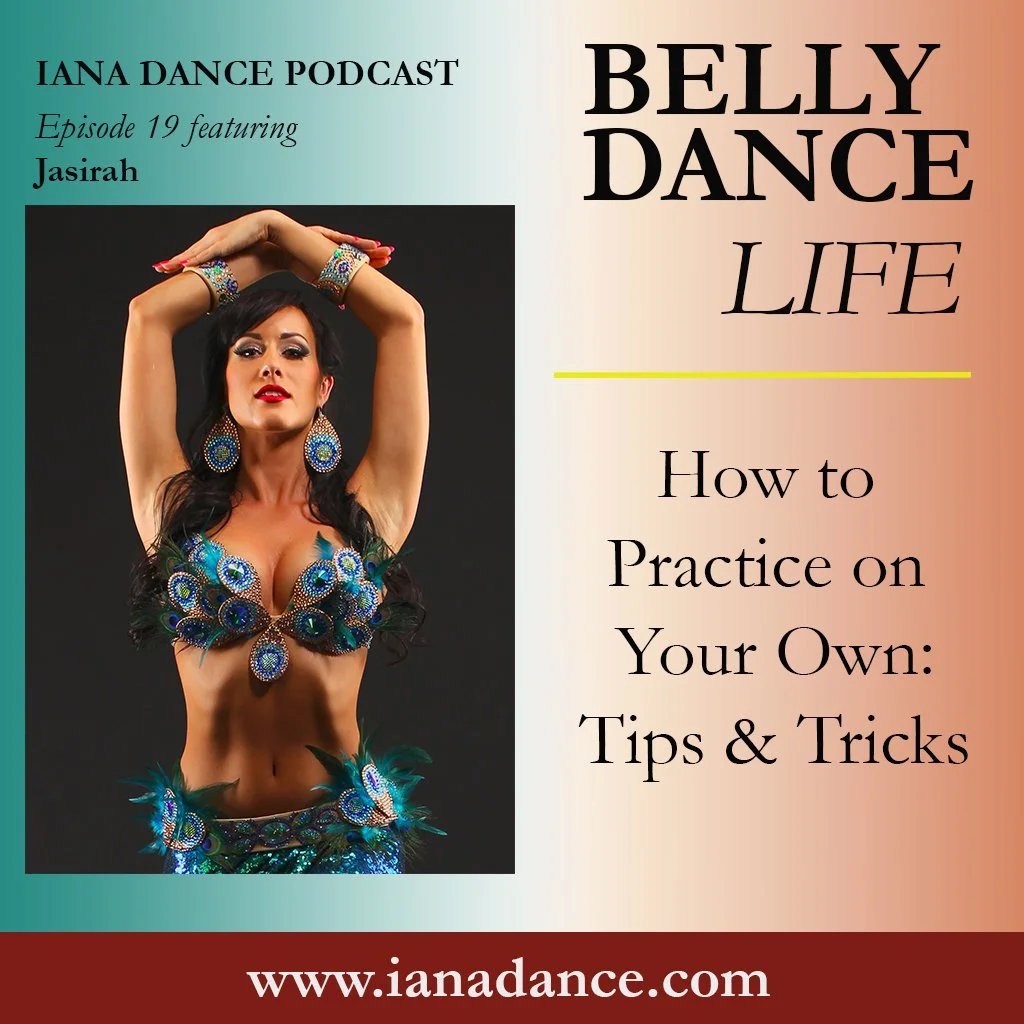


Giselle Alfaro, originally from El Salvador, is a dance artist with more than 17 years of experience, specializing in Middle Eastern dance. She has performed at international festivals including Oriental Marathon Festival in France, Bellydance Convention in Mexico, and Sands of Time in Greece. From 2017 to 2019, Giselle toured as a featured dancer with BellyDance Evolution in its production Fantasm and later joined the creative team as assistant director for the season finale in Buenos Aires, Argentina. Alongside her artistic career, Giselle holds a B.S. in Finance and Economics and is deeply committed to community service. For the past three years, she has worked as a medical interpreter supporting the Hispanic community at Arkansas Children’s Hospital.
In this episode you will learn about:
How to train your brain to feel more comfortable before stepping onstage
How international opportunities often grow from relationships built years earlier
What years with Bellydance Evolution taught her about touring, collaboration, and professional dance life
How Giselle rebuilt her dancing after surgery through repetition and consistency
Is social media visibility really that important?